Winter brings icy roads and dangerous conditions. Without effective ice-melting solutions, accidents increase, traffic halts, and businesses suffer. Snow salt provides an immediate solution to these pressing challenges.
Snow salt is a specialized deicing compound designed to lower the freezing point of water, effectively melting ice and preventing its formation on roads, sidewalks, and other surfaces. The most common type is sodium chloride (rock salt), though calcium chloride and magnesium chloride are also widely used for enhanced performance.

As a professional snow salt1 manufacturer with over 15 years in the industry, I've seen how proper ice management transforms winter safety. Let's explore why our snow salt solutions have become essential for clients across Saudi Arabia, UAE, and other regions that experience occasional but challenging winter conditions.
Your Trusted Snow Salt Manufacturer: What Makes Wanhong Different?
Property owners struggle with unreliable salt supplies and inconsistent product quality. When winter strikes, inferior products create dangerous conditions and waste valuable resources.
Wanhong stands out as a trusted snow salt manufacturer due to our ISO-certified production facilities, rigorous quality control processes, consistent chemical composition, and reliable supply chain that ensures timely delivery even during peak winter demand seasons.
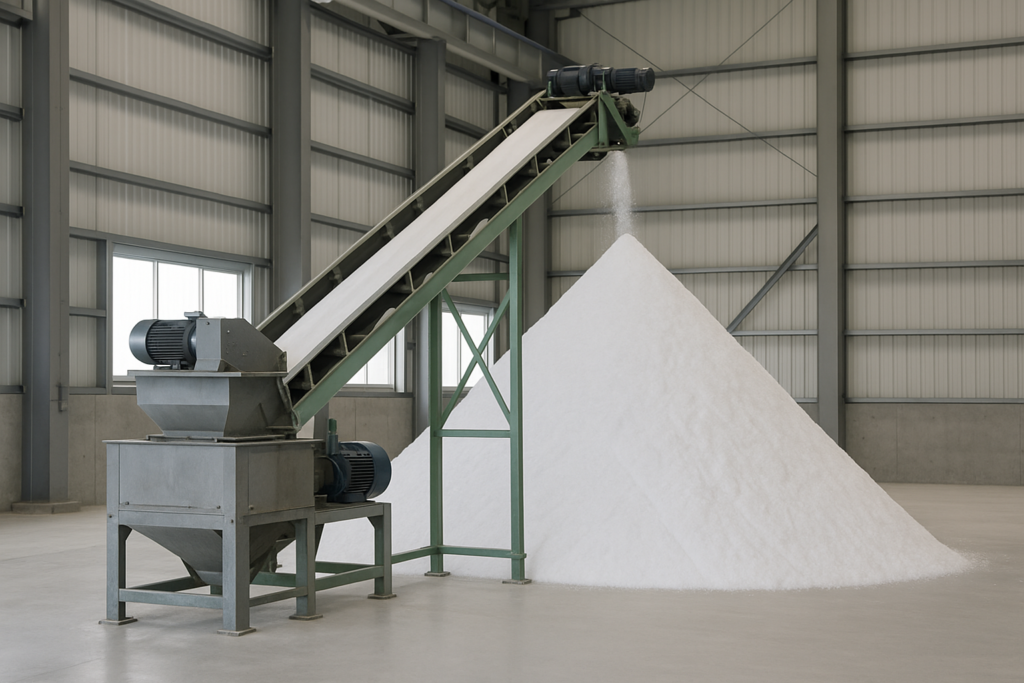
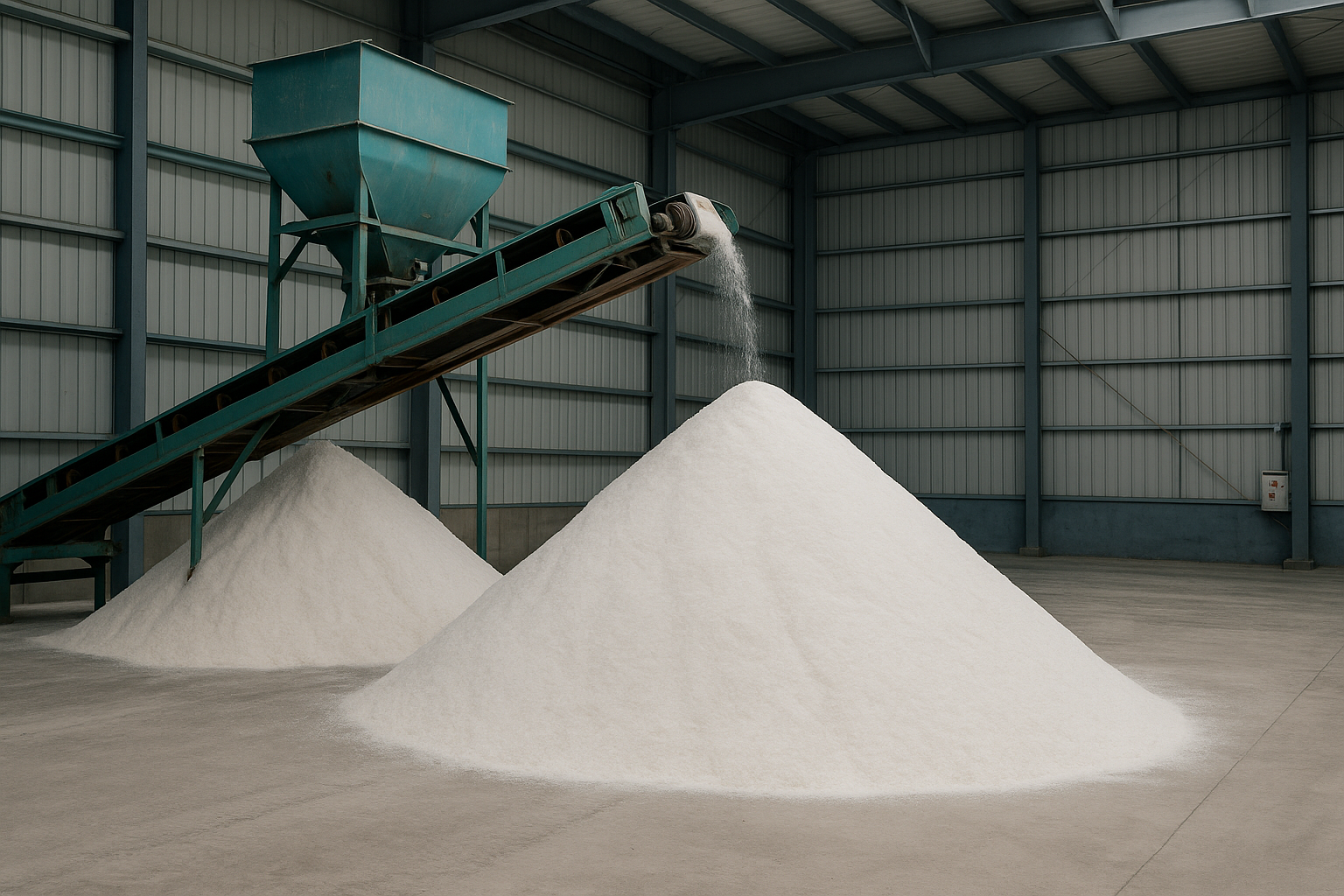
At Wanhong, we've invested heavily in our production capabilities to ensure reliability when you need it most. Our six dedicated production lines operate 24/7 during peak season, ensuring we can meet the demands of even our largest distributors and government clients.
Production Capacity and Reliability
Our facility produces over 100,000 tons of snow salt annually, with capacity to scale up during unexpected weather events. This robust manufacturing capability means we never leave our clients without supplies during critical winter periods.
Quality Control Standards
Unlike competitors who might cut corners, every batch of our snow salt undergoes laboratory testing for:
- Chemical composition verification
- Moisture content analysis
- Granule size distribution
- Freezing point depression performance
- Corrosion inhibitor effectiveness (for premium products)
This dedication to quality has earned us trusted supplier status with major municipalities and highway authorities across multiple countries.
Best Snow Salt for Ice Melting: How to Choose the Right Type?
Snow removal teams often choose the wrong type of salt, resulting in ineffective melting, environmental damage, and wasted resources. Using inappropriate products increases costs and compromises safety.
The best snow salt depends on temperature conditions: rock salt (sodium chloride) works effectively down to -9°C and is cost-efficient for moderate conditions; calcium chloride performs in extreme cold (-32°C) but costs more; magnesium chloride balances performance (-15°C) with reduced environmental impact.
Understanding the science behind different ice melt products is crucial for optimal results. In my experience working with large-scale operations, choosing the right product for specific conditions makes all the difference in effectiveness and cost-efficiency.
Temperature Performance Comparison
| Salt Type | Effective Temperature | Cost Factor | Environmental Impact | Concrete Impact |
|---|---|---|---|---|
| Sodium Chloride (Rock Salt) | Down to -9°C (15°F) | Low (1x) | Moderate | High |
| Calcium Chloride | Down to -32°C (-25°F) | High (3-4x) | Moderate | Moderate |
| Magnesium Chloride | Down to -15°C (5°F) | Medium (2-3x) | Lower | Low |
| Potassium Chloride | Down to -7°C (20°F) | High (3x) | Low | Low |
| Sodium Acetate | Down to -10°C (14°F) | Very High (5x) | Very Low | Very Low |
For clients in regions with milder winters, like parts of Saudi Arabia or UAE that occasionally experience freezing conditions, I typically recommend our enhanced sodium chloride products with corrosion inhibitors. These provide the best balance of cost and performance while protecting infrastructure investments.
Trust Source for Ice Melt Supply: Why Supply Chain Reliability Matters?
Winter storms create sudden demand spikes, leaving unprepared businesses without critical supplies. When salt inventories deplete during emergencies, safety is compromised and operations halt completely.
A reliable ice melt supply chain requires multiple sourcing locations, strategic inventory positioning, weather-triggered stocking algorithms, dedicated logistics partnerships, and transparent communication systems that alert customers about potential delays or availability issues.
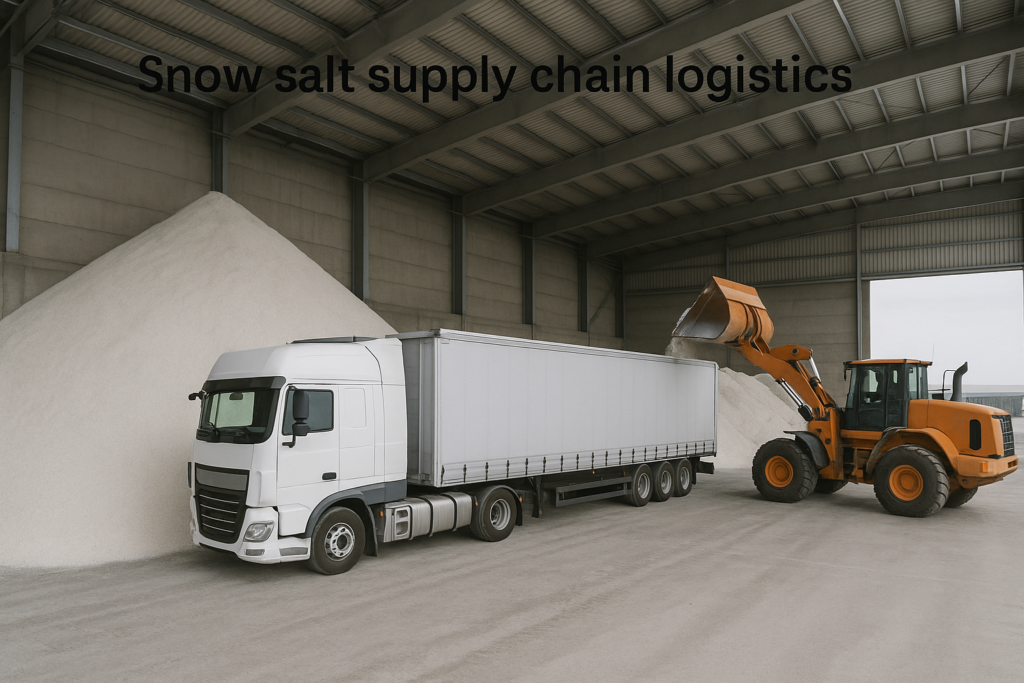
Having weathered numerous supply chain crises over my years in this business, I've learned that transparency and planning make all the difference. We've built our reputation on never leaving clients stranded during winter emergencies.
Our Supply Chain Advantages
Our supply chain resilience stems from several strategic advantages:
-
Multiple Production Facilities: With factories in different regions, we maintain production even if one area faces challenges.
-
Early Warning System: Our proprietary weather monitoring integrates with inventory management, automatically triggering production increases before major storms.
-
Reserved Capacity Model: Unlike competitors who sell 100% of their capacity, we maintain 15% production reserve for emergency situations.
-
Flexible Shipping Options: Our relationships with multiple shipping lines and overland carriers ensure product movement even during difficult conditions.
-
Strategic Warehousing: We maintain inventory in key distribution hubs near major markets, reducing delivery time during emergencies.
This systematic approach has allowed us to maintain 99.7% on-time delivery even during the most challenging winter seasons.
Snow Salt Specifications: What Quality Indicators Matter Most?
Many buyers focus solely on price, ignoring crucial quality specifications. This leads to poor performance, equipment damage, and environmental problems that ultimately cost more than premium products.
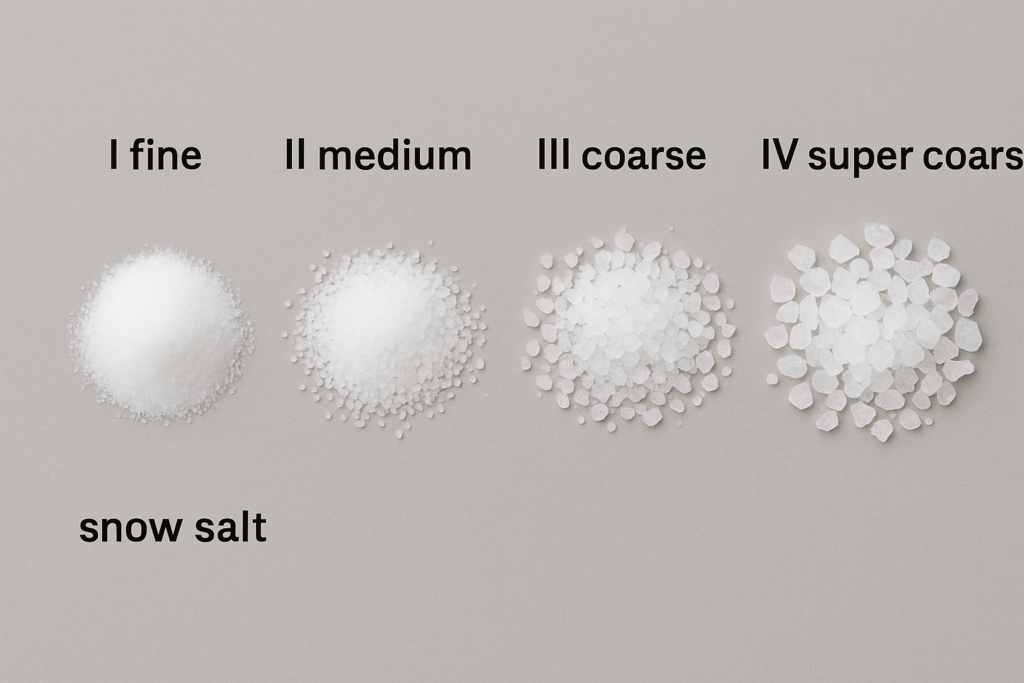
Key snow salt specifications include: purity level (95-99%), grain size distribution (1-5mm optimal), moisture content (<0.5% preferred), anti-caking additives presence, corrosion inhibitor content, and certified effective temperature range.

As someone who has personally overseen the development of our specification standards, I can't emphasize enough how these technical details impact real-world performance. Let me break down the most critical specifications that separate premium snow salt from inferior products.
Critical Quality Specifications
The performance of snow salt is directly tied to its physical and chemical properties:
Purity Levels and Contaminants
Our premium snow salt maintains 98.5% purity, exceeding industry standards of 95%. Lower-purity products often contain soil contaminants that leave residue, clog equipment, and reduce effectiveness.
Grain Size Distribution
We carefully control particle sizing for optimal performance:
- Too fine: Dissolves too quickly, wasting material
- Too coarse: Slow activation, poor coverage
- Optimal range: 1-5mm with specific distribution curves for different applications
Moisture Content
Our production process ensures moisture content2 below 0.2%, compared to the industry average of 0.5-1.5%. Lower moisture content prevents clumping during storage and ensures free-flowing application, essential for mechanical spreaders.
Anti-Caking Technology
We incorporate advanced anti-caking agents that maintain flowability even after extended storage. This prevents the common problem of salt hardening into unusable blocks in storage facilities.
All these specifications are verified through our ISO-certified testing protocols and documented in our batch certification process.
Choose Excellence, Choose Wanhong: What Makes Our Products Superior?
Decision-makers struggle to differentiate between seemingly similar salt products. Without clear quality indicators, they risk purchasing inferior products that fail when most needed, potentially resulting in liability issues.
Wanhong's snow salt superiority comes from pharmaceutical-grade production standards, custom formulations for specific climate conditions, enhanced products with corrosion inhibitors and traction additives, environmental certification, and comprehensive technical support.
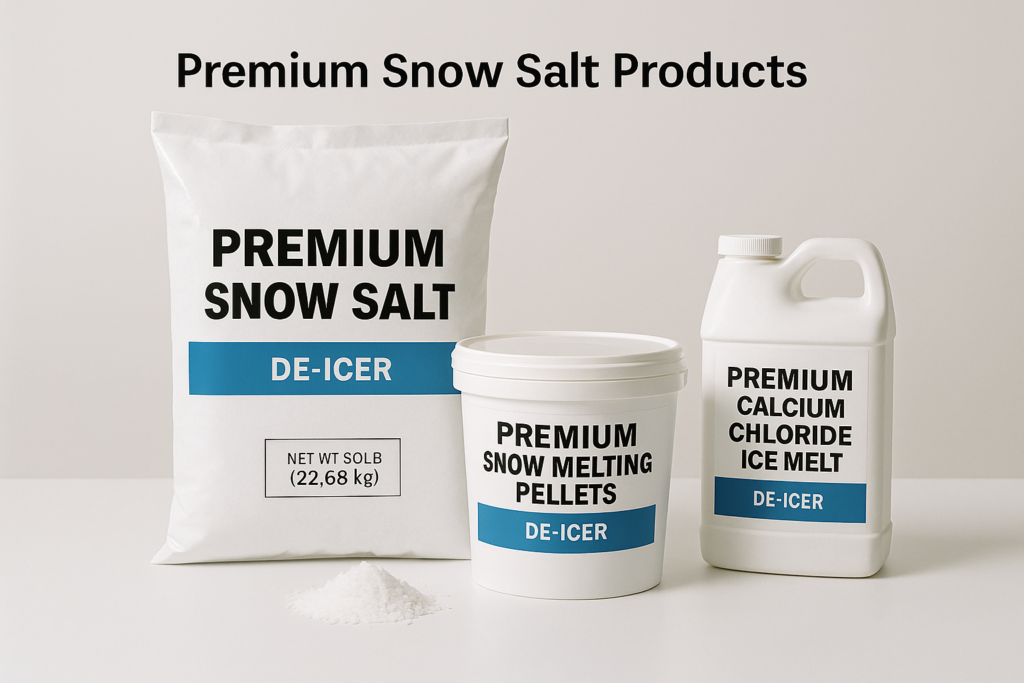
I believe what truly separates Wanhong from competitors isn't just our superior products, but our approach to partnership. We don't just sell salt; we provide complete winter safety solutions tailored to each client's specific needs.
Beyond Basic Salt: Our Enhanced Formulations
Over years of research and client feedback, we've developed specialized formulations that address common challenges:
-
ProGuard Series: Enhanced with corrosion inhibitors that reduce vehicle and infrastructure damage by up to 70% compared to untreated salt.
-
EcoMelt Line: Environmentally optimized formulations with reduced chloride content and biodegradable additives for sensitive ecological areas.
-
QuickAction Blend: Combines fast-acting calcium chloride with cost-effective sodium chloride for rapid melting even in extreme cold.
-
VisiblePath Products: Contains organic coloring agents that allow maintenance crews to visually confirm application coverage, preventing dangerous untreated areas.
These specialized products reflect our commitment to innovation and addressing the real-world challenges our clients face beyond basic ice melting.
Snowmelt Salt Serves In Multiple Industries: Who Needs Our Products?
Many businesses underestimate their vulnerability to winter weather. Inadequate preparation leads to business interruptions, liability claims, and damage to reputation when customers encounter unsafe conditions.
Snow salt serves essential functions across diverse industries: municipalities maintain public roadways; commercial property managers protect shopping centers and office complexes; transportation hubs ensure operational continuity; hospitals maintain emergency access; and industrial facilities prevent production shutdowns.

Having worked with clients across various sectors, I've seen firsthand how winter weather impacts operations differently depending on the industry. Our specialized approach addresses these unique requirements.
Industry-Specific Solutions and Applications
Different industries face unique challenges that require tailored approaches:
Municipal and Highway Applications
For government clients managing extensive road networks, we provide:
- Bulk delivery systems for large storage facilities
- Pre-wetting technology that reduces salt usage by 30%
- Training programs for optimal application rates
- Environmental impact reduction strategies
- Budget-stretching options for fiscally constrained municipalities
Commercial Property Management
For property managers balancing safety with aesthetics and environmental concerns:
- Low-residue formulations that minimize tracking into buildings
- Pet-friendly options for residential complexes
- Landscape-safe products that protect expensive plantings
- Liquid applications for preventative treatment before storms
Critical Infrastructure
For airports, hospitals, and essential services:
- Ultra-rapid melting products for zero-tolerance environments
- Certification documentation for regulatory compliance
- Emergency delivery protocols with guaranteed response times
- Performance guarantees backed by liability insurance
This industry-specific knowledge allows us to recommend the most appropriate products and application methods for each client's unique situation.
Snow Melting Products Volume and Packaging: How to Choose?
Buyers often select inappropriate packaging that creates handling problems, increases labor costs, and results in product waste. Wrong volume choices lead to storage issues and increased environmental exposure.
Snow melting products come in various packaging options: 25kg bags for small operations and spot treatment; 500kg/1000kg super sacks for medium facilities; bulk deliveries (10-30 tons) for large operations; and liquid formulations in 1000L totes or bulk tankers for pre-treatment and brine applications.
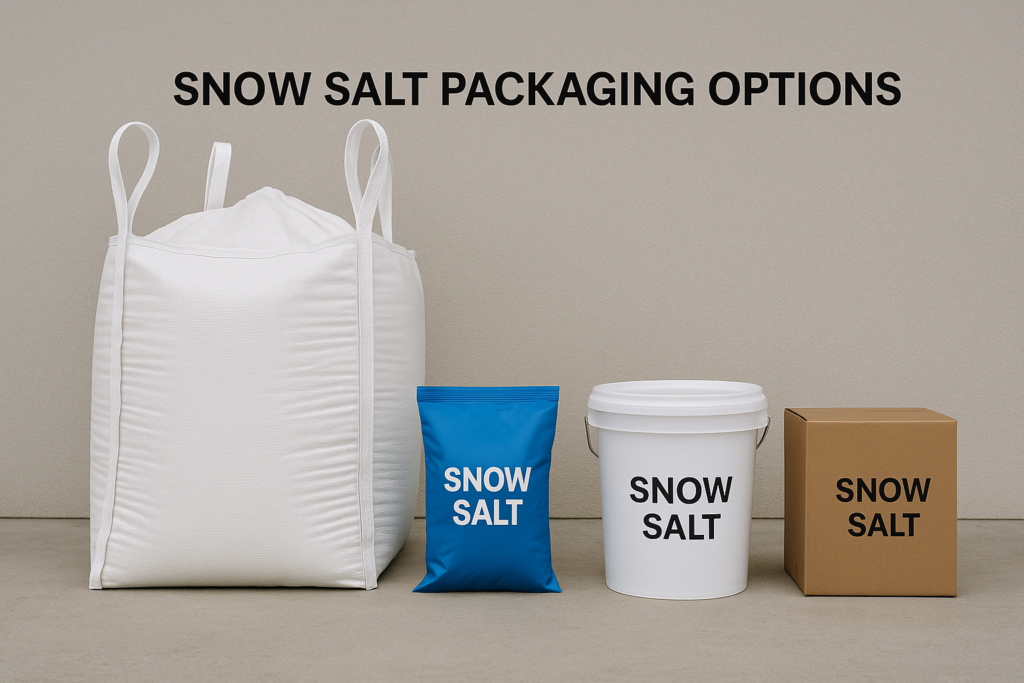
From my experience working with operations of all sizes, packaging decisions significantly impact efficiency and total cost. Let me share some insights on selecting the right packaging approach.
Strategic Packaging Selection Guidelines
The right packaging approach depends on several operational factors:
Application Equipment Compatibility
Your spreading equipment dictates optimal packaging:
- Walk-behind spreaders: 25kg bags for easy handling
- Tailgate spreaders: Either 25kg bags or super sacks with loading equipment
- V-box spreaders: Super sacks or bulk delivery
- Liquid applicators: Totes or bulk liquid delivery
Storage Infrastructure Considerations
Your existing facilities influence packaging decisions:
- Covered storage availability
- Loading equipment (forklifts, conveyors)
- Environmental protection requirements
- Security concerns
Labor and Handling Efficiency
Packaging directly impacts labor costs:
- Small bags require more handling but less equipment
- Super sacks reduce handling but require lifting equipment
- Bulk delivery minimizes handling but requires appropriate storage
Volume Requirements and Usage Patterns
We recommend:
- Small properties (<5,000 sq.m): 25kg bags
- Medium properties (5,000-50,000 sq.m): Combination of bags and super sacks
- Large properties (>50,000 sq.m): Bulk delivery with supplemental bagged product
Our packaging consulting service can analyze your specific operation and recommend the most efficient approach that minimizes both cost and environmental impact.
Wanhong is Your Ice Melt Chemical Partner for Winter Challenges: Why Partnership Matters?
Many suppliers view ice melt as a seasonal commodity transaction. This transactional approach leaves buyers without critical support during emergencies and fails to optimize solutions for specific needs.
A true ice melt chemical partnership includes seasonal planning assistance, customized product recommendations, application rate guidance, staff training programs, emergency response protocols, and ongoing product optimization based on performance feedback.
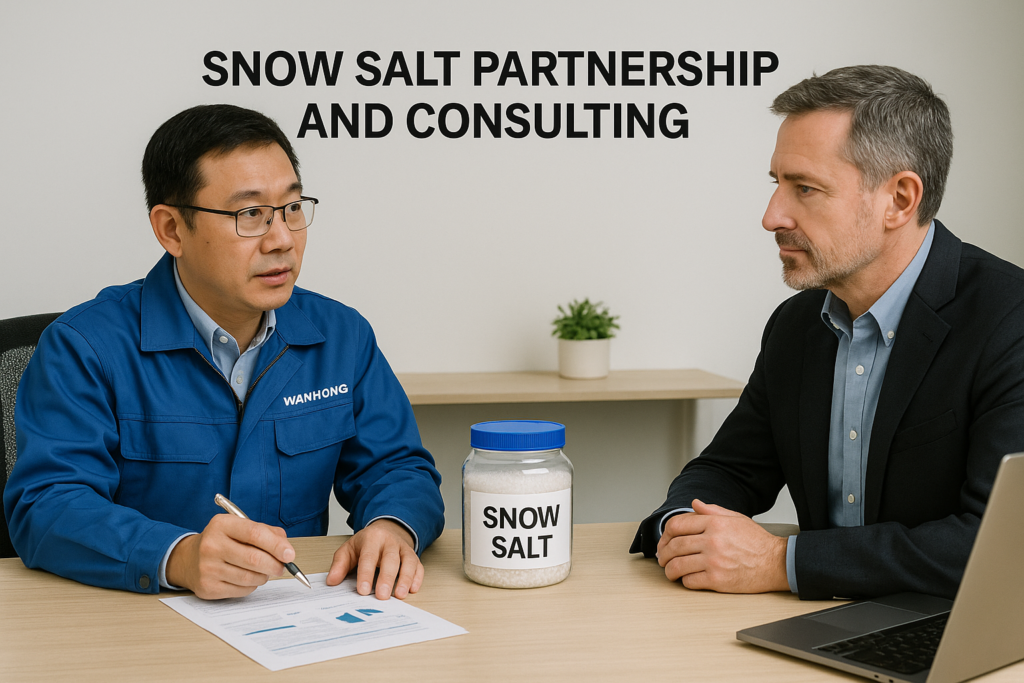
In my years serving clients across diverse regions, I've found that the most successful winter management programs arise from true partnerships rather than simple supplier-buyer relationships. At Wanhong, we invest in these partnerships through several key programs.
Our Partnership Approach
We differentiate ourselves through comprehensive support programs:
Technical Support and Training
Our team of winter management specialists provides:
- On-site application training for maintenance staff
- Equipment calibration assistance
- Custom application rate charts based on specific products and conditions
- Video resources and printed materials in multiple languages
Weather Monitoring and Forecasting
We provide access to:
- Regional weather alert systems
- Storm prediction notifications
- Application timing recommendations
- Post-storm assessment tools
Inventory Management Programs
To prevent shortages and optimize storage:
- Seasonal usage forecasting
- Staged delivery scheduling
- Reserve stock programs
- Emergency replenishment guarantees
Performance Optimization
Through ongoing improvement:
- Post-season performance reviews
- Product usage analysis
- Cost-efficiency assessments
- Environmental impact reduction strategies
These partnership elements ensure you're never alone in facing winter challenges, with expertise and support available when you need it most.
Other Chemicals You Might Like: What Complementary Products Should You Consider?
Many winter maintenance programs focus solely on reactive deicing, missing opportunities for more comprehensive approaches. This single-product strategy results in higher material usage, increased environmental impact, and suboptimal results.
Complementary winter maintenance chemicals include: liquid anti-icing agents for pre-storm application; brine-making systems that reduce salt usage; traction enhancement additives for improved safety; eco-friendly alternatives for sensitive areas; and corrosion inhibitors to protect infrastructure investments.
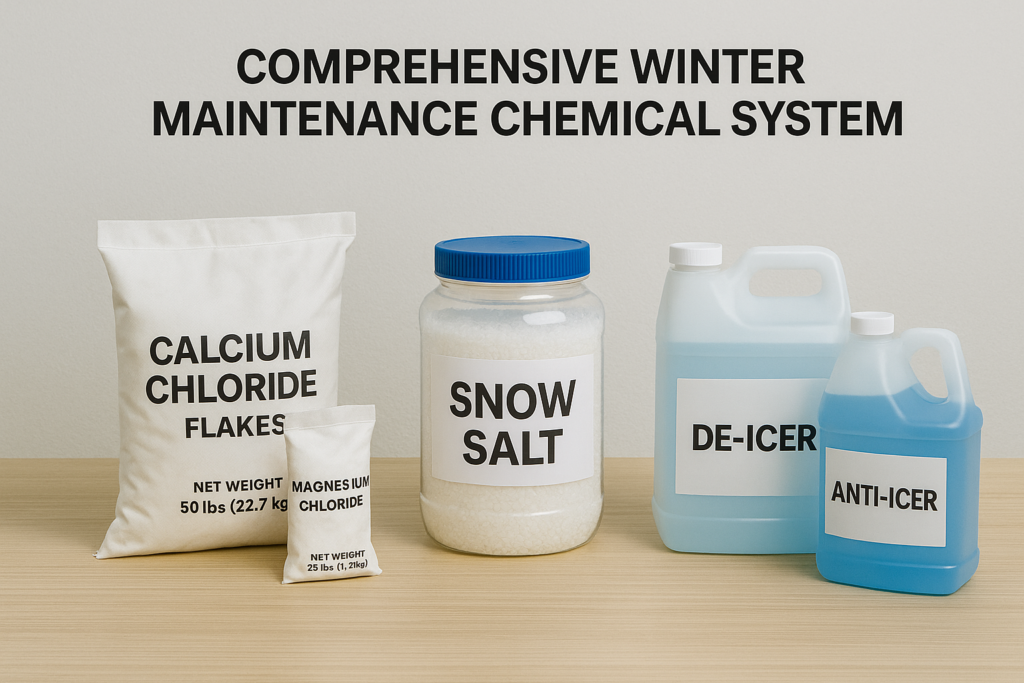
My most successful clients typically employ a systematic approach using multiple complementary products. This strategy not only improves performance but often reduces overall material costs and environmental impact.
Comprehensive Winter Management Systems
A complete winter management system typically includes:
Pre-Storm Preparation Products
- Liquid Anti-Icing Solutions: Applied before storms to prevent ice-pavement bonding
- Brine Production Systems: Create cost-effective liquid applications on-site
- Weather-Triggered Preventative Treatments: Specialized products applied based on forecast conditions
Active Storm Management
- Primary Deicing Agents: Various salt types selected for specific temperature ranges
- Accelerator Additives: Enhance melting speed in critical areas
- Traction Enhancement Materials: Combined with salt for immediate safety improvement
Post-Storm Recovery
- Residue Management Products: Minimize tracking and environmental impact
- Corrosion Neutralizers: Protect vehicles and infrastructure
- Surface Treatments: Prevent refreezing during temperature fluctuations
By implementing this systems approach, clients typically reduce their overall salt usage by 20-30% while improving safety outcomes and reducing property damage.
FAQs: What Do Most Customers Ask About Snow Salt?
Buyers often lack crucial information about snow salt properties and usage. Without answers to common questions, they make costly mistakes in selection, application, and storage that reduce effectiveness and increase environmental impact.
Common snow salt questions include: effective temperature ranges between products, appropriate application rates, environmental impacts, storage requirements, compatibility with different surfaces, and whether salt alternatives like sand or chemicals can provide better results in specific conditions.
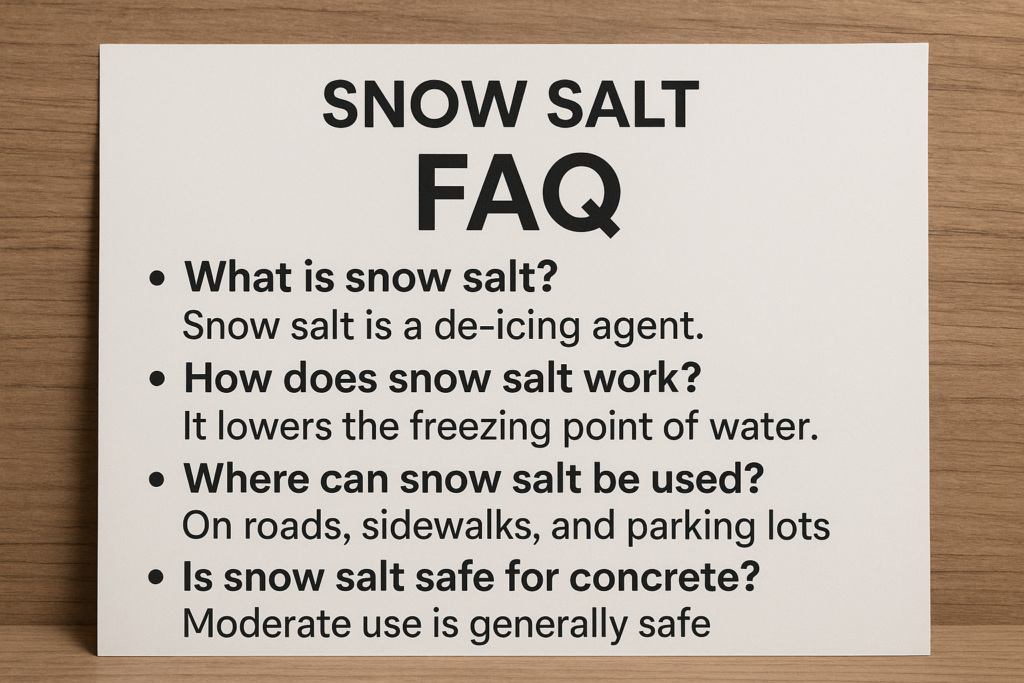
After answering thousands of customer questions over the years, I've compiled the most important information buyers need to make informed decisions. Here are the answers to the questions we receive most frequently.
Essential Snow Salt Information
Q: What's the difference between various types of ice melt products?
The primary differences are effective temperature range, melting speed, corrosiveness, environmental impact, and cost:
- Sodium Chloride (Rock Salt): Most economical, effective to -9°C
- Calcium Chloride: Premium option, works to -32°C, attracts moisture, fastest acting
- Magnesium Chloride: Mid-range performance to -15°C, less corrosive to concrete
- Potassium Chloride: Environmentally safer but less effective, works to -7°C
- Blended Products: Combine benefits with balanced cost
Q: How much snow salt should I apply?
Proper application rates depend on several factors:
- Preventative application: 15-30g/m²
- Light snow/frost: 30-60g/m²
- Heavy snow/ice: 60-120g/m²
- Extreme conditions: 120-150g/m²
Exceeding these rates wastes product without improving results. Our packaging includes detailed application guidelines.
Q: Is snow salt harmful to concrete?
Salt can affect concrete through:
- Physical damage from freeze-thaw cycles
- Chemical reactions with concrete components
To minimize impact:
- Remove slush promptly after melting
- Use products with corrosion inhibitors on new concrete
- Apply appropriate amounts
- Consider calcium magnesium acetate for sensitive surfaces
Q: How should snow salt be stored?
Proper storage is crucial for maintaining effectiveness:
- Keep dry: Store in waterproof containers or on pallets
- Cover completely: Even humidity can cause clumping
- Temperature stability: Avoid extreme temperature fluctuations
- Containment: Prevent environmental contamination
- Rotation: Use older stock first
Q: Are there environmentally friendly alternatives?
Yes, we offer several options with reduced environmental impact:
- EcoMelt Series: Reduced chloride content with organic additives
- Acetate-Based Products: Biodegradable but more expensive
- Treated Salt Products: Enhanced efficiency requiring less product
- Beet Juice Enhanced Options: Organic additive improves performance and reduces overall salt needed
Q: Can I make my own brine solution?
While possible, commercial-grade brine requires precise concentration:
- Optimal concentration is 23.3% salt by weight
- Requires water between 15-30°C for proper dissolution
- Needs proper filtration to prevent spreader clogging
- Must be tested for proper freezing point depression
We offer ready-to-use brine solutions and on-site brine making system consultations for large operations.
Conclusion
Selecting the right snow salt ensures winter safety while protecting your infrastructure and environment. Wanhong delivers premium quality, reliable supply, and expert support to make your winter management successful. Contact us today for customized solutions.