Are you facing cracking issues with your mortar in hot weather? Traditional HPMC cellulose might be failing you when temperatures soar, causing unexpected water release and compromising your project's integrity.
MHEC (Methyl Hydroxyethyl Cellulose)1 outperforms HPMC in hot climates because it has a higher gel temperature2 (85°C vs 70°C for HPMC). This allows MHEC to maintain water retention properties even when mortar temperatures3 rise, preventing premature drying, cracking, and strength loss in tropical or summer conditions.
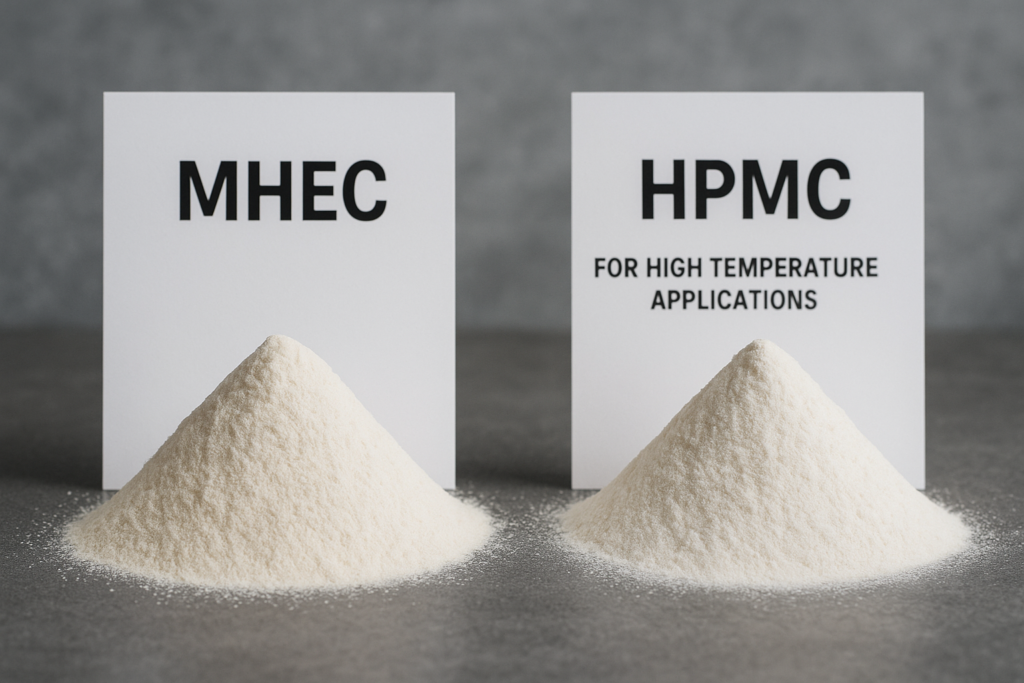
Let me take you through my experience with cellulose ethers in extreme conditions. I've seen countless projects in the Middle East where the wrong choice between these two additives made the difference between a successful application and a complete failure. The technical differences might seem small, but they have enormous practical impacts.
What is the difference between HPMC and MHEC?
Have you ever wondered why some mortar mixes fail in summer while others perform perfectly? The molecular structure difference between these two cellulose ethers explains why one collapses when the heat is on.
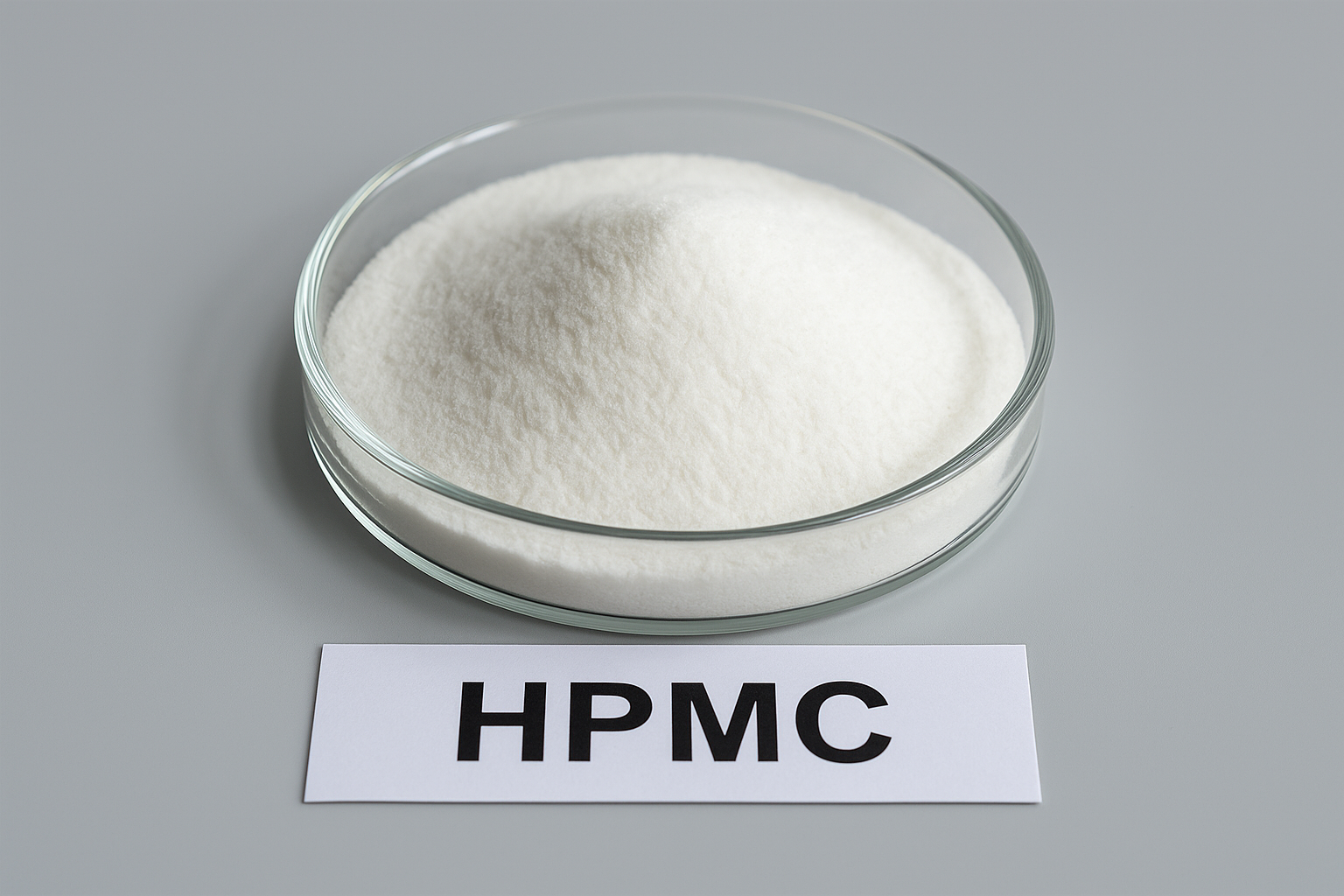
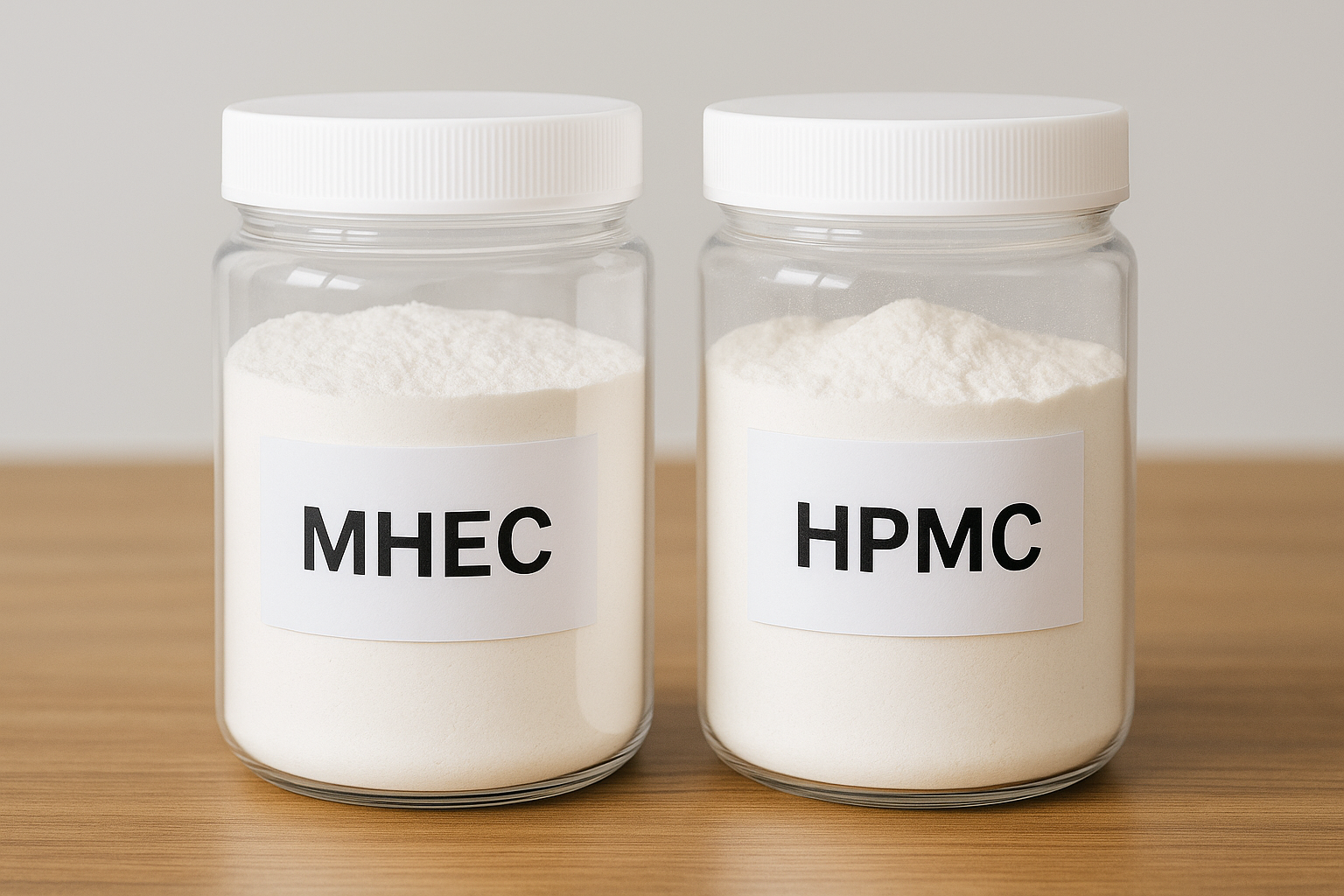
HPMC (Hydroxypropyl Methylcellulose)4 and MHEC (Methyl Hydroxyethyl Cellulose)1 differ primarily in their substituent groups. HPMC contains hydroxypropyl groups, while MHEC features hydroxyethyl groups, giving MHEC superior thermal stability, higher gel temperature, and better performance in hot climates.
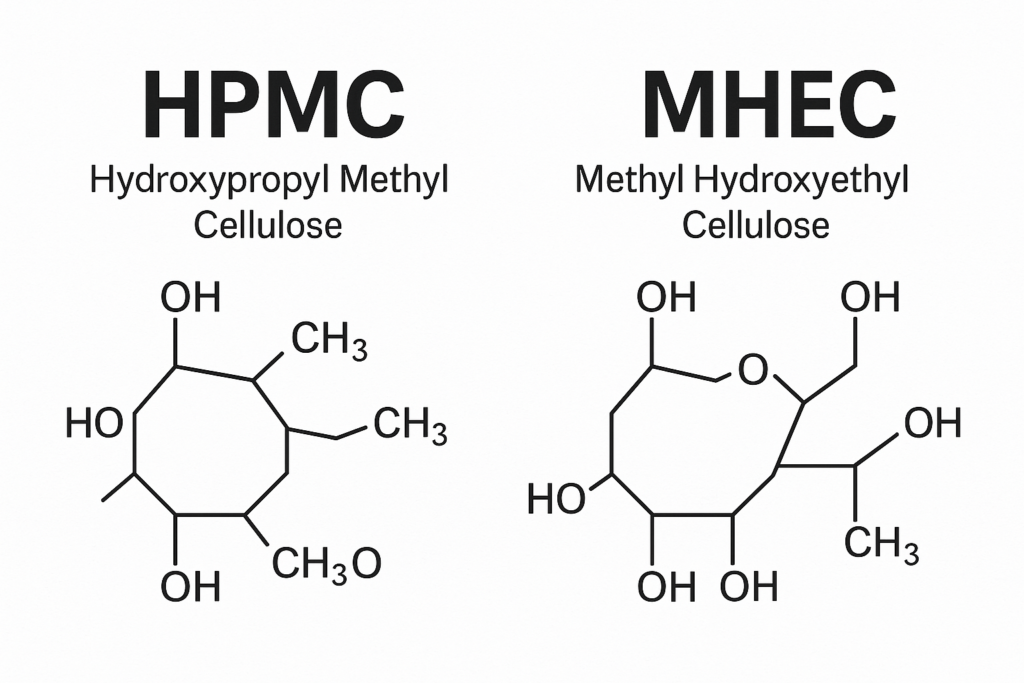
The key difference goes beyond their chemical names. From my factory experience producing both polymers, I can tell you that these molecular differences create distinct performance profiles. MHEC's hydroxyethyl groups form stronger hydrogen bonds compared to HPMC's hydroxypropyl groups. This seemingly small distinction affects how they behave when temperatures climb.
Performance Comparison in Different Temperature Ranges
| Temperature Range | HPMC Performance | MHEC Performance |
|---|---|---|
| Below 50°C | Excellent | Excellent |
| 50-70°C | Good | Excellent |
| 70-85°C | Poor (begins failing) | Good |
| Above 85°C | Fails completely | Begins to weaken |
Application Differences
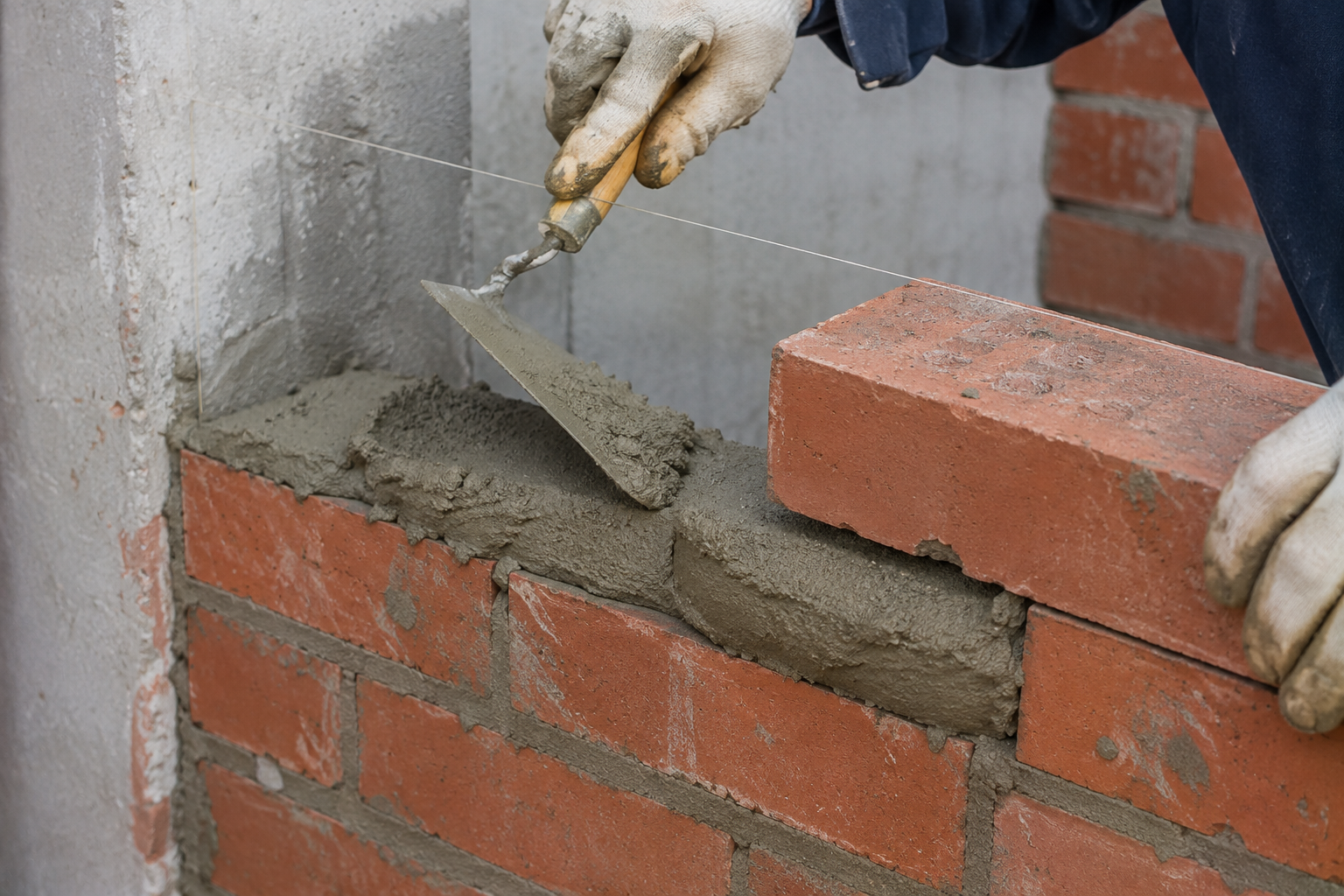
When working with mortar in places like Saudi Arabia or the UAE, where surface temperatures can easily exceed 70°C, this difference becomes critical. MHEC continues functioning as a water reservoir, giving cement particles time to hydrate properly. Meanwhile, HPMC may suddenly release its water, causing rapid drying, shrinkage cracks, and reduced final strength. That's why many of our Middle Eastern customers have switched to MHEC exclusively for exterior applications.
What is the degradation temperature of HPMC?
Have you noticed how your HPMC-based mortar sometimes fails mysteriously on hot job sites? The thermal degradation point explains this common but often misdiagnosed problem affecting contractors worldwide.
HPMC begins thermal degradation at approximately 70°C (158°F), when its gel temperature is reached. At this point, it suddenly releases retained water, causing mortar to dry too quickly. In contrast, MHEC remains stable up to about 85°C (185°F), providing a crucial safety margin in hot climate applications.
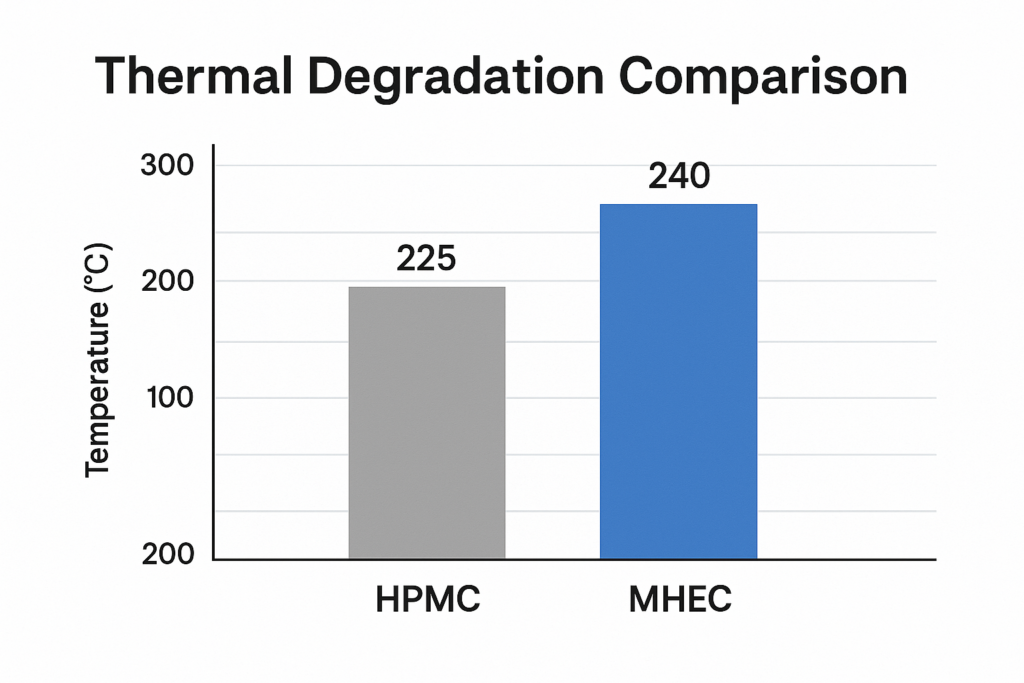
The degradation temperature represents a critical turning point in cellulose ether performance. This isn't just theoretical chemistry—I've seen it happen on real construction sites. When mortar containing HPMC faces intense sunlight or is applied to sun-heated surfaces, its temperature can quickly approach this critical threshold.
Thermal Behavior Patterns in Real-World Conditions
What many applicators don't realize is that this degradation isn't gradual—it's sudden. When HPMC reaches its gel temperature, it undergoes a phase change where its water-retention capability collapses almost instantly. This creates a dangerous situation where the mortar loses its workability and water retention properties precisely when it needs them most.
In our testing laboratory at Kehao, we've documented this phenomenon using thermal imaging. When HPMC-modified mortar reaches approximately 70°C, it releases moisture in a visible pattern we call "flash drying." MHEC-modified mortar, on the other hand, maintains consistent moisture levels even when heated to 80°C.
Temperature Exposure Timeline Effects
| Exposure Duration | HPMC Effect | MHEC Effect |
|---|---|---|
| 15 minutes at 70°C | Significant water loss | Minimal change |
| 30 minutes at 70°C | Complete failure | Slight reduction in efficiency |
| 15 minutes at 80°C | Complete failure | Begins to show stress |
| 30 minutes at 80°C | Complete failure | Moderate water loss |
For contractors working in places like Singapore or Vietnam where both heat and humidity are high, this temperature stability5 is not a luxury—it's essential for project success.
Which is better, CMC or HPMC?
Are CMC and HPMC truly interchangeable in your formulations? Many manufacturers make this costly assumption without understanding the fundamental differences that affect overall performance and cost-efficiency.
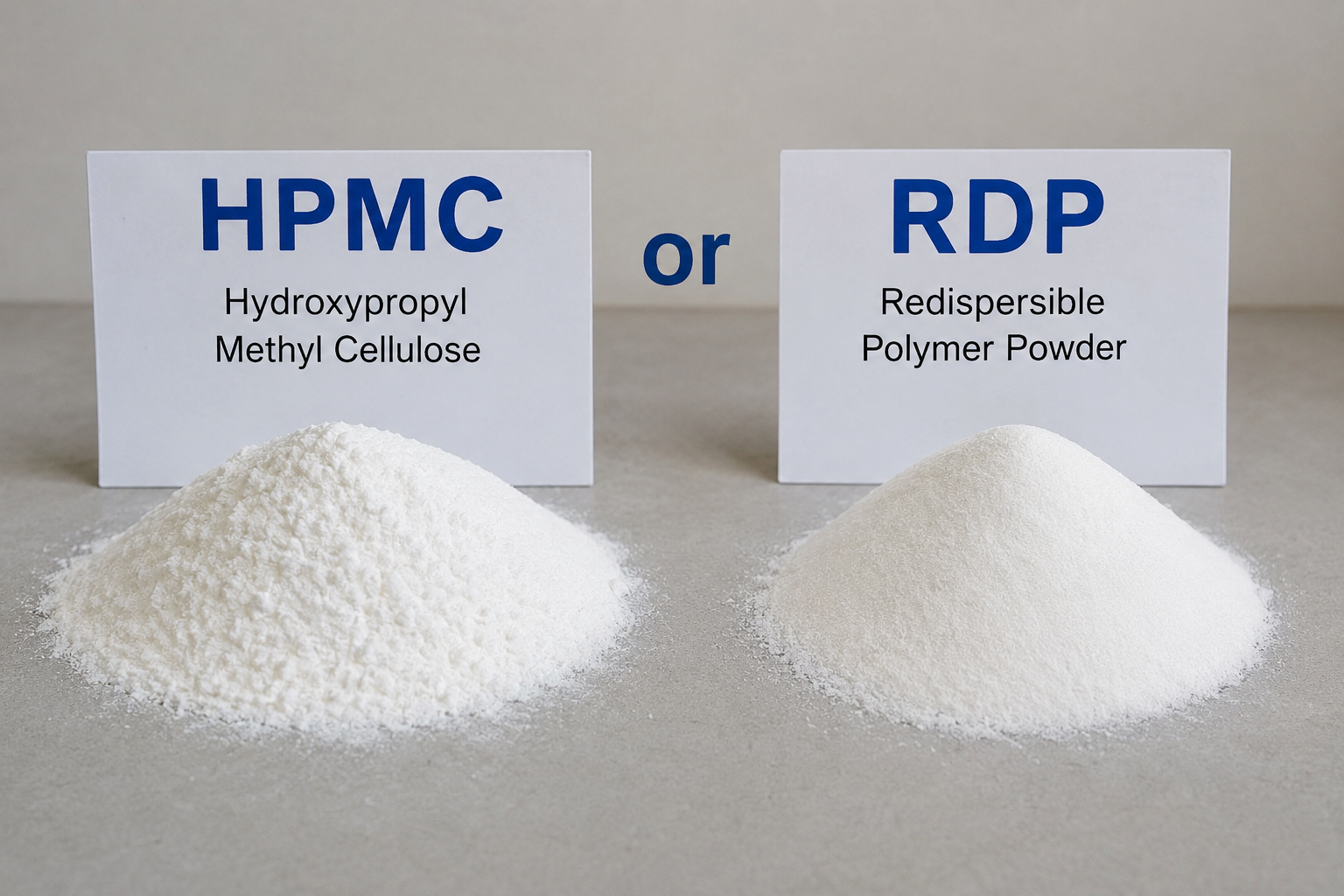
Neither CMC nor HPMC is universally "better"—they serve different purposes. CMC offers superior water solubility and stability in alkaline environments, while HPMC provides better water retention and workability. For hot climate applications, however, MHEC outperforms both with its higher thermal stability.
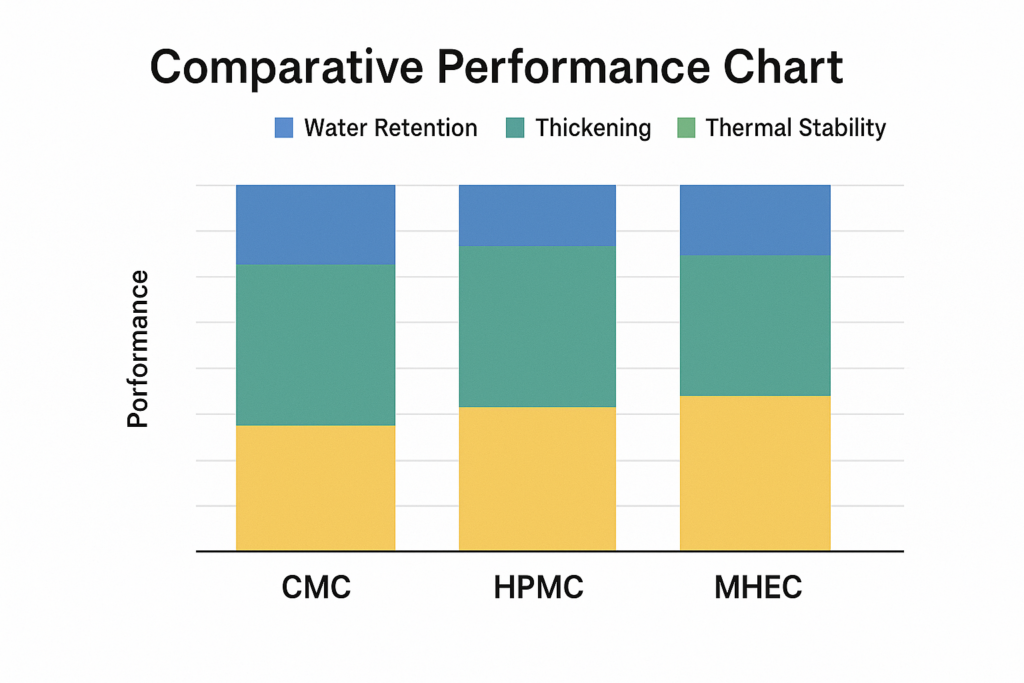
Through years of working with various cellulose ethers in our Kehao production lines, I've found that the question isn't which is broadly "better," but rather which is most appropriate for specific applications. Each has distinct properties that make it ideal for certain uses.
Functional Comparison Across Cellulose Ethers
The choice between CMC (Carboxymethyl Cellulose), HPMC, and MHEC should be driven by application requirements. For tile adhesives in normal temperatures, HPMC often provides the best balance of properties. For rendering mortars in hot climates, MHEC is clearly superior. And for applications where cost is the primary concern and high-temperature stability isn't needed, CMC may be sufficient.
| Property | CMC | HPMC | MHEC |
|---|---|---|---|
| Water retention | Moderate | High | High |
| Thermal stability | Low | Moderate | High |
| Workability | Good | Excellent | Excellent |
| Compatibility with cement | Limited | Excellent | Excellent |
| Cost | Lower | Moderate | Higher |
| Salt tolerance | Poor | Good | Good |
Application-Specific Recommendations
I often advise our customers in Pakistan and India, where both cost constraints and high temperatures are concerns, to use MHEC for exterior applications and HPMC for interior work. This balanced approach optimizes performance while managing costs.
In more extreme environments like Saudi Arabia, the additional cost of MHEC pays for itself many times over by preventing project failures. One large customer reported a 70% reduction in callback repairs after switching from HPMC to MHEC for their exterior rendering mortars, despite the 15% higher material cost.
What is the pH stability of HPMC?
Is your mortar setting too quickly or not bonding properly? The underlying issue might be pH instability of your cellulose ether—a technical aspect often overlooked by even experienced manufacturers.
HPMC maintains stability across pH 2-12, making it suitable for most construction applications. However, in highly alkaline environments (pH>12) common in fresh cement mixtures, HPMC may degrade faster than MHEC, which offers superior stability up to pH 13, ensuring consistent performance throughout the curing process.
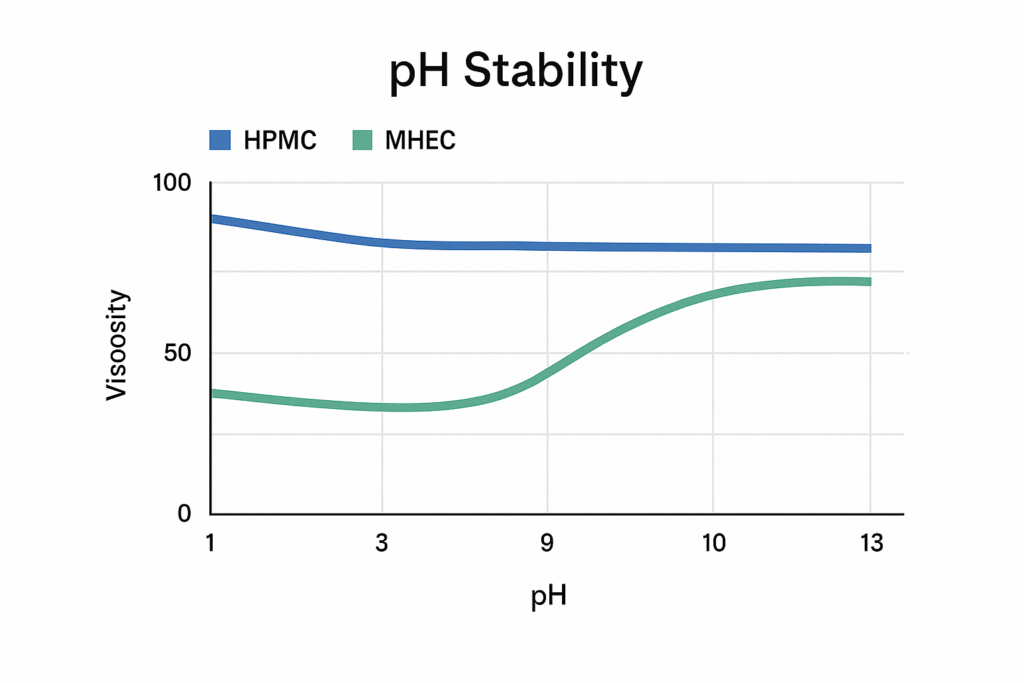
pH stability directly impacts how cellulose ethers perform in cement-based applications. Having manufactured these additives for years, I can tell you that the extremely alkaline environment of fresh cement (often reaching pH 12-13) creates challenging conditions for cellulose ethers.
pH Stability Across Different Environments
The superior alkaline resistance of MHEC becomes particularly important in applications with extended working times. When mortar needs to remain workable for longer periods in hot weather, MHEC's molecular structure withstands the combined stress of high pH and high temperature more effectively than HPMC.
| pH Value | HPMC Stability | MHEC Stability | CMC Stability |
|---|---|---|---|
| pH 3-7 (Acidic to Neutral) | Excellent | Excellent | Good |
| pH 7-11 (Neutral to Moderately Alkaline) | Excellent | Excellent | Excellent |
| pH 11-12 (Highly Alkaline) | Good | Excellent | Fair |
| pH 12-13 (Extremely Alkaline) | Fair | Good | Poor |
Real-World pH Impact
Our laboratory tests at Kehao have shown that when exposed to pH 12.5 (typical for fresh cement) at 60°C for 4 hours, HPMC loses approximately 30% of its water retention capability, while MHEC loses only about 15%. This difference becomes more pronounced as temperature increases.
In practice, this means that mortars formulated with MHEC are more forgiving in challenging conditions. For one of our customers in Brazil, switching to MHEC resolved inconsistent setting times they had experienced during their summer season, when both temperature and humidity fluctuated dramatically throughout the day.
Conclusion
MHEC outperforms HPMC in hot climates thanks to its higher gel temperature (85°C vs 70°C), providing crucial stability when mortar temperatures rise. This prevents the sudden water release that causes cracking and strength loss in critical applications.
-
Explore how MHEC can enhance your mortar's performance in extreme temperatures. ↩ ↩
-
Find out how gel temperature influences the performance of cellulose ethers. ↩
-
Understand how high temperatures can impact mortar performance. ↩
-
Learn about HPMC's properties and its role in construction materials. ↩
-
Understand the importance of temperature stability in ensuring material performance. ↩