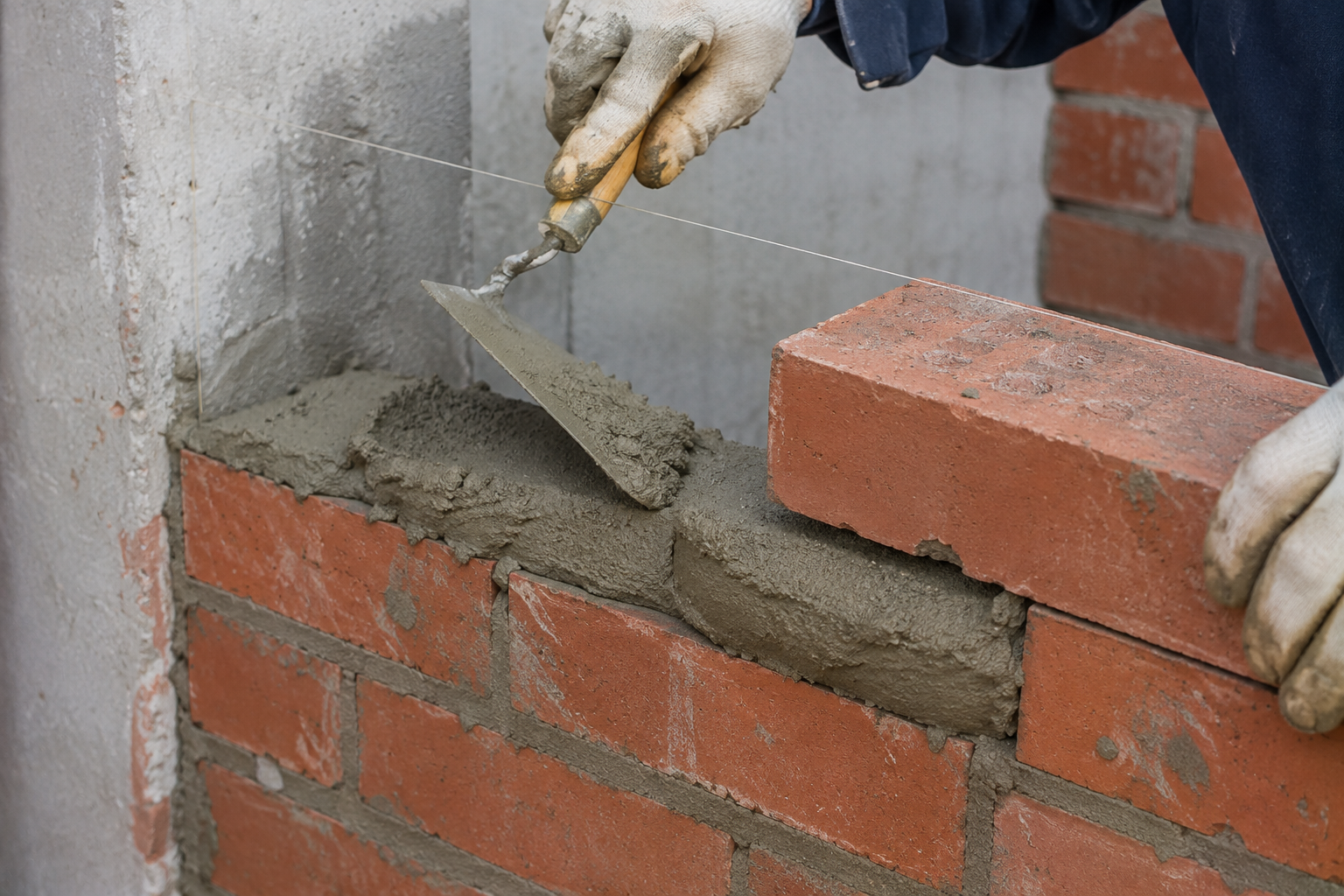
Are you struggling with concrete that cracks too easily or sets too quickly? Poor concrete performance causes project delays and increased costs. Concrete admixtures can solve these problems.
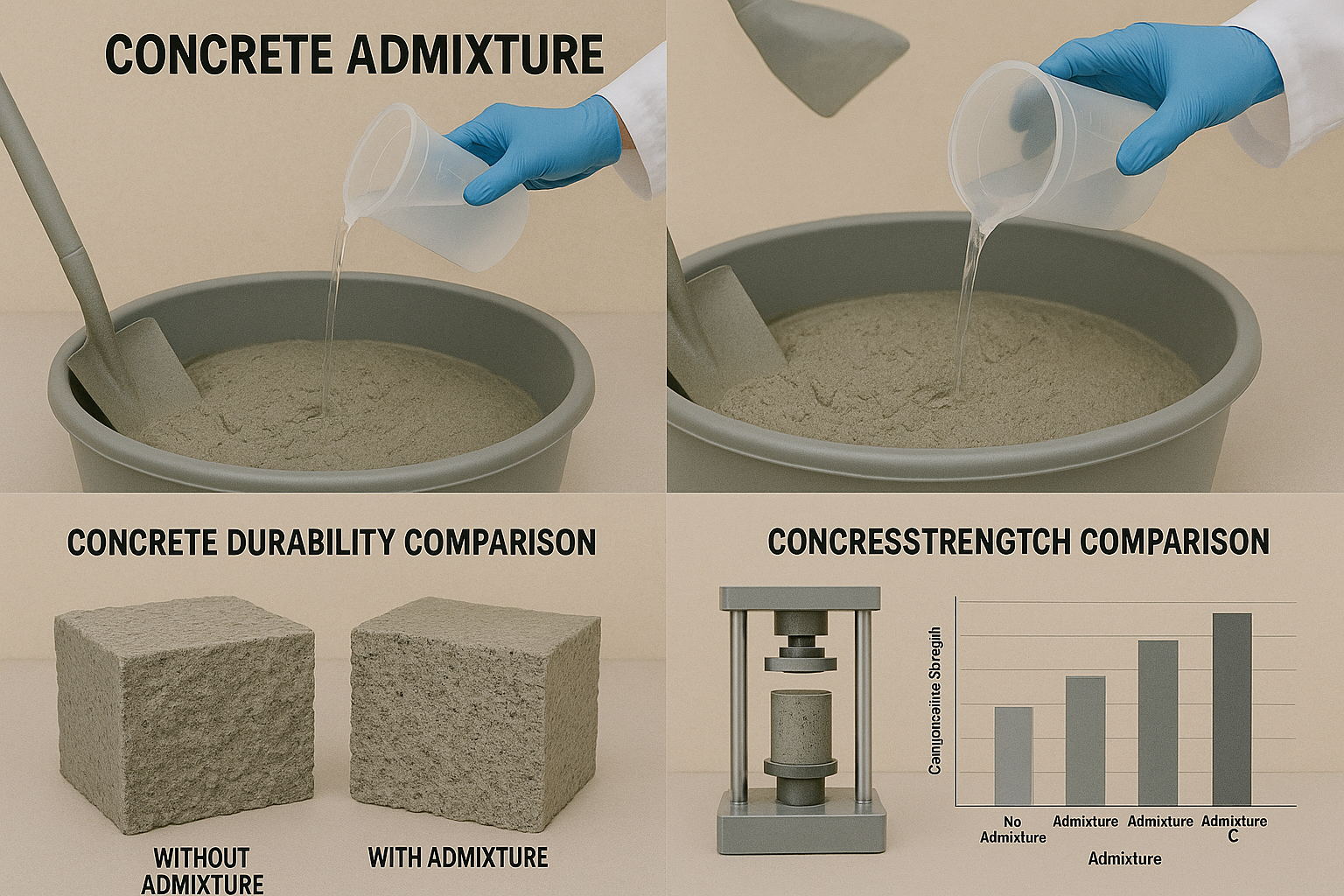
A concrete admixture1 is a material added to concrete during mixing to modify its properties. Common types include water reducers, air entrainers, accelerators, retarders, and plasticizers that improve workability, durability, setting time, and strength of concrete.
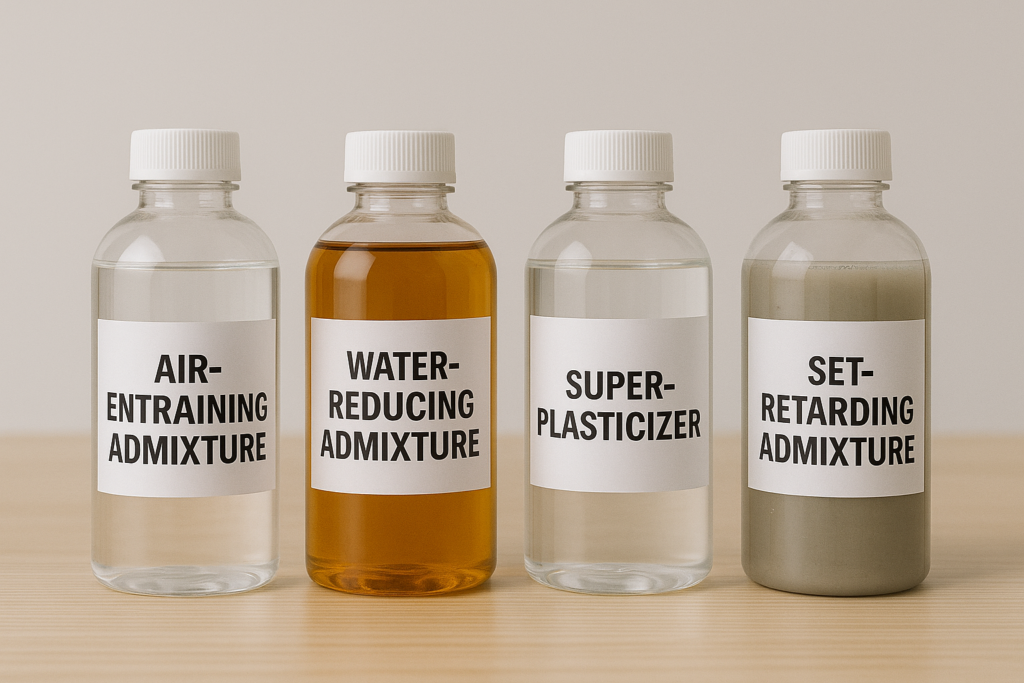
I've been in the construction materials business for over 15 years, and concrete admixtures remain one of the most misunderstood components. Let me clear up your confusion and answer your most pressing questions.
What is Admixture in Concrete?
Do you find yourself confused by the various chemicals being added to your concrete mix? Many contractors struggle to understand what these materials actually do.
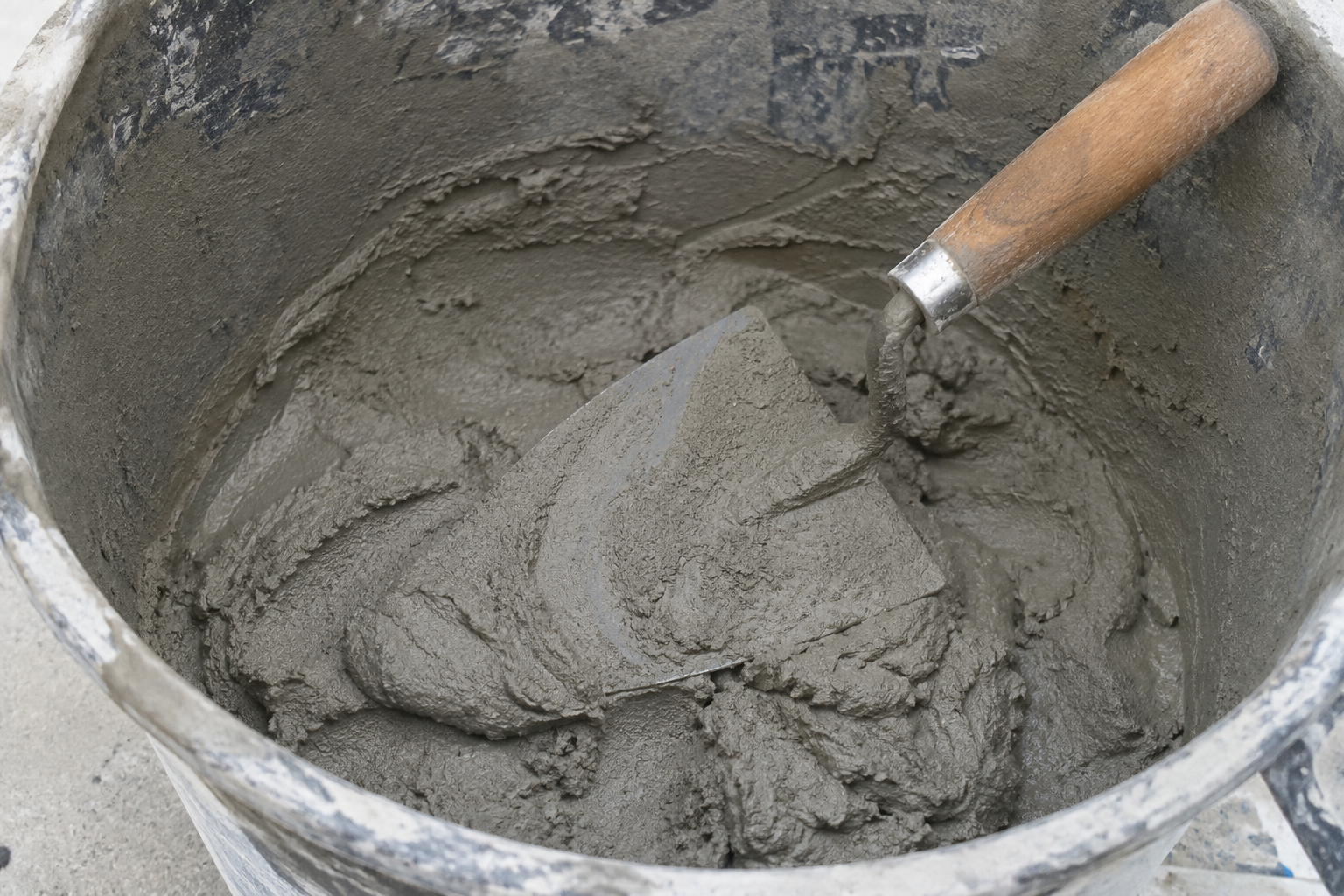
Concrete admixtures are materials added to concrete during mixing in small quantities to modify concrete properties in fresh or hardened states. They can alter setting time, workability, water content requirements, air content, and other characteristics without changing the basic composition.
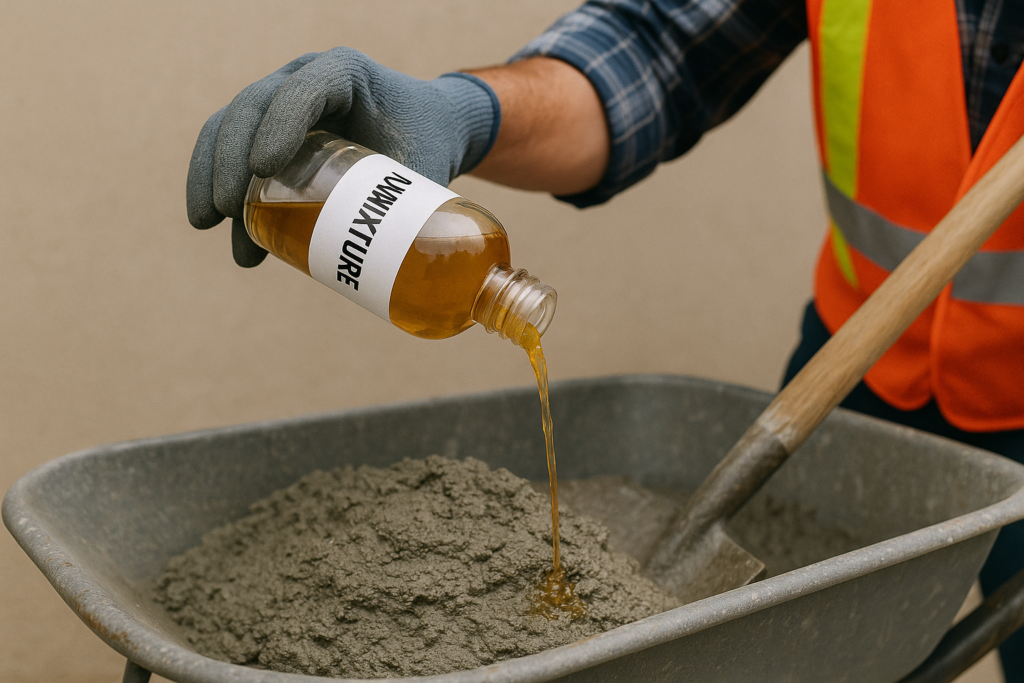
Admixtures work by changing the chemical and physical interactions between cement and water. From my experience at Kehao, I've observed how these additives transform ordinary concrete into high-performance material.
Let me break down the main categories of concrete admixtures:
Types of Concrete Admixtures
| Type | Function | Common Examples |
|---|---|---|
| Water Reducers | Decrease water content while maintaining workability | Hydroxypropyl methylcellulose, lignosulfonates |
| Air Entrainers | Introduce tiny air bubbles for freeze-thaw resistance | Fatty acid salts, wood resins |
| Accelerators | Speed up setting time | Calcium chloride, triethanolamine |
| Retarders | Slow setting time | Sugar, hydroxylated carboxylic acids |
| Superplasticizers | Dramatically increase workability | Modified lignosulfonates, polycarboxylates |
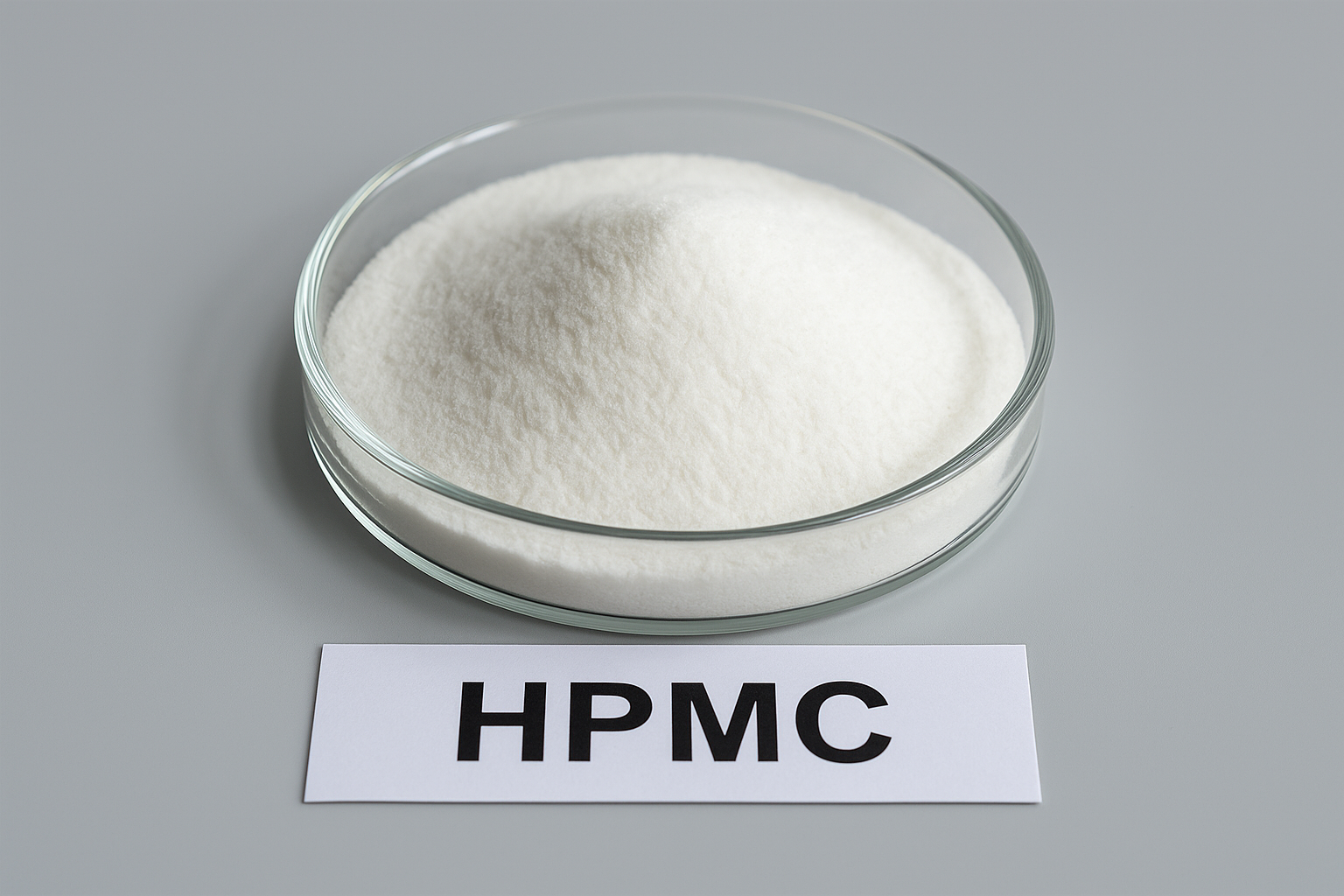
I once visited a project in Saudi Arabia where the extreme heat caused concrete to set too quickly. By introducing a retarding admixture containing our specially formulated hydroxypropyl methylcellulose2, we extended the working time by 2 hours, allowing proper placement and finishing. This highlights how crucial understanding admixture types is for successful concrete applications in challenging environments.
Why is Admixture Used in Concrete?
Have you ever wondered why your concrete supplier insists on using these additives? Many builders question if they really need them or if they're just an unnecessary expense.
Admixtures are used in concrete to improve workability, increase strength, control setting time, enhance durability, reduce water content, improve finish appearance, and overcome difficult construction conditions like extreme temperatures. They help achieve concrete properties that would be impossible with basic ingredients alone.
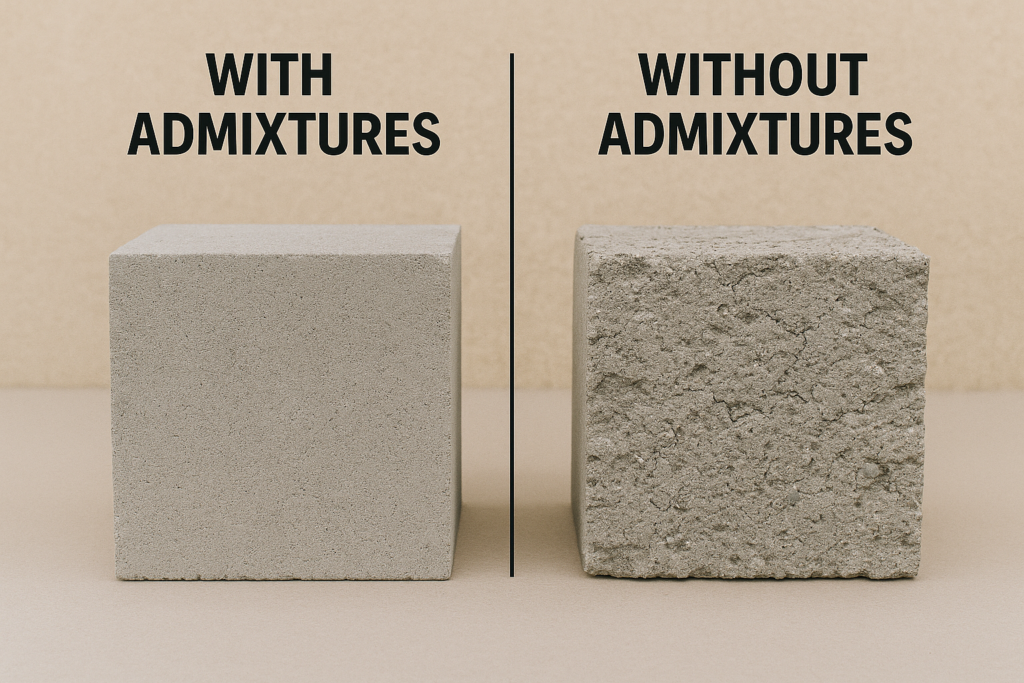
The benefits of concrete admixtures extend far beyond basic performance enhancements. In my years at Kehao, I've seen countless projects transformed by the strategic use of admixtures.
Key Benefits of Concrete Admixtures
When properly selected and dosed, admixtures can solve numerous concrete challenges. One notable example was when we helped a major construction project in UAE. The client was experiencing rapid water evaporation due to the hot climate, resulting in surface cracking. By incorporating our water-retaining hydroxypropyl methylcellulose admixture, they achieved a 40% reduction in surface cracking.
Admixtures also provide significant economic benefits. For instance, water-reducing admixtures typically reduce cement content by 5-10% while maintaining strength, resulting in substantial cost savings on large projects. Our redispersible latex powder has helped clients reduce cement content while actually improving flexural strength.
Environmental benefits shouldn't be overlooked either. By optimizing cement usage (cement production being a major carbon dioxide source), admixtures contribute to greener construction. One of our clients in Brazil reduced their carbon footprint by 15% through optimized admixture usage.
Best Admixture for Concrete
Are you overwhelmed by the countless admixture options available? Many contractors waste money on inappropriate products because they don't know which one best suits their specific needs.
The best admixture for concrete depends on project requirements. For general strength improvement, polycarboxylate-based superplasticizers work well. For durability in freeze-thaw conditions, air-entraining agents are essential. For hot weather, retarders containing hydroxypropyl methylcellulose2 provide optimal working time.
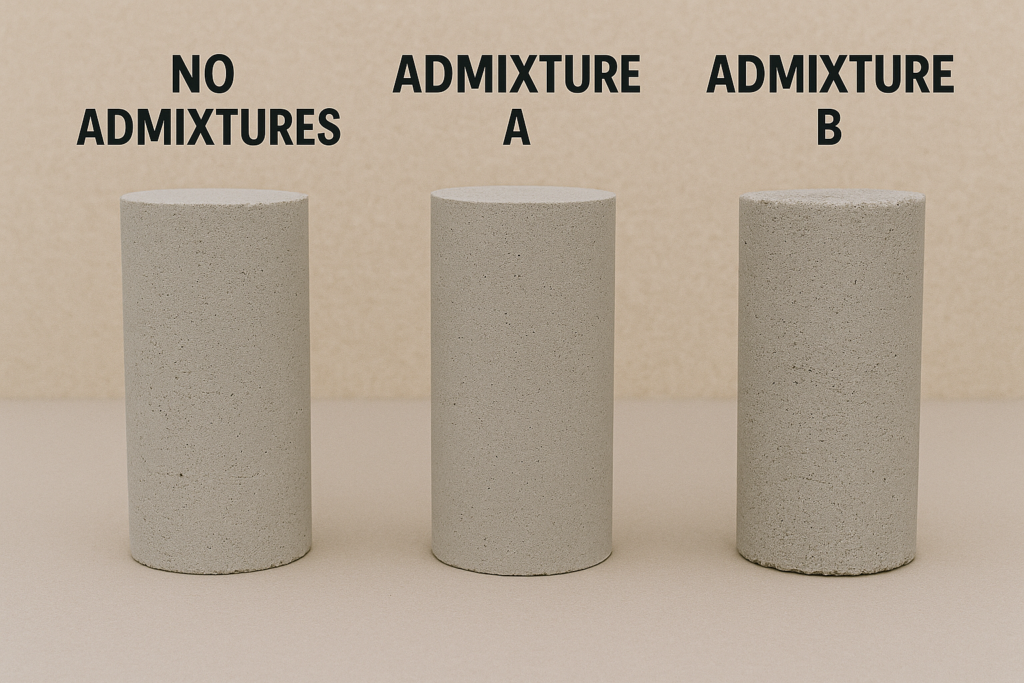
Selecting the right admixture requires considering multiple factors including climate conditions, concrete application, and desired properties. At Kehao, we've developed a systematic approach to admixture selection.
Selecting the Optimal Admixture
The "best" admixture is always project-specific. To illustrate this point, I'll share a systematic selection process we use with our clients:
- Define Performance Requirements: First, identify what properties you need to enhance (strength, workability, setting time, etc.)
- Consider Environmental Conditions: Temperature, humidity, and exposure conditions greatly affect admixture choice
- Evaluate Compatibility: Not all admixtures work well together or with certain cement types
- Test Before Full Implementation: Always conduct trial mixes
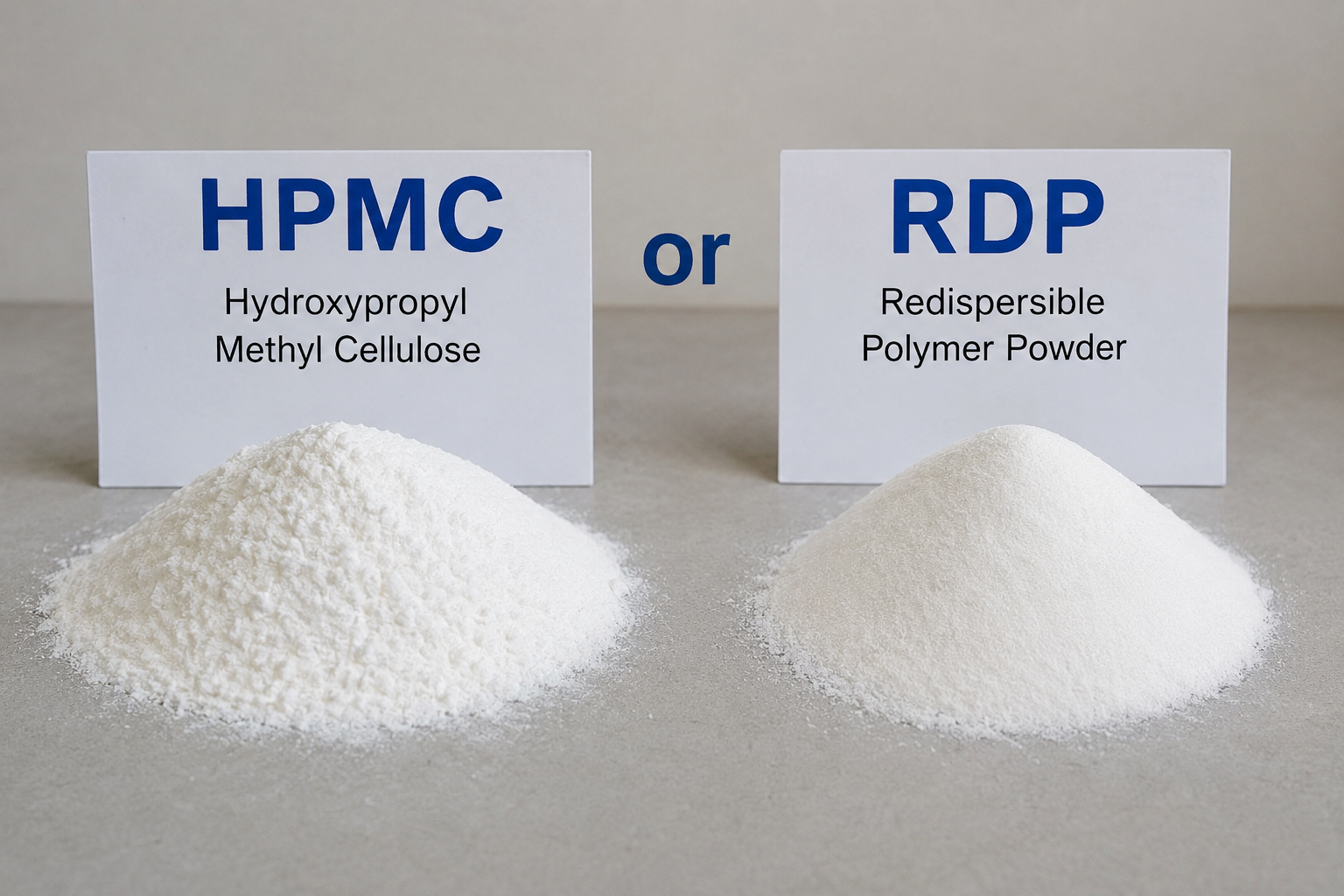
I worked with a major mortar factory in Pakistan that was struggling with their product cracking in dry conditions. After testing several options, we found that a combination of our hydroxyethyl methylcellulose for water retention and redispersible latex powder for flexibility provided the optimal solution, reducing cracking by 85%.
For high-strength applications, superplasticizers remain the gold standard. However, for general construction in developing regions where we operate, well-formulated water reducers offer the best value proposition, improving both workability and strength while remaining economical.
What is the Code for Concrete Admixture?
Does deciphering admixture specifications feel like reading a foreign language? Many builders get confused by the technical codes and standards governing these products.
Concrete admixtures are governed by standards like ASTM C494 (chemical admixtures), ASTM C260 (air-entraining admixtures), and EN 934 (European standards). These codes classify admixtures by type (A through G) based on their effects and establish performance requirements for each category.
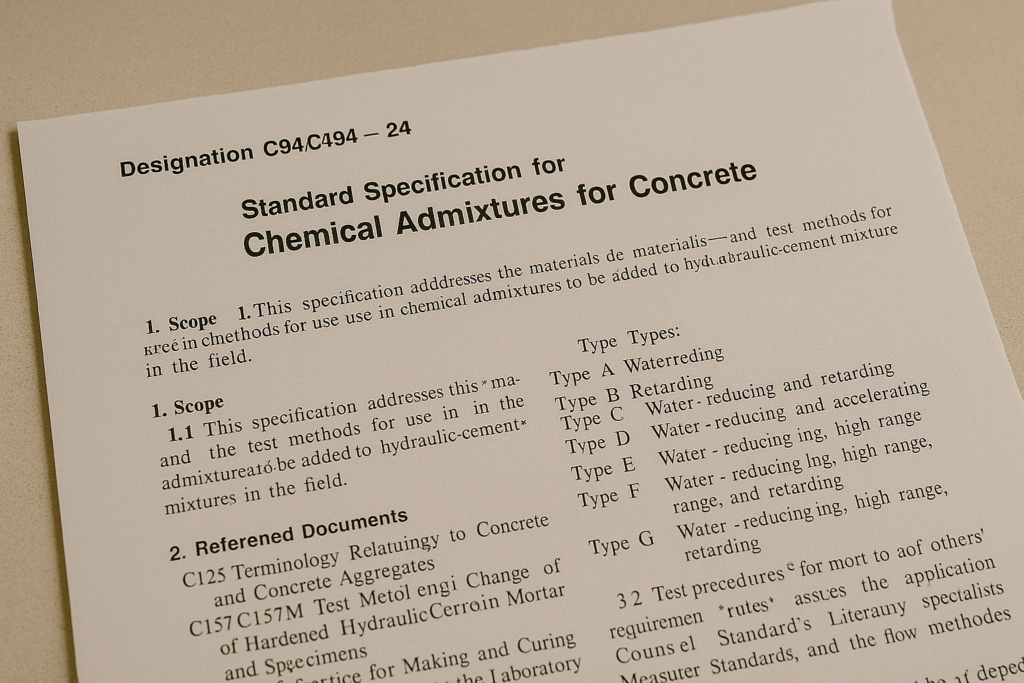
Understanding admixture codes is essential for ensuring product quality and performance. Through my work with international clients, I've become familiar with the major standards systems.
Key Admixture Standards and Classifications
The ASTM C494 classification system is particularly important as it provides a standardized way to categorize chemical admixtures:
| ASTM Type | Description |
|---|---|
| Type A | Water-reducing admixtures |
| Type B | Retarding admixtures |
| Type C | Accelerating admixtures |
| Type D | Water-reducing and retarding admixtures |
| Type E | Water-reducing and accelerating admixtures |
| Type F | High-range water-reducing admixtures |
| Type G | High-range water-reducing and retarding admixtures |
| Type S | Specific performance admixtures |
Beyond ASTM, there are other important standards. For example, in the Middle East, many of our customers require SASO (Saudi Standards) compliance, while European exports must meet EN 934 requirements.
I recently helped a client in Georgia navigate certification requirements. Their project specifications referenced ASTM standards, but local regulations required compliance with regional standards. We provided comprehensive documentation showing how our hydroxypropyl methylcellulose-based admixtures met both standards, enabling them to satisfy all parties involved in the project.
How to Add Admixture in Concrete?
Are you worried about wasting expensive admixtures through improper dosing? Many contractors compromise concrete quality through incorrect admixture addition methods.
Admixtures should typically be added after the initial mixing of cement and water. Liquid admixtures are usually dosed with the mixing water, while powders like hydroxypropyl methylcellulose should be pre-dispersed before adding. Always follow manufacturer instructions for timing, dosage rates, and mixing duration.
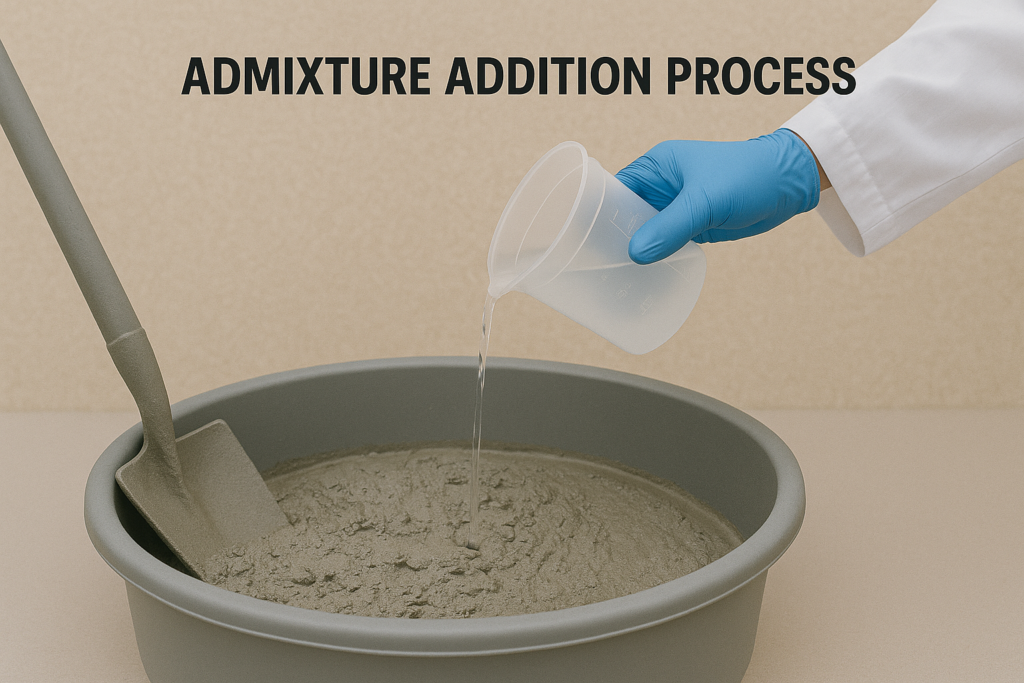
Proper admixture addition significantly impacts concrete performance. In my work with construction companies across developing markets, I've identified several critical factors for successful admixture incorporation.
Best Practices for Admixture Addition
The sequence of addition matters tremendously. From numerous field experiences, I've observed that adding certain admixtures at the wrong time can neutralize their effectiveness or even damage concrete properties.
For powder admixtures like our hydroxypropyl methylcellulose and redispersible latex powder, pre-dispersion is crucial. One of our clients in Vietnam was experiencing inconsistent results until we discovered their mixing procedure was causing clumping. By implementing a pre-dispersion step where the powder was mixed with a portion of the mix water before adding to the batch, they achieved uniform distribution and consistent results.
Temperature also affects admixture performance. In colder regions like parts of Georgia in winter, dosage rates may need adjustment. We typically recommend increasing dosages by 10-15% when mixing in temperatures below 10°C.
Compatibility between multiple admixtures requires attention too. For instance, air-entraining agents should generally be added before water reducers. When one client in Mexico combined our carboxymethyl cellulose with a third-party superplasticizer, they experienced setting issues until we adjusted the addition sequence.
Conclusion
Choosing the right concrete admixture makes all the difference between a successful project and costly failures. By understanding what admixtures are, why they're used, which ones work best, what standards apply, and how to add them correctly, you'll achieve superior concrete performance.