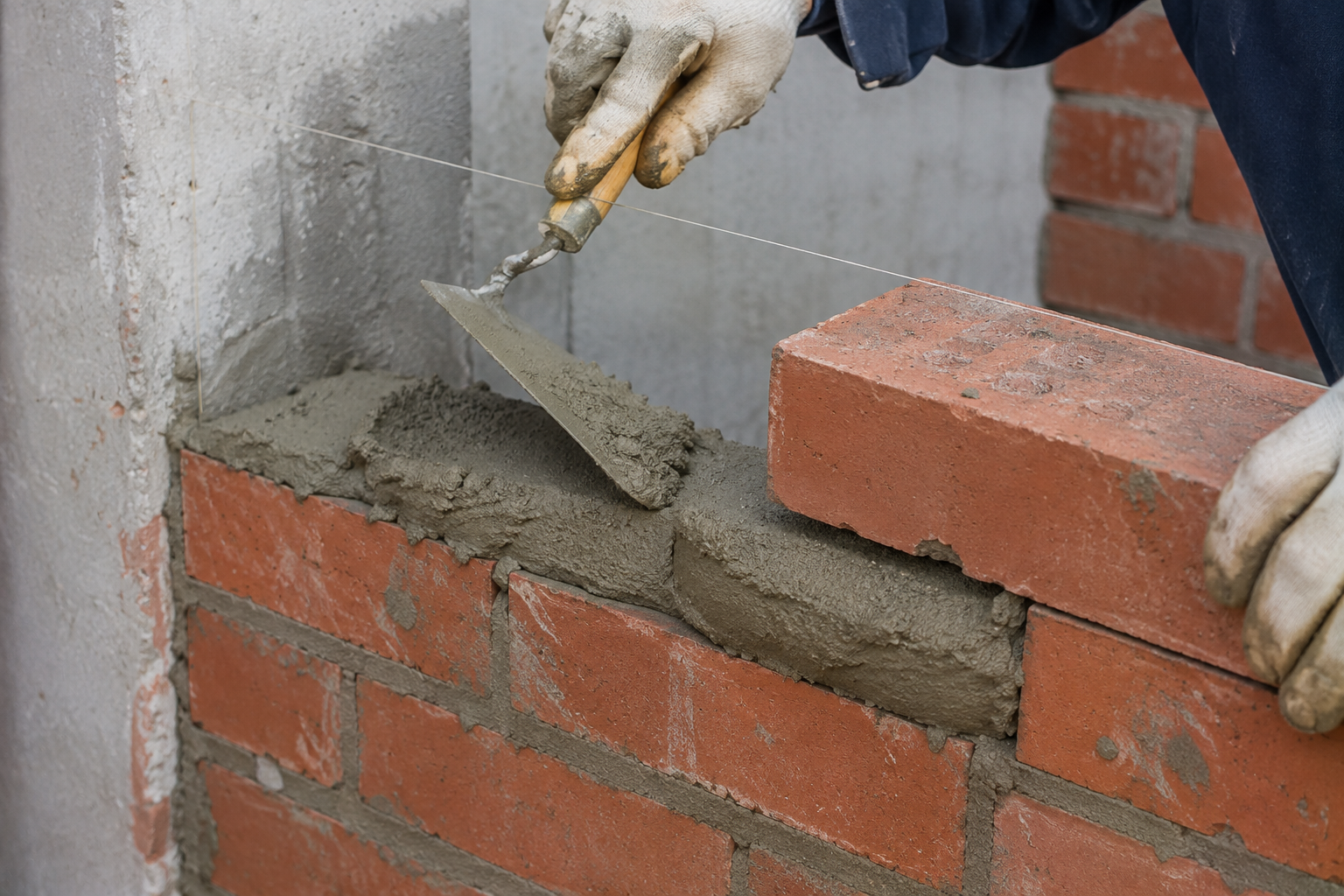
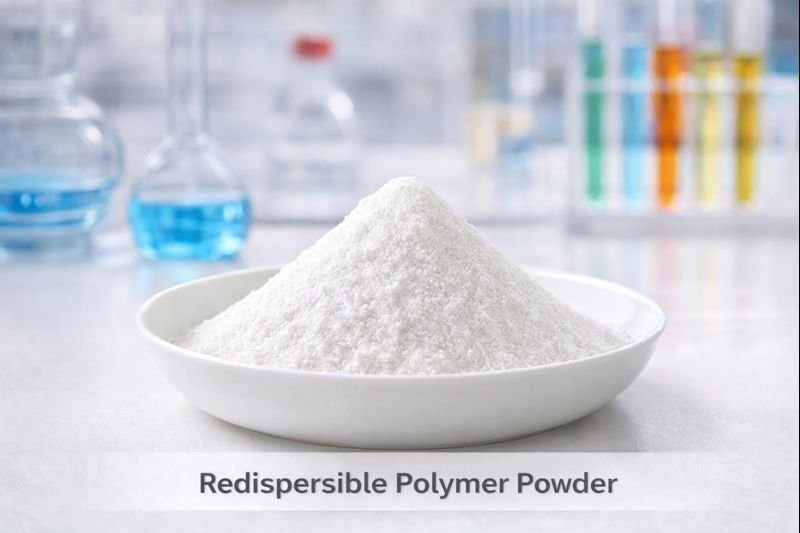
Are you struggling with mortar that cracks and fails too soon? Regular mortar just doesn't hold up under stress, causing costly repairs and safety concerns. High-strength needs demand better solutions.
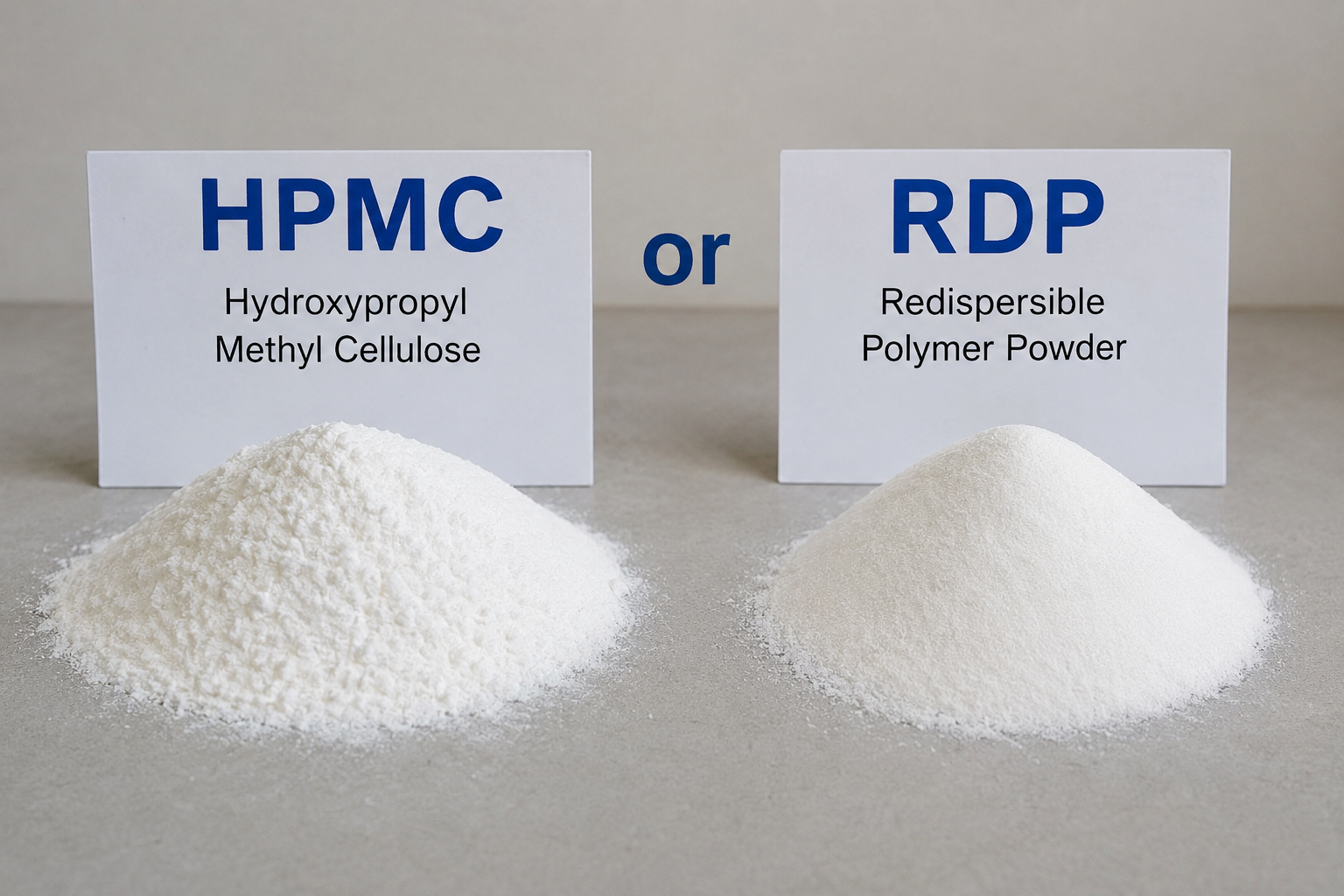
Redispersible Polymer Powder (RDP)1 transforms ordinary mortar into high-performance material by creating a flexible polymer network within cement's rigid structure. This network dramatically improves bond strength, flexibility, and crack resistance while enhancing durability against water and environmental damage.
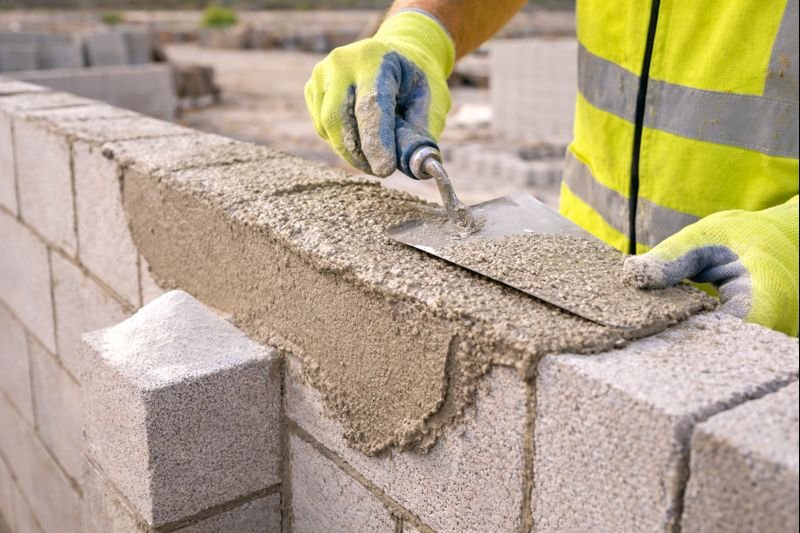
I remember visiting a construction site last year where they were replacing mortar that had failed after just two years. The project manager was frustrated because they had used standard mortar for a high-traffic area. This is a common problem I see in many developing markets. Let me share why RDP is worth the investment for your high-strength mortar needs.
What Key Benefits Does RDP Bring to High-Strength Mortar?
Pain point: Traditional mortars often fail under load, temperature changes, and vibration. This leads to cracking, debonding, and expensive repairs that hurt your reputation and bottom line.
RDP creates a flexible polymer film inside mortar that works alongside cement's rigid structure. This dual-network system increases bond strength by 200-300%, improves flexibility by absorbing mechanical stress, enhances water resistance, and prevents cracking from thermal expansion.
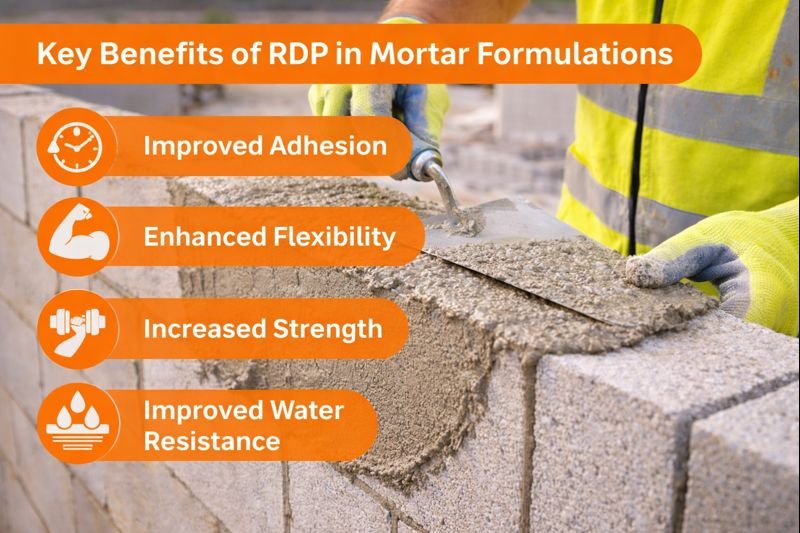
RDP's key benefits go beyond just making mortar "harder." In fact, that's a misconception many of my clients initially have about polymer modification. What RDP actually does is introduce what I call a "flexible skeleton" within the rigid cement structure.
Understanding the Strength-Flexibility Balance
When developing high-performance mortars, focusing solely on compressive strength can lead to brittle materials. RDP helps balance strength with necessary flexibility. The polymer film forms a three-dimensional network throughout the mortar matrix, creating micro-bridges between cement particles and aggregates.
| Property | Standard Mortar | RDP-Modified Mortar |
|---|---|---|
| Tensile Bond Strength | 0.5-1.0 MPa | 1.5-3.0 MPa |
| Flexural Strength | 3-5 MPa | 5-10 MPa |
| Water Absorption | High | Reduced by 40-60% |
| Crack Resistance | Poor | Excellent |
I've tested numerous formulations in our lab, and the results consistently show that adding just 2-5% RDP dramatically transforms mortar performance. One customer in Saudi Arabia switched to our RDP-modified formulation for their exterior rendering mortar and reported an 80% reduction in callback repairs related to cracking and debonding after one year.
How Does RDP Work in High-Strength Mortar?
Pain point: Understanding the science behind performance additives can be confusing. Without knowing how RDP functions, you might use incorrect amounts or wrong types for your specific application.
When water is added to mortar containing RDP, the polymer particles redisperse into tiny droplets that form a continuous film throughout the cement matrix as water evaporates. This film creates elastic bridges between cement particles that flex under stress while maintaining structural integrity.
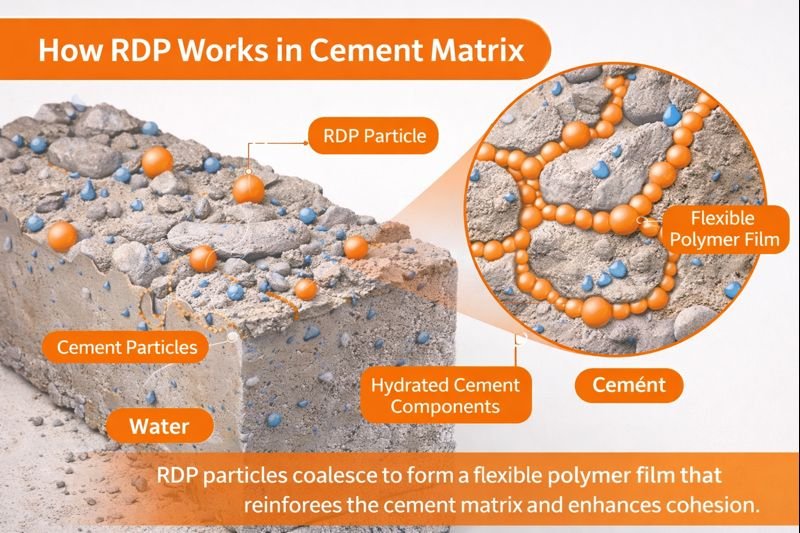
The functioning of RDP in cement systems fascinates me because it's such an elegant solution to mortar's inherent brittleness. When we add water to the dry mix, the previously dried polymer particles "wake up" and redisperse into a polymer emulsion again – hence the name "re-dispersible."
The Film-Formation Process
What happens next is crucial for understanding RDP's effectiveness. As the mortar cures and water evaporates, these tiny polymer particles gradually come closer together, eventually joining to form a continuous polymer network throughout the cement matrix. This process occurs in several stages:
- Redispersion: Polymer particles separate and distribute evenly throughout the mix
- Water Removal: As cement hydrates and water evaporates, polymer particles move closer
- Particle Deformation: Particles deform and begin connecting
- Film Formation: A continuous polymer network develops
This polymer network doesn't replace cement's function – instead, it complements it. While cement provides compression strength and rigidity, the polymer network provides tensile strength and flexibility. I like to explain to customers that it's like reinforcing concrete with steel – each material contributes different but complementary properties.
In our testing facility, we've used electron microscopy to visualize this polymer film. The images clearly show how the polymers create bridges across microcracks, preventing them from propagating into larger structural failures. This explains why RDP-modified mortars can withstand movement from thermal cycling, building settlement, and vibration much better than standard mortars.
How Should You Select RDP for High-Strength Applications?
Pain point: With so many RDP options available, choosing the wrong type can waste money and result in poor performance. Different applications need specific polymer properties.
Select RDP based on your application requirements: use vinyl acetate/ethylene copolymers for general-purpose needs, vinyl acetate/ethylene/vinyl versatate for water resistance, and acrylic-based RDPs for extreme conditions. Consider particle size (50-80μm), glass transition temperature, and additives like anti-foaming agents.
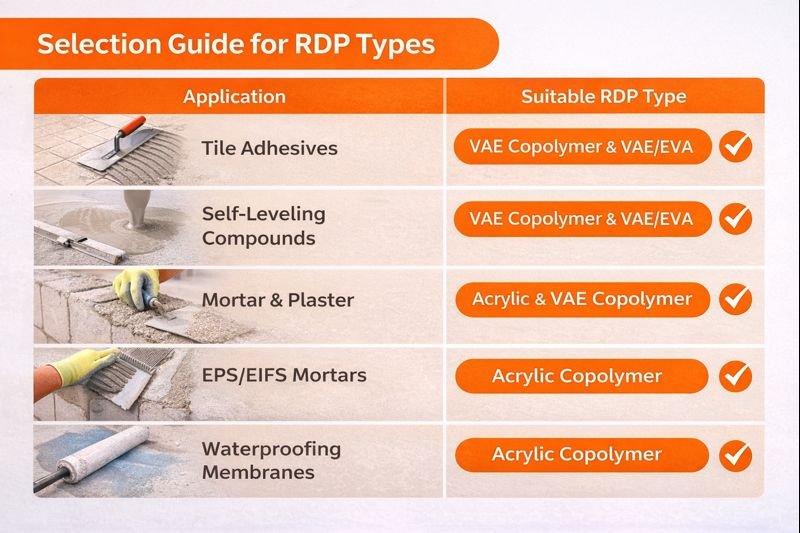
Selecting the right RDP for your specific project is critical for achieving optimal performance, and I've helped hundreds of clients make this decision. Based on my experience, there are several key factors you should consider:
Critical Selection Criteria for High-Strength Applications
The RDP market offers diverse options, but for high-strength mortar applications, these factors matter most:
| Selection Factor | Why It Matters | Recommendation |
|---|---|---|
| Polymer Base | Determines basic properties | VAE/VeoVa for exterior use, VAE for interior, Acrylic for extreme conditions |
| Particle Size | Affects dispersion quality | 50-80μm for most applications |
| Glass Transition Temperature (Tg) | Controls flexibility at service temperature | -5°C to +5°C for flexible mortars, higher for rigid applications |
| Protective Colloids | Influences redispersibility | PVOH-protected grades for general use |
| Ash Content | Affects cement hydration | <2% for high-strength applications |
I remember consulting with a large mortar manufacturer in Dubai who was experiencing inconsistent performance in their exterior tile adhesive. After analyzing their formulation, I discovered they were using a standard VAE polymer with insufficient hydrophobic properties. By switching to a VAE/VeoVa copolymer with a lower Tg value, they achieved both the flexibility and water resistance needed for the extreme desert temperature cycles.
Another important consideration is dosage level. While small amounts (1-3%) can provide basic improvements, high-strength applications typically require 3-7% RDP by weight of the dry mix. Above 7%, cost-effectiveness diminishes, and other properties like setting time might be adversely affected.
What are the advantages of polymer modified cementitious mortar?
Pain point: Standard mortars have fundamental limitations in demanding applications, leading to system failures, water damage, and poor durability in extreme environments.
Polymer modified cementitious mortars outperform standard formulations with 3-5 times greater adhesion to difficult substrates, 40-60% reduced water permeability, increased freeze-thaw resistance, and improved flexibility that prevents cracking from building movement and temperature fluctuations.
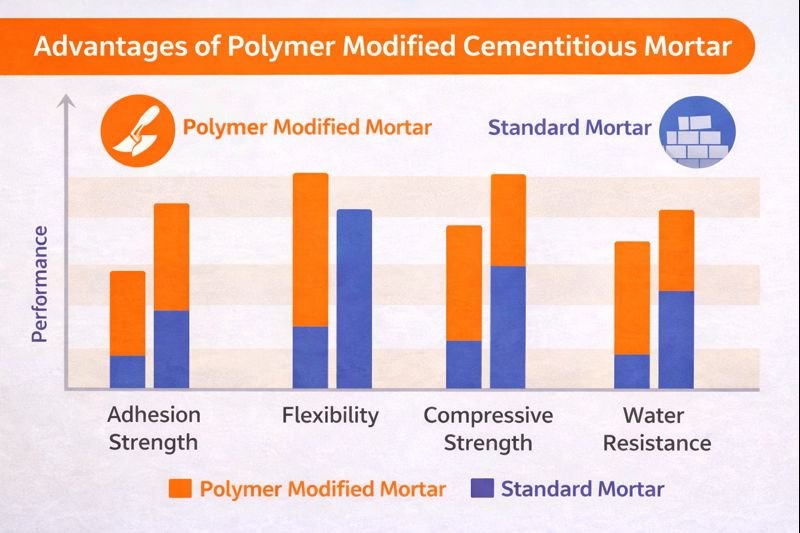
The advantages of polymer modified cementitious mortars extend far beyond simple strength enhancement. This is something I emphasize whenever I conduct technical seminars for our customers. Traditional cementitious mortars have served the construction industry for centuries, but they have inherent limitations that polymer modification addresses directly.
Performance Advantages in Real-World Applications
Polymer modification transforms ordinary mortar into a high-performance building material suitable for modern construction demands. Here's how these advantages translate to different applications:
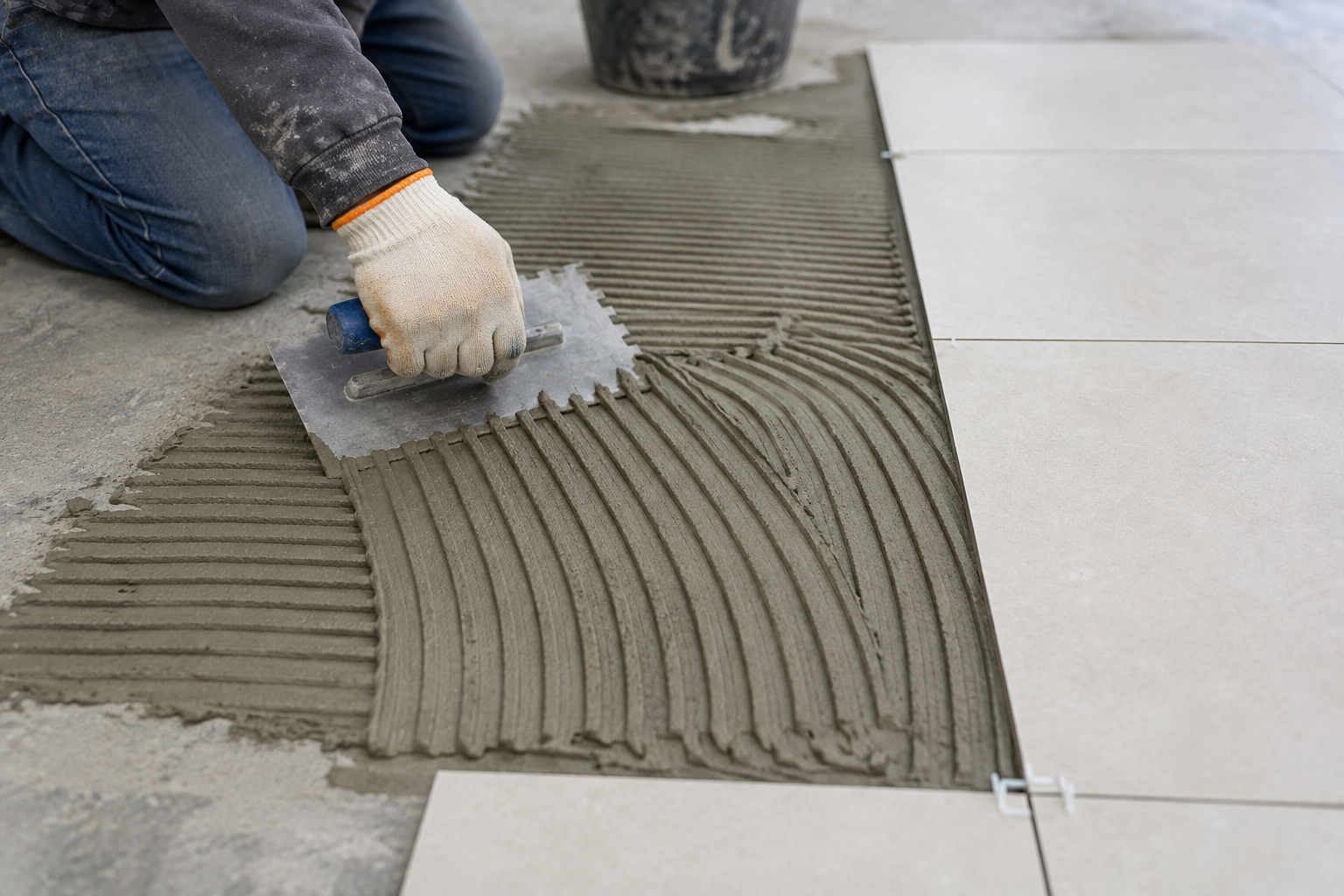
For Tile Adhesives:
- Enhanced adhesion: Achieves bond strengths exceeding 2 MPa even on difficult surfaces like existing tiles or smooth concrete
- Reduced slip: Improves vertical hold of heavy tiles
- Extended open time: Gives installers more working time without performance loss
For Self-Leveling Compounds:
- Improved flow properties: Creates smoother surfaces with less effort
- Reduced shrinkage: Minimizes cracking during curing
- Better substrate wetting: Ensures complete contact with the substrate
For Exterior Insulation and Finish Systems (EIFS):
- Weather resistance: Withstands rain, UV exposure, and temperature fluctuations
- Impact resistance: Reduces damage from hail and physical impacts
- Flexibility: Accommodates substrate movement without cracking
I've seen particularly dramatic results in renovation projects. Last year, I advised a client in Iran who was facing persistent failures with mortar applied over existing painted surfaces in a hospital renovation. By incorporating our RDP into their formulation, their adhesion values increased from 0.3 MPa to over 1.5 MPa, completely eliminating the callback issues they had been experiencing.
The durability advantage cannot be overstated. In accelerated aging tests we conducted, standard mortars showed significant deterioration after equivalent 5-year exposure cycles, while polymer modified versions retained over 85% of their original properties. This translates directly to longer service life and reduced maintenance costs for building owners.
Conclusion
RDP transforms ordinary mortar into high-performance material2 by creating a flexible polymer network within cement's rigid structure, dramatically improving bond strength, flexibility, and durability – essential benefits for demanding modern construction applications.