Ever noticed how some buildings look plain gray while others shine with pristine white finishes? The secret lies in cement choice. Builders face this decision daily, but many don't understand the crucial differences that impact both appearance and budget.
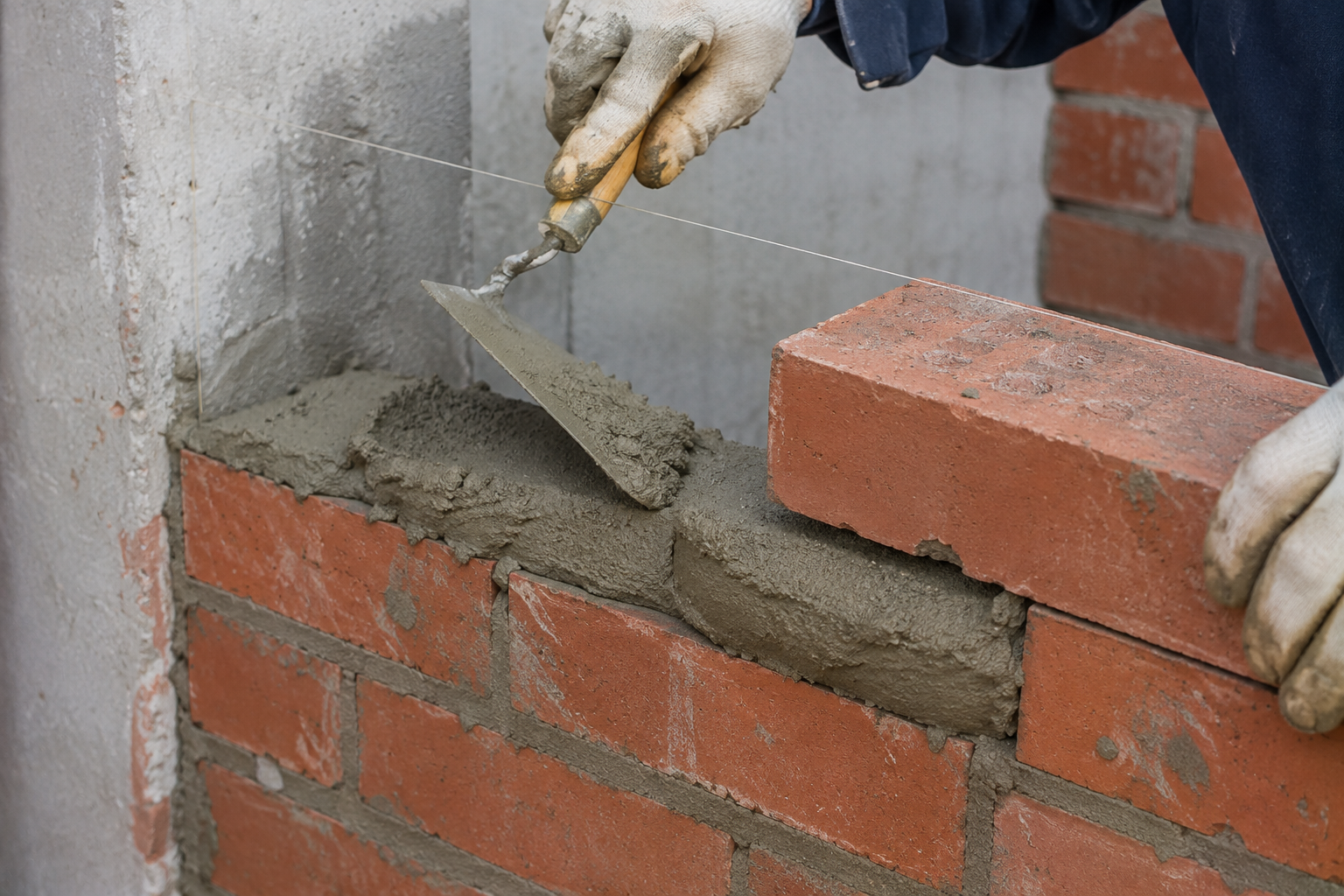
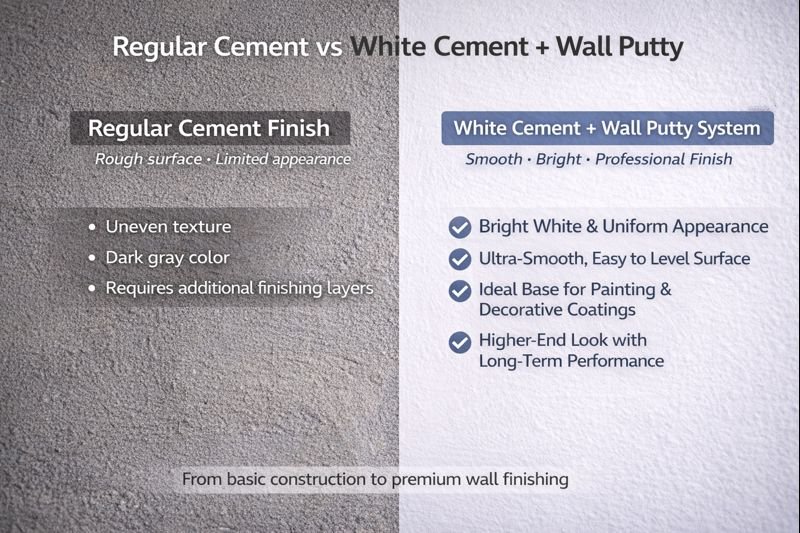
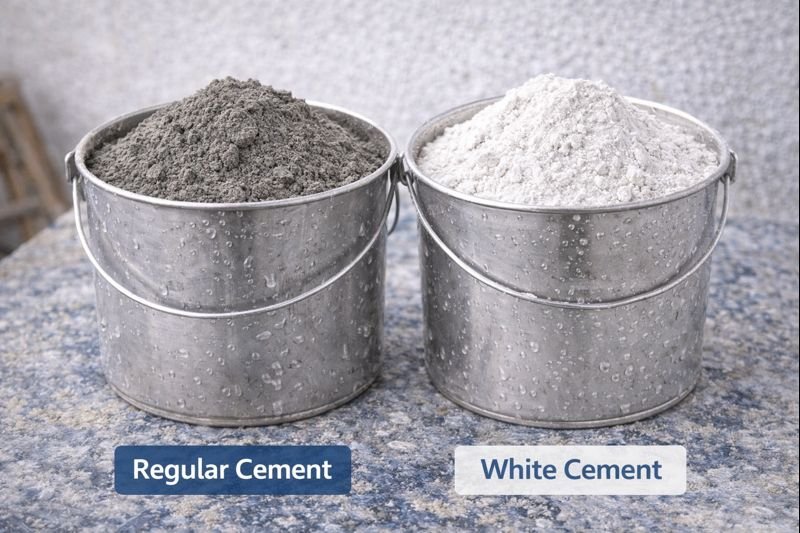
The main difference between regular and white cement is their raw materials. Regular cement contains iron and manganese oxides creating its gray color for structural applications1, while white cement uses pure limestone with minimal oxides to produce a bright white finish ideal for decorative purposes, though at a higher cost.
I've been in countless situations where clients confused these materials, leading to costly mistakes. Let me break down the key differences so you can make better choices for your next construction project.
What is the Difference Between Cement and White Cement?
Pain point: Many builders waste money using expensive white cement where regular cement would work fine. Understanding their differences helps avoid this common mistake.
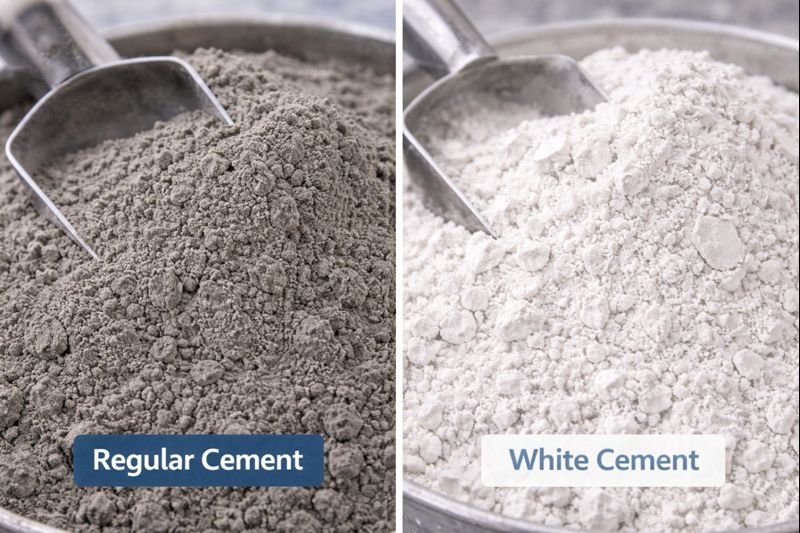
Regular cement is grayish due to iron and manganese oxide content in its raw materials, while white cement is manufactured using purer raw materials with minimal metal oxides. Regular cement is for structural work, while white cement excels in decorative applications where appearance matters.
Diving Deeper into Cement Types
The fundamental difference between these two cement types starts with their "birth" - their raw materials. Regular cement contains naturally occurring iron and manganese oxides that give it that characteristic gray color. White cement, however, undergoes a more selective production process using kaolin (pure clay) and limestone with extremely low iron content.
The production process also differs significantly. White cement manufacturing requires higher firing temperatures and more rapid cooling to prevent color contamination. We often explain to our customers that it's like comparing regular coffee to specialty coffee - the beans may be similar, but the processing makes all the difference.
This table helps illustrate the key differences:
| Property | Regular Cement | White Cement |
|---|---|---|
| Color | Gray | Bright white |
| Raw materials | Standard limestone, clay with iron/manganese oxides | Pure limestone, kaolin with minimal oxides |
| Main purpose | Structural applications | Decorative applications |
| Cost | Lower | 2-3 times higher |
| Production | Standard process | More refined process |
Can We Use White Cement as Normal Cement?
The question creates anxiety for many builders who wonder if they're using the right material. Using the wrong cement type can mean wasted money or compromised structural integrity.
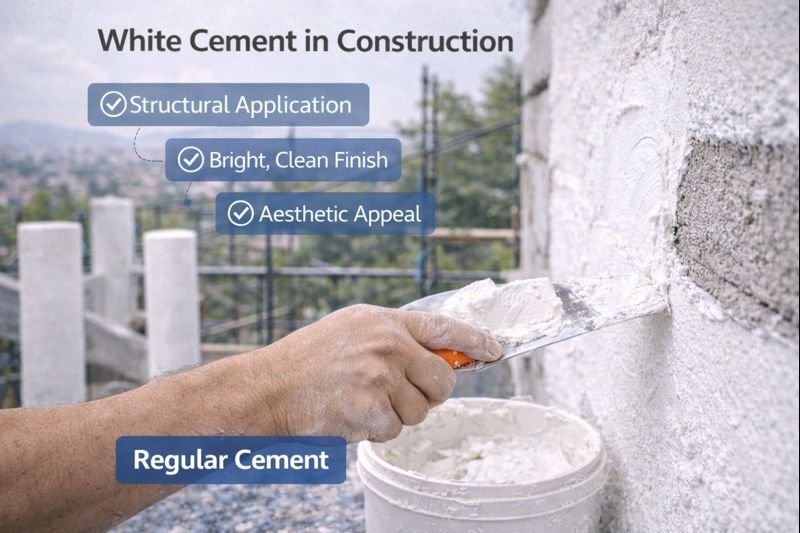
Yes, white cement can technically replace regular cement in most structural applications. It has comparable strength specifications to gray cement and contains the same basic ingredients. However, using white cement2 for standard construction is impractical and unnecessarily expensive.
Diving Deeper into Cement Interchangeability
While white cement can technically substitute for regular cement, there are practical considerations that make this swap rarely advisable. The strength profiles of both cements are comparable - both can achieve similar compressive strength values when properly mixed and cured. I've tested samples from both types in our lab, and the structural performance can be nearly identical.
However, the cost difference makes this substitution economically unsound for most projects. White cement typically costs 2-3 times more than regular cement due to its specialized manufacturing process and carefully selected raw materials. I recall a client who insisted on using white cement throughout a large commercial project - his budget nearly doubled just for raw materials!
The functional division between these cements is clear:
- Regular cement serves as the "skeleton" of construction - it handles structural integrity, load-bearing capacity, and durability
- White cement functions as the "skin" - focused on aesthetics, finish quality, and visual appeal
This table shows comparable applications:
| Application | Regular Cement | White Cement |
|---|---|---|
| Structural foundation | Ideal (cost-effective) | Possible but expensive |
| Concrete blocks | Standard choice | Unnecessarily expensive |
| Decorative elements | Poor aesthetic quality | Ideal |
| Exposed surfaces | Requires additional finishing | Perfect for visible applications |
What Are the Disadvantages of White Cement?
Contractors often face disappointment when white cement doesn't perform as expected. Without knowing its limitations, projects can go over budget or fail to meet expectations.
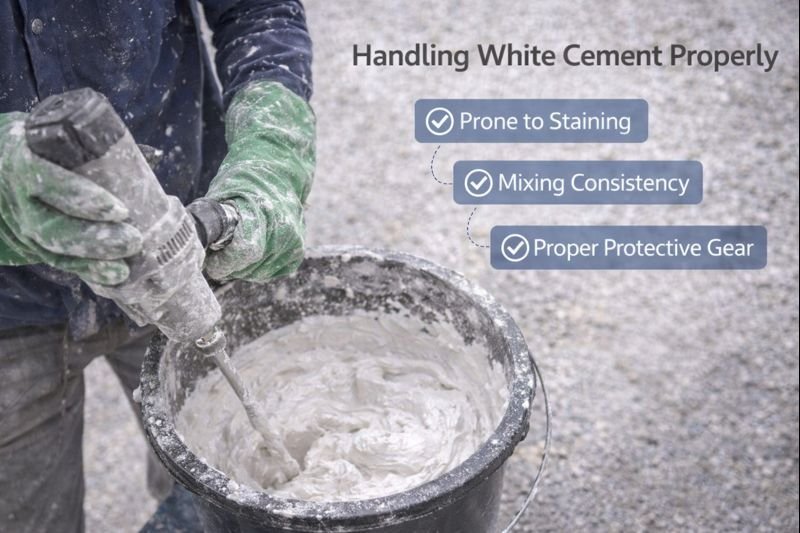
White cement's main disadvantages include significantly higher cost (2-3 times more than regular cement), limited availability, stricter handling requirements to maintain whiteness, and susceptibility to staining. It also requires more care during installation to preserve its aesthetic advantages.
Diving Deeper into White Cement Limitations
Despite its beauty, white cement comes with several drawbacks that make it impractical for everyday construction. The cost factor alone restricts its use to specific applications where aesthetics justify the premium price. I've advised many clients who initially wanted white cement throughout their projects to limit its use to visible decorative elements only.
Handling challenges present another significant disadvantage. White cement requires exceptionally clean mixing equipment, water, and aggregate to maintain its pristine appearance. Even minor contamination can result in discoloration. On job sites, I've seen entire batches rejected because equipment wasn't properly cleaned between uses.
Maintenance also presents challenges. White cement surfaces show dirt, stains, and weathering more prominently than gray cement. This means additional long-term costs for cleaning and maintenance. One of my clients built a white decorative wall along a busy road, only to discover he needed quarterly professional cleaning to maintain its appearance.
The availability of white cement can also be problematic in some markets. While regular cement is universally available, white cement often requires special ordering, longer lead times, and sometimes import fees depending on your location. This can impact project timelines and planning.
| Disadvantage | Impact | Mitigation Strategy |
|---|---|---|
| Higher cost | Budget constraints | Limit use to visible areas only |
| Difficult handling | Potential discoloration | Use dedicated equipment for mixing |
| Maintenance issues | Ongoing expenses | Apply protective sealants |
| Limited availability | Project delays | Plan orders well in advance |
| Shows imperfections | Aesthetic disappointment | Hire experienced installers |
Why Is White Cement More Expensive?
The price difference between cement types often shocks buyers who haven't budgeted properly. Understanding the reasons behind the higher cost helps manage project expenses better.
White cement costs more because it requires purer raw materials with minimal iron content3, special manufacturing processes to prevent contamination, higher firing temperatures, and more controlled cooling. These factors, plus smaller production volumes, result in prices 2-3 times higher than regular cement.
Diving Deeper into White Cement Pricing
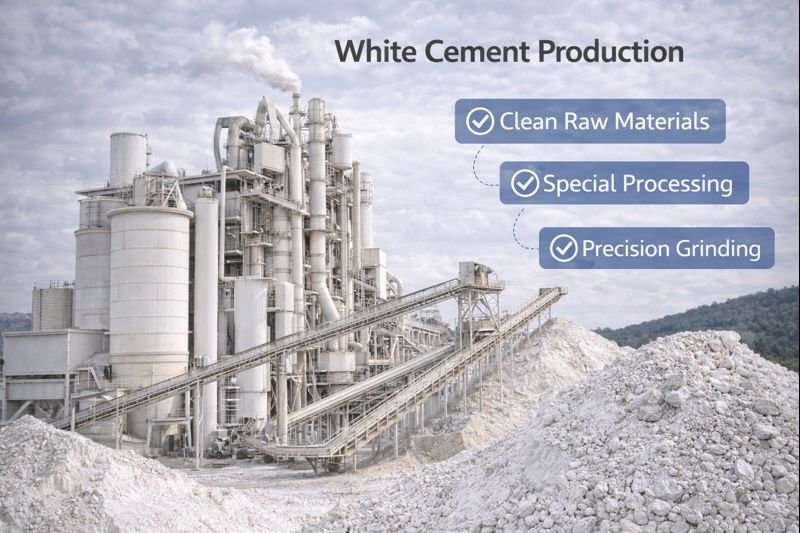
The premium price of white cement stems directly from its demanding production requirements. The entire manufacturing process must prioritize purity at every stage. During my visit to a white cement production facility last year, I was struck by how much more complex their operation was compared to standard cement plants.
The raw material selection process is particularly stringent. While regular cement can use widely available limestone and clay, white cement requires limestone and kaolin with iron oxide content below 0.4% (compared to 2-3% for regular cement). These materials are rarer and often must be sourced from specific quarries, increasing raw material costs significantly.
The production process itself requires additional steps. White cement kilns typically operate at higher temperatures (around 1450-1500°C versus 1400-1450°C for regular cement) and require specialized fuels to avoid introducing contaminants. The cooling process must also be more rapid and controlled to prevent color changes.
Quality control for white cement is extraordinarily rigorous. Each batch undergoes color analysis and testing that regular cement doesn't require. Rejected batches can't simply be recycled into the next production run as they might contaminate it, creating additional waste and cost.
Finally, white cement is produced in smaller volumes, meaning manufacturers can't achieve the same economies of scale as with regular cement. This table illustrates the key cost factors:
| Cost Factor | Regular Cement | White Cement |
|---|---|---|
| Raw material purity | Standard grade | Premium grade with low iron content |
| Production temperature | 1400-1450°C | 1450-1500°C |
| Quality control | Standard testing | Standard + color consistency testing |
| Production volume | High volume | Smaller specialized batches |
| Equipment | Standard | Specialized to prevent contamination |
| Fuel requirements | Standard | Premium fuels with low ash/residue |
Conclusion
Regular and white cement differ mainly in their raw materials and appearance - gray cement for structural strength and white cement for decorative finishes - with significantly different prices reflecting their specialized purposes.
-
Find out how regular cement is utilized in various structural applications for durability and strength. ↩
-
Discover the advantages of white cement, especially for decorative applications, and how it can enhance your projects. ↩
-
Understand the role of iron content in determining the color and properties of cement. ↩