Are your mortar joints cracking and failing? This wastes time and money. Here’s the secret to mixing mortar that achieves maximum strength for your projects.
For maximum strength, the best mortar mix is a Type M, typically using a 1:3 ratio of cement to sand. The key is controlling water content, aiming for a 0.5 to 0.6 water-to-cement ratio. Adding polymer additives can boost strength even further.
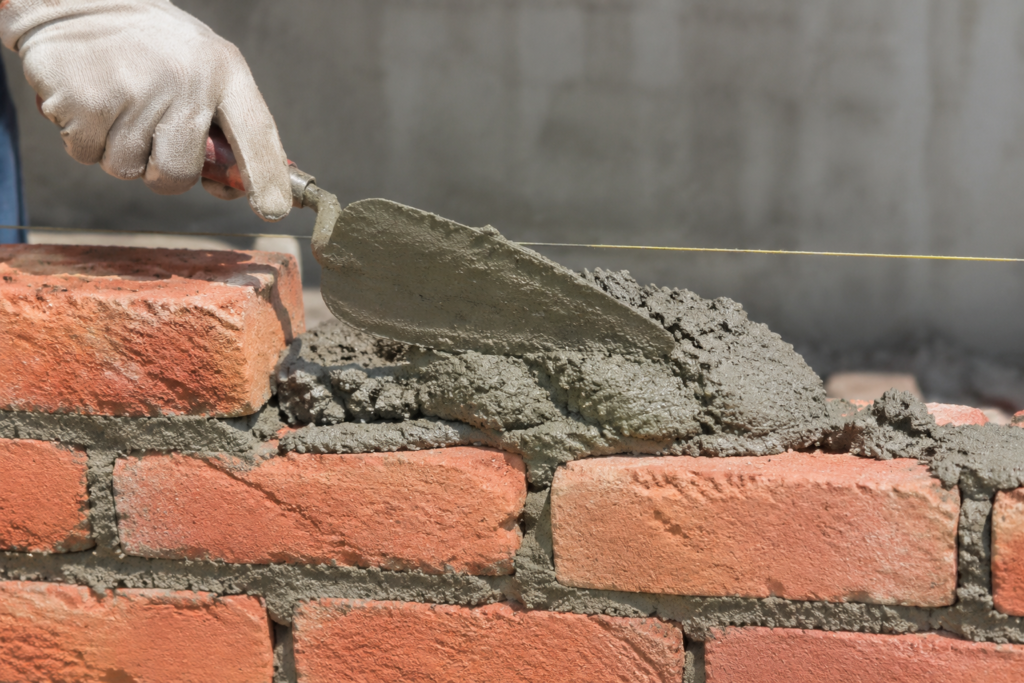
That ratio gives you a great start. But as any pro knows, the real difference between good and great mortar is in the details. I see this all the time with my clients, like Mark from Saudi Arabia. He needs high-strength mortar for his large paint factories, where quality is everything. Things like sand quality, climate, and special additives can make or break your final strength. Let’s break down exactly how you can guarantee your mortar is the strongest on the block, so you can build with confidence.
What is the Strongest Mortar Mix Type?
Choosing the wrong mortar type can be a disaster. A mix that is too weak will fail under load. Picking the right one ensures your structure stands strong for decades.
The strongest common mortar mix is Type M, with a compressive strength of over 2500 psi (17.2 MPa)1. It’s used for heavy load-bearing walls and foundations. For general high-strength use, Type S is also an excellent choice with at least 1800 psi strength.
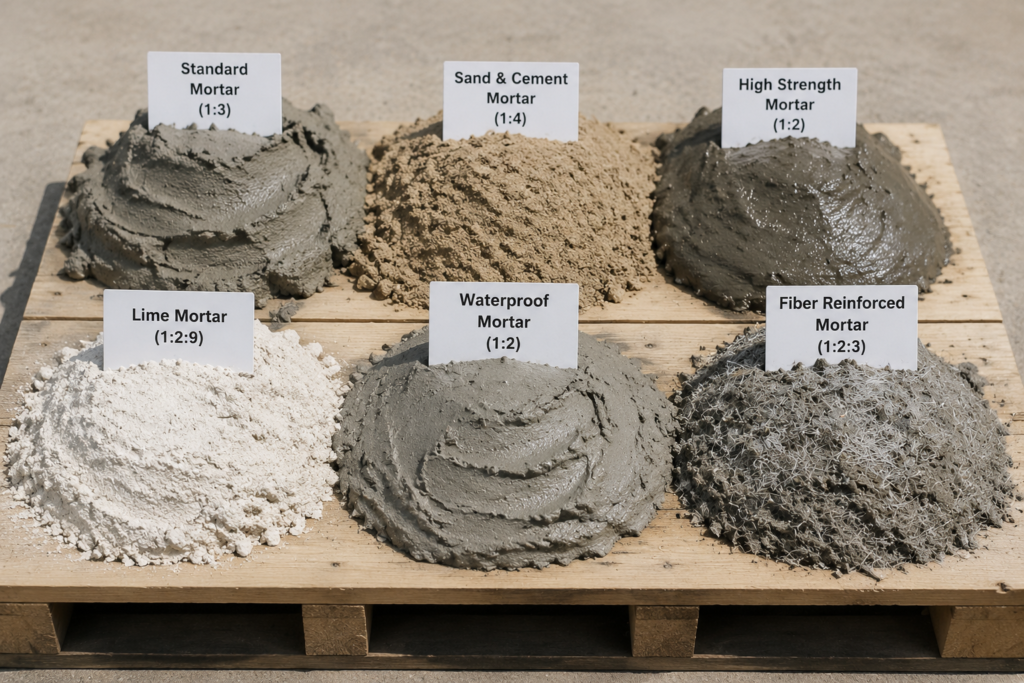
The strength of mortar is graded into different types. Understanding these types is the first step to choosing the right mix. For projects that demand the absolute highest strength, like foundations, retaining walls, or structures in seismic zones, Type M is the only choice. For most other structural work where high strength is still critical, Type S provides a perfect balance of strength and workability.
Here is a simple breakdown:
| Mortar Type | Minimum Strength (psi) | Typical Ratio (Cement:Lime:Sand) | Common Uses |
|---|---|---|---|
| Type M | 2500 psi (17.2 MPa) | 3 : 1 : 12 | Foundations, retaining walls, heavy loads |
| Type S | 1800 psi (12.4 MPa) | 2 : 1 : 9 | Structural walls, below-grade applications |
| Type N | 750 psi (5.2 MPa) | 1 : 1 : 6 | General above-grade exterior walls |
| Type O | 350 psi (2.4 MPa) | 1 : 2 : 9 | Interior, non-load-bearing walls |
When you see a ratio like 1 part cement to 3 parts sand, it’s specifying a mix designed for high strength, similar to Type M or S. This brings us to the next, most crucial part: the ratios themselves.
How Do Ratios and Water Content Affect Strength?
You followed the ratio, but the mortar is still weak. What went wrong? Often, the hidden killer of strength is something you thought was harmless: too much water.
The ideal ratio for strength is 1 part cement to 3 parts sand. Critically, the water-to-cement ratio should be between 0.5 and 0.62. Adding even a little too much water can decrease the final compressive strength by over 20%, ruining an otherwise perfect mix.
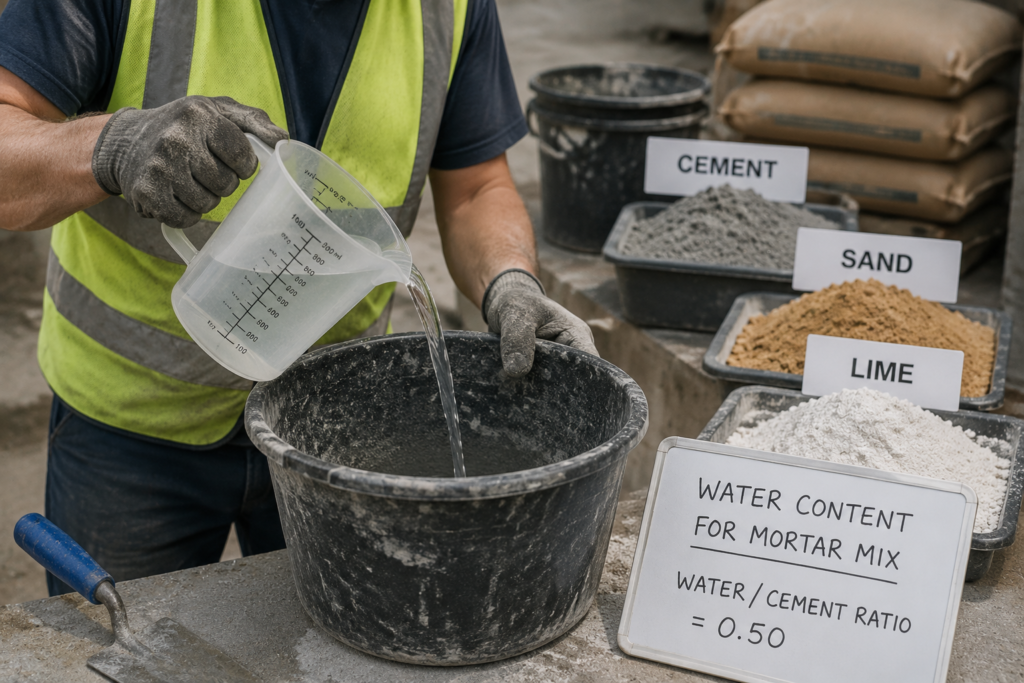
The 1:3 cement-to-sand ratio is a golden rule for high-strength mortar. Based on standards like ACI 530-22, this mix delivers a compressive strength of over 30 MPa. Some people might think a richer mix, like 1:2, would be stronger, but this is a mistake. It often causes shrinkage cracks. The key is just enough cement to bind the sand particles effectively.
Even more important is the water content. The chemical reaction that gives cement its strength, called hydration, requires a specific amount of water. We aim for a water-to-cement ratio of 0.5 to 0.6. This gives you a good workable slump of around 110mm. According to the USACE Concrete Field Manual, adding excess water creates voids in the cured mortar, which can cut strength by 20% or more. Remember, the quality of your local sand can also change how much water you need. You should always run a few small trial batches first.
How Can You Make Very Strong Mortar with Additives?
Your standard mortar mix is strong, but you need it to be exceptional. Your competitors are pushing boundaries. How do you gain a performance edge that wins bigger contracts?
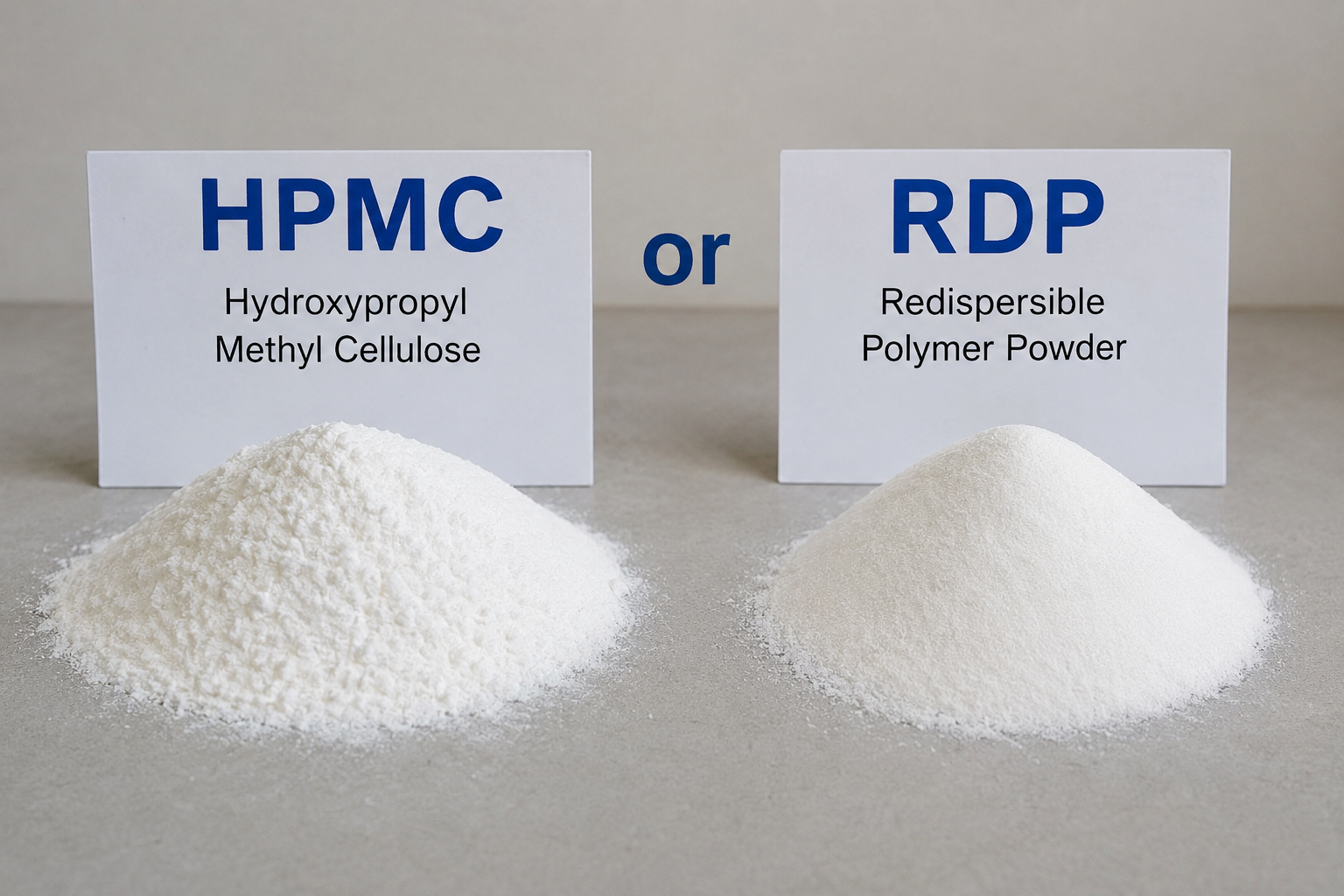
To make exceptionally strong mortar, use additives. Adding 0.5-1% of a polymer additive like our Redispersible Polymer Powder (RDP) can boost flexural strength by 40%. For extreme durability, especially in freeze-thaw cycles, adding silica fume is a professional secret for superior performance3.
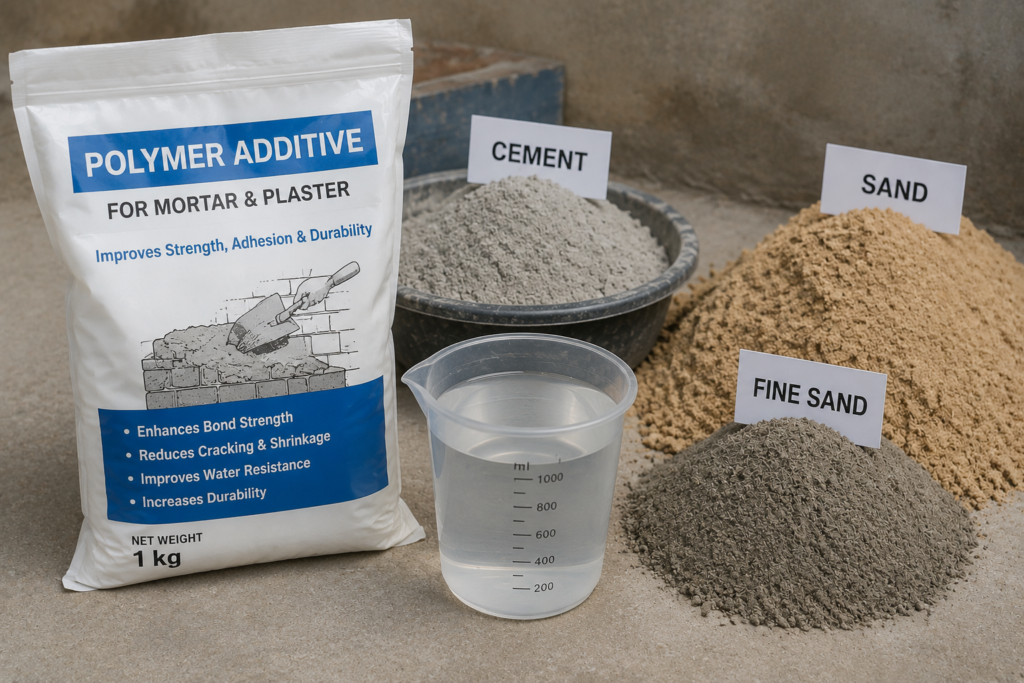
Once you have mastered the basic ratios, additives are how you take your mortar to the next level. At our Kehao factory, we specialize in these products. For example, adding Redispersible Polymer Powder (RDP) dramatically improves performance. Tests from leading manufacturers like BASF show that including just a small amount of SBR latex, a type of polymer, can increase flexural strength by 40%. This means the mortar is not just strong, but also less brittle and better at resisting cracks. Our RDPs provide similar benefits, creating a stronger bond and better water resistance.
For customers in very demanding climates, like an area with frequent freezing and thawing, I recommend another pro tip. Replace 10-15% of your cement with silica fume4. This industry secret significantly reduces the porosity of the mortar. A 2023 NIST durability study showed it can lower porosity by a factor of three, making the mortar far more resistant to water penetration and freeze-thaw damage.
Frequently Asked Questions About Mortar and Concrete Strength?
You see different ratios online and get confused. Is it for mortar or concrete? A simple mix-up here can lead to a complete structural failure. Let's clear this up.
Mortar and concrete are not the same. Mortar bonds masonry units like bricks, using fine sand. Concrete is a structural material itself, using coarse aggregate (gravel). Their mix ratios are not interchangeable and are designed for completely different purposes and strengths.
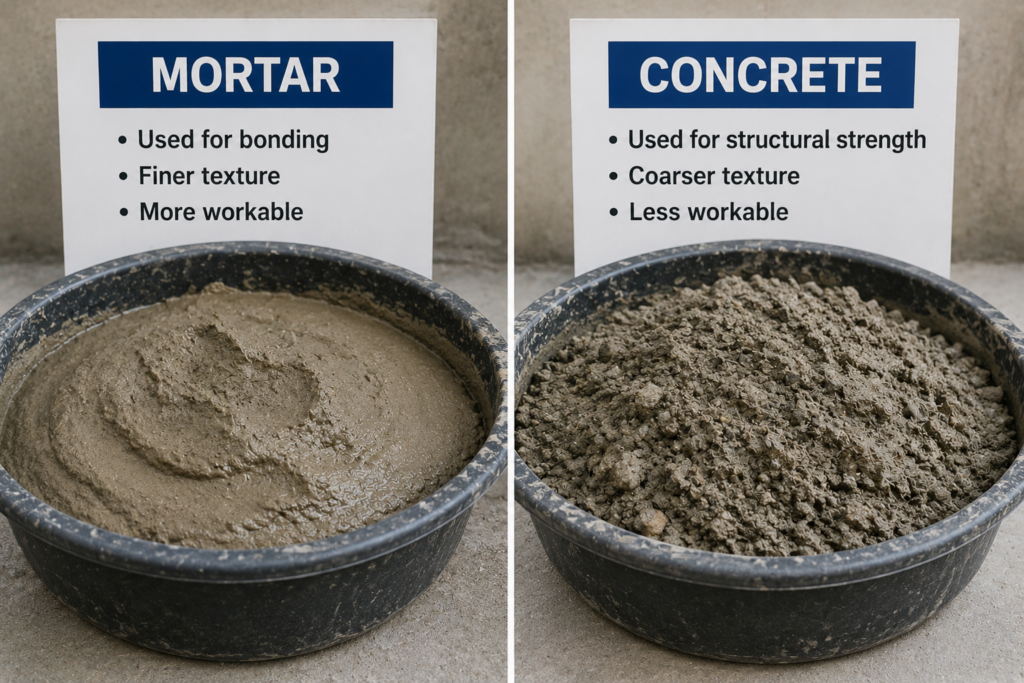
I often get asked questions like, "Which is stronger, a 1/3/3 or 1/2/4 mixture?" This question reveals a common but dangerous confusion. These ratios refer to concrete, not mortar. A concrete ratio is typically listed as Cement : Sand : Gravel (coarse aggregate). So, a 1:2:4 ratio is 1 part cement, 2 parts sand, and 4 parts gravel. This mix is designed to be a structural element on its own.
Mortar, on the other hand, uses only fine aggregate (sand) and its purpose is to be the "glue" between bricks or blocks. Its ratio is simply Cement : Sand (sometimes with lime). You cannot use a concrete mix in place of mortar, and you cannot use a mortar mix in place of concrete. The strength properties are completely different. Comparing them is like comparing apples and oranges. For maximum mortar strength, forget the concrete ratios and focus on the 1:3 cement-to-sand mortar mix.
Conclusion
Achieving maximum mortar strength is simple. Stick to a 1:3 ratio, control your water, and use quality additives. Your projects will be stronger and more durable.
Need climate-specific tweaks or help choosing the right additive? Contact me at ada@xhhpmc.com, and I can send over our high-strength mortar cheat sheet.
-
"Mortar (masonry) - Wikipedia", https://en.wikipedia.org/wiki/Mortar_(masonry). According to ASTM C270, Type M mortar is specified to have a minimum compressive strength of 2500 psi (17.2 MPa), supporting its use in heavy load-bearing applications. Evidence role: statistic; source type: institution. Supports: The strongest common mortar mix is Type M, with a compressive strength of over 2500 psi (17.2 MPa).. Scope note: ASTM C270 provides minimum values; actual field strength may vary depending on materials and conditions. ↩
-
"Water–cement ratio - Wikipedia", https://en.wikipedia.org/wiki/Water%E2%80%93cement_ratio. Concrete and mortar engineering literature, including the USACE Concrete Field Manual, recommends a water-to-cement ratio of 0.5 to 0.6 for optimal strength and workability. Evidence role: mechanism; source type: government. Supports: The water-to-cement ratio should be between 0.5 and 0.6 for maximum mortar strength.. Scope note: Exact ratio may vary based on sand moisture and environmental conditions. ↩
-
"INFLUENCE OF SILICA FUME REPLACEMENT OF CEMENT ON ...", https://trid.trb.org/View/372885. Silica fume is recognized in construction research for improving mortar durability and reducing permeability, especially in freeze-thaw environments. Evidence role: mechanism; source type: research. Supports: Adding silica fume is a professional secret for superior performance, especially in freeze-thaw cycles.. Scope note: The degree of improvement depends on replacement percentage and mix design. ↩
-
"effect of silica fume on the strength of cement mortar - Academia.edu", https://www.academia.edu/21357485/EFFECT_OF_SILICA_FUME_ON_THE_STRENGTH_OF_CEMENT_MORTAR. Construction research and standards suggest replacing 10-15% of cement with silica fume to significantly reduce mortar porosity and enhance durability. Evidence role: mechanism; source type: research. Supports: Replace 10-15% of your cement with silica fume to improve mortar durability.. Scope note: Optimal replacement percentage may vary by application and local standards. ↩