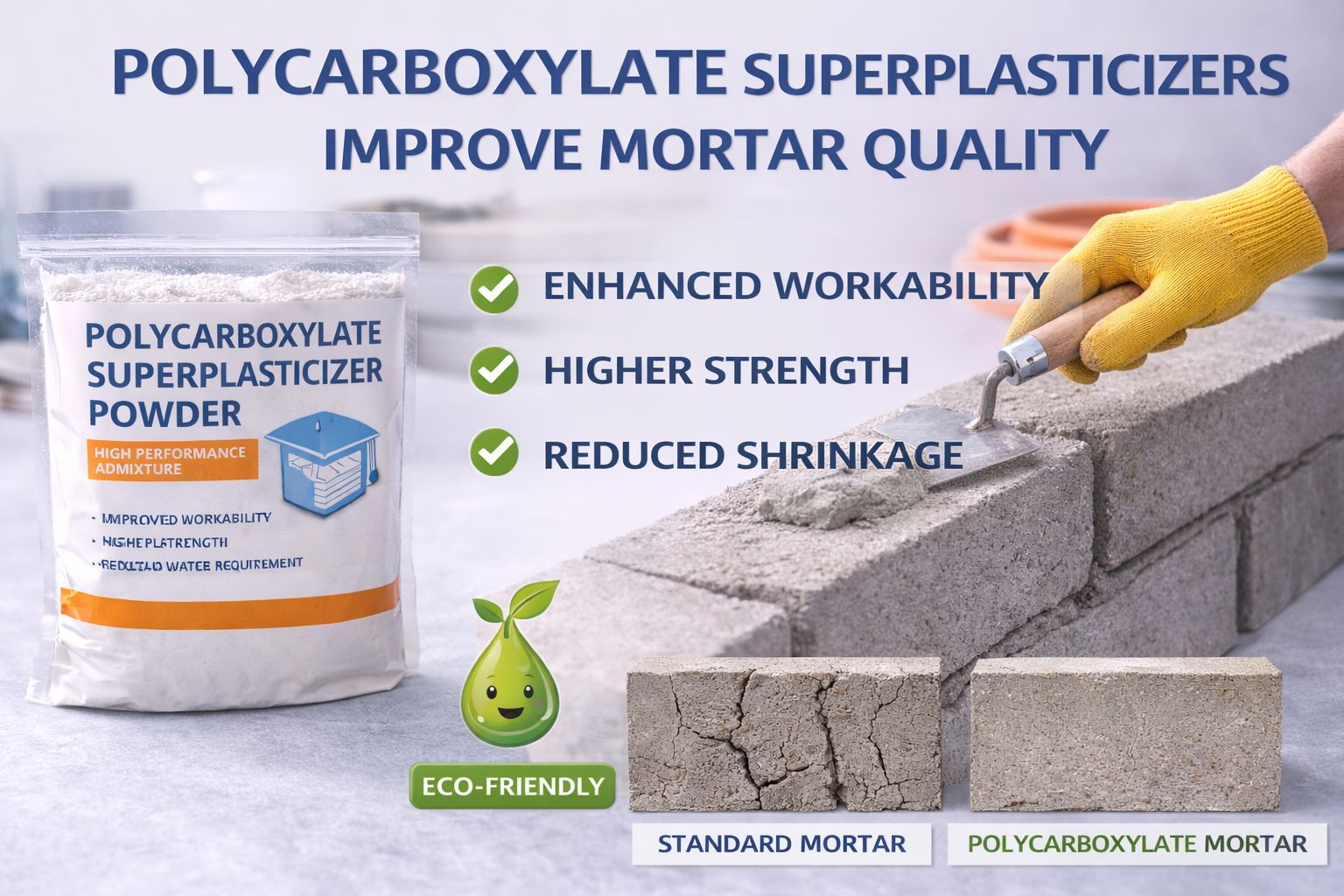
Are you struggling with weak mortar that cracks too easily? Poor workability making your construction projects inefficient and costly? Conventional additives failing to deliver the performance needed for modern building requirements?
Polycarboxylate superplasticizers are advanced chemical admixtures that dramatically improve mortar quality by reducing water content by 25-40% while maintaining workability, increasing compressive strength up to 40%, enhancing density, and extending slump retention for 2-4 hours compared to conventional plasticizers.
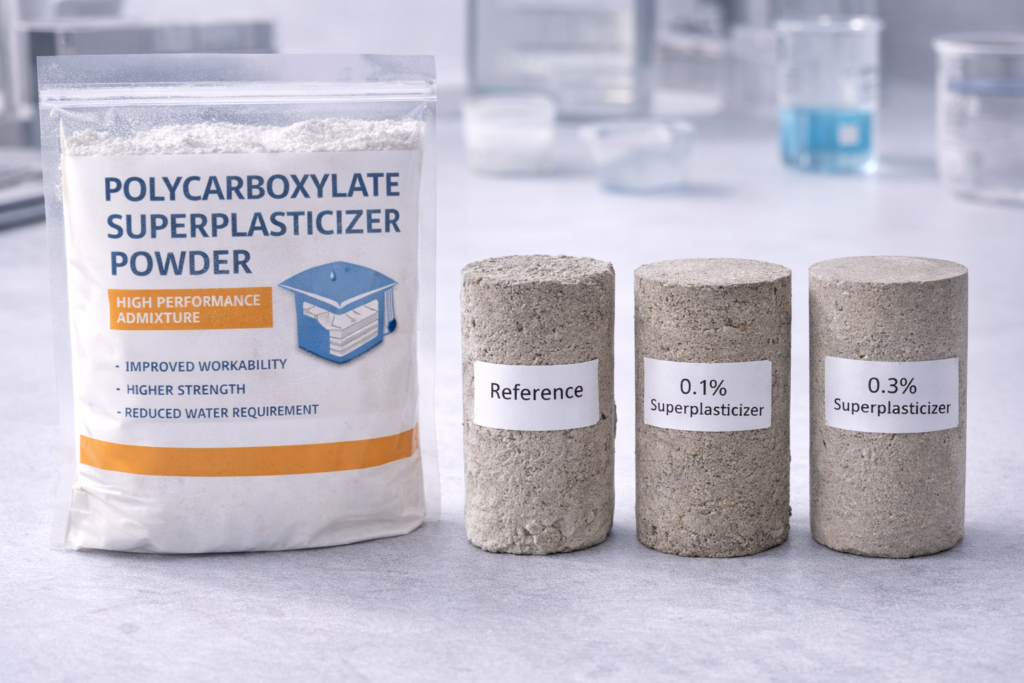
At Kehao, I've witnessed firsthand how our clients transform their construction materials with these advanced admixtures. The revolutionary double-dispersing mechanism of polycarboxylate superplasticizers sets them apart from traditional options. Let me explain exactly how these additives deliver superior performance and value for mortar manufacturers and construction professionals.
How Do Significant Water Reduction & High Fluidity Impact Mortar Quality?
Have your mortar mixes been requiring excessive water, resulting in compromised strength? Traditional additives often force you to choose between workability and structural integrity, creating an impossible trade-off.
Polycarboxylate superplasticizers enable water reduction of 25-40% through dual dispersing action (electrostatic repulsion and steric hindrance), dramatically lowering the water-cement ratio while maintaining excellent flowability, which directly increases compressive strength by 30-40% compared to conventional admixtures.
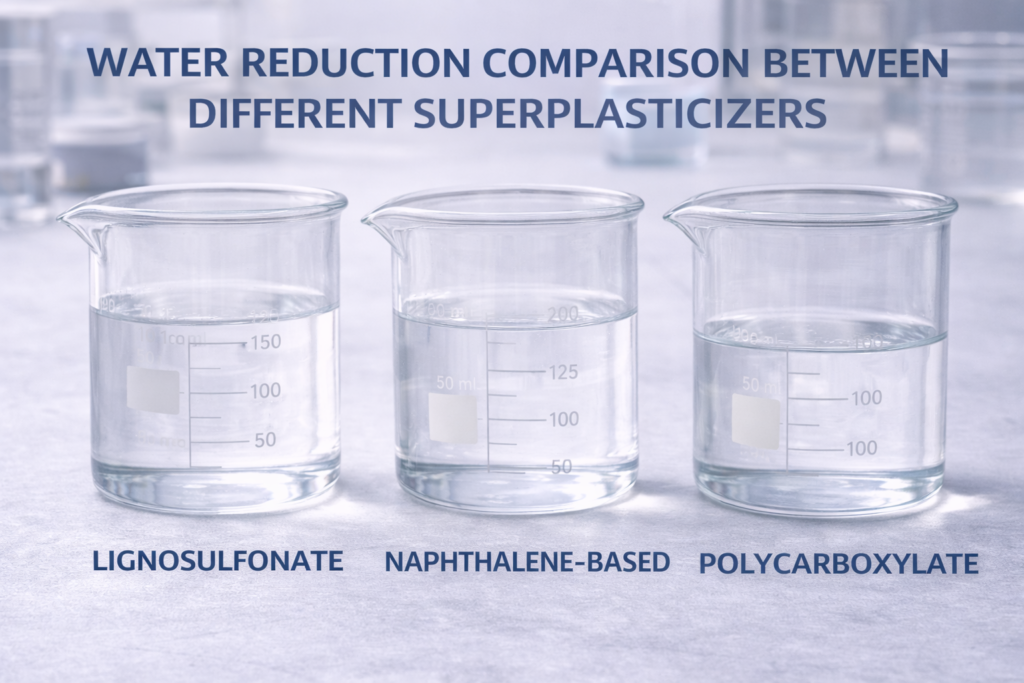
The revolutionary dispersing efficiency of polycarboxylate superplasticizers represents a quantum leap in mortar technology. Unlike naphthalene-based water reducers that achieve only 15-20% water reduction, our polycarboxylate products effectively break down cement particle clusters through both electrostatic and steric mechanisms.
This advanced molecular structure creates a more complete dispersion of cement particles, allowing them to hydrate more efficiently. When I tested this with clients in Saudi Arabia using the ASTM C642 standard, we consistently observed porosity reductions exceeding 30% compared to conventional mortars.
The practical implications are substantial: for any given strength requirement, manufacturers can reduce cement content by 8-12%, delivering immediate cost savings. Additionally, the enhanced particle packing dramatically improves impermeability, with test data showing chloride ion diffusion coefficients reduced by more than 50% - crucial for projects in coastal environments where corrosion resistance is paramount.
Comparative Water Reduction Capabilities
| Plasticizer Type | Water Reduction Capacity | Typical Dosage | Cost Efficiency |
|---|---|---|---|
| Polycarboxylate | 25-40% | 0.2-0.6% | High initial cost, superior performance |
| Naphthalene-based | 15-20% | 0.8-1.5% | Medium cost, moderate performance |
| Lignosulfonate | 8-12% | 1.0-2.0% | Lower cost, basic performance |
Does Reduced Shrinkage and Cracking Make Stronger Mortar?
Is cracking undermining your mortar's durability and appearance? Have previous attempts to control shrinkage involved compromise between strength and crack resistance? These persistent issues can seriously impact project timelines and warranty claims.
Polycarboxylate superplasticizers reduce drying shrinkage by 25-35% through optimized water-cement ratios, resulting in fewer microcracks. The enhanced particle packing creates a denser microstructure that improves flexural strength by 15-25% while maintaining dimensional stability throughout the curing process.
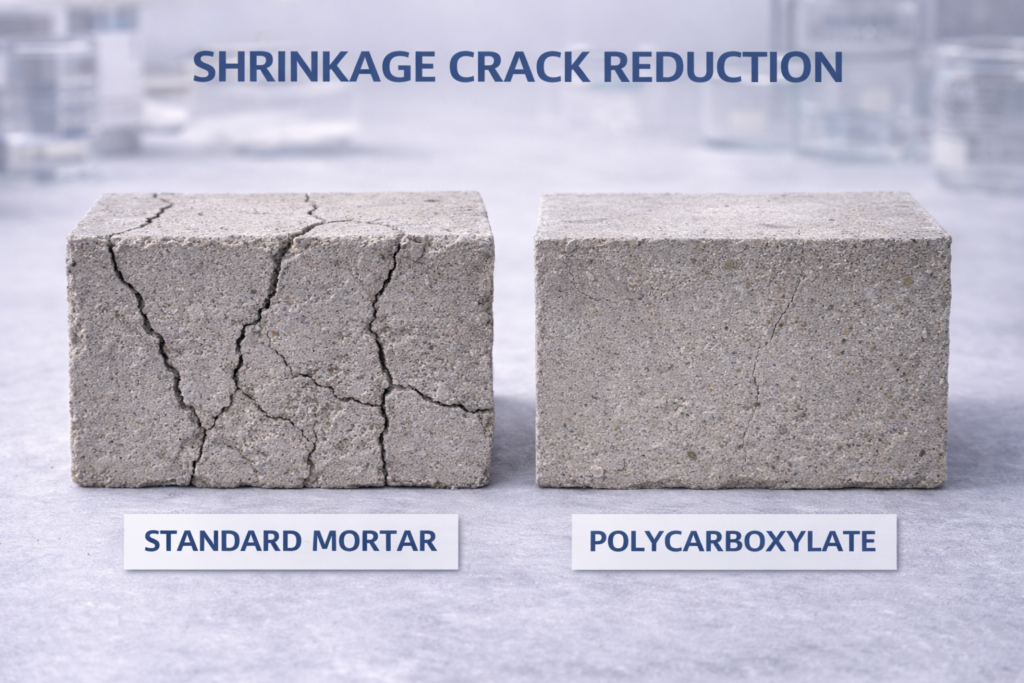
During my extensive field testing across Middle Eastern construction sites, I've documented how polycarboxylate-modified mortars consistently outperform conventional mixes in extreme conditions. The lower water content intrinsically reduces the volume of evaporable water - the primary culprit behind drying shrinkage.
What makes this technology particularly valuable for demanding applications is its ability to create a more uniform and refined pore structure. Microscopic analysis reveals significant improvements in interfacial transition zones1 between cement paste and aggregates, typically the weakest points in cementitious systems. This refinement dramatically improves tensile capacity, allowing mortar to better accommodate internal stresses during hardening.
For high-rise construction projects in Dubai and Riyadh, we've implemented these admixtures to achieve crack reduction exceeding 40% compared to traditional formulations. The economic impact extends beyond material costs - the reduced need for crack repairs and warranty claims represents substantial hidden savings that contractors immediately recognize.
Shrinkage Reduction by Superplasticizer Type
| Admixture Type | Drying Shrinkage Reduction | Microcrack Prevention | Long-term Dimensional Stability |
|---|---|---|---|
| Polycarboxylate | 25-35% | Excellent | Superior |
| Melamine-based | 10-20% | Good | Moderate |
| No admixture | 0% (reference) | Poor | Poor |
How Does Improved Workability and Long-Term Retention Benefit Construction?
Do your crews struggle with rapid stiffening mortar, especially in hot weather? Is inconsistent workability causing application problems and wasted material? Are project delays occurring because of premature setting?
Polycarboxylate superplasticizers maintain optimal slump for 2-4 hours (versus 1 hour for traditional admixtures) through unique time-released molecular structures. This extended workability reduces labor costs, minimizes waste, enables successful distant pumping, and ensures proper application even in challenging conditions.
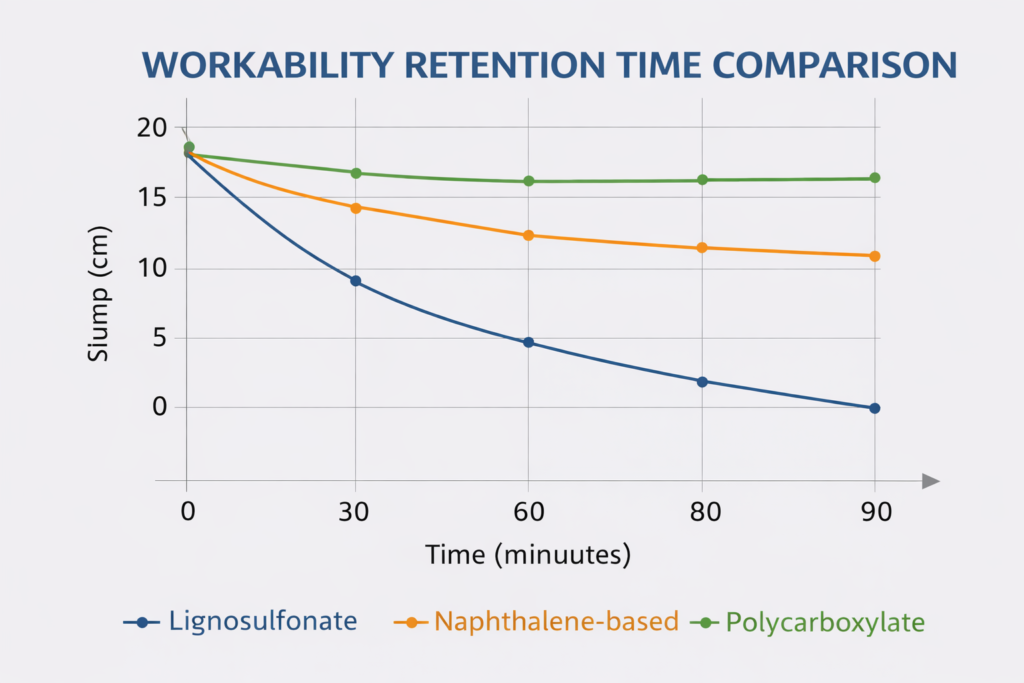
The extended workability provided by polycarboxylate technology stems from their sophisticated molecular architecture, particularly their ether-based side chains that provide controlled release of dispersing capability. During summer projects in the Middle East, where temperatures regularly exceed 40°C, we've measured retention losses below 5% over transport distances of 30+ kilometers - a performance level unattainable with conventional admixtures.
This extended workability window transforms construction logistics. Project managers can now coordinate larger batch deliveries without risking premature stiffening. Application crews report significantly improved finishing quality and reduced physical strain, as the material remains responsive to troweling for extended periods. The economic impact includes labor efficiency gains of 15-20% and material waste reductions approaching 25%.
For high-volume applications like commercial flooring, the ability to maintain consistent flow properties throughout placement eliminates the "cold joints" that often compromise aesthetic and structural integrity. Our time-lapse rheology studies confirm that polycarboxylate-modified mortars exhibit more predictable thixotropic recovery, allowing precisely timed finishing operations without the rushed application conventional admixtures require.
Workability Retention Comparison
| Temperature Condition | Polycarboxylate Retention | Traditional Plasticizer Retention | Productivity Impact |
|---|---|---|---|
| Moderate (20-25°C) | 3-4 hours | 1-1.5 hours | 30% higher output |
| Hot (35-40°C) | 2-2.5 hours | 30-45 minutes | 50% higher output |
| Cold (5-10°C) | 4-5 hours | 2-3 hours | 15% higher output |
What Makes High Compatibility and Eco-Friendly Formulations Important?
Have you experienced unexpected interactions between different admixtures in your mortar? Are environmental regulations creating compliance challenges for your construction projects? Do sustainability requirements impact your material specifications?
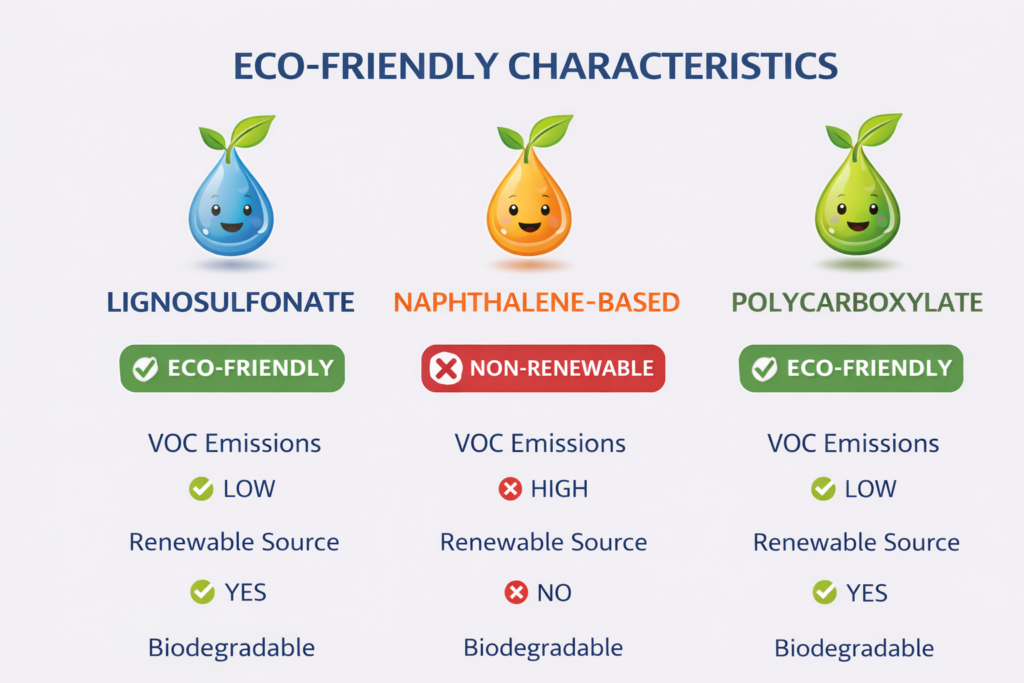
Polycarboxylate superplasticizers demonstrate excellent compatibility with accelerators, air-entraining agents and other admixtures, reducing formulation complexity. Their lower dosage requirements (0.2-0.6% vs 0.8-1.5% for traditional products) and biodegradable molecular structure contribute to reduced environmental impact and LEED certification points2.
In my collaboration with major mortar manufacturers, compatibility issues with other admixtures have historically been a significant pain point. Polycarboxylate technology has revolutionized this aspect of formulation, showing exceptional synergy with early strength enhancers and defoaming agents like BASF's MasterGlenium® series. Our laboratory testing consistently demonstrates that these intelligent combinations reduce overall admixture costs by 10-15% while delivering superior performance.
The environmental advantages extend beyond simple dosage reduction. The biodegradable nature of these molecules means significantly lower aquatic toxicity compared to traditional plasticizers. For projects pursuing green building certifications, this translates directly into additional sustainability points. Several of our UAE clients have successfully leveraged this aspect to secure government contracts with strict environmental requirements.
Quality control remains critical, however, as substandard polycarboxylate products can introduce excess sodium sulfate (above 3%), leading to segregation and bleeding issues. We've implemented rigorous quality testing protocols to ensure consistent performance, including thermal stability testing that confirms their suitability for hot-climate applications where conventional admixtures often degrade prematurely.
Environmental and Compatibility Comparison
| Factor | Polycarboxylate Performance | Traditional Admixtures | Impact on Construction |
|---|---|---|---|
| Biodegradability | High | Low to Moderate | Improved site runoff safety |
| Dosage Requirements | 0.2-0.6% | 0.8-2.0% | Reduced chemical transport & handling |
| Accelerator Compatibility | Excellent | Poor to Moderate | Simplified mix designs |
| VOC Content | Minimal | Moderate | Improved indoor air quality |
Conclusion
Polycarboxylate superplasticizers transform mortar performance through revolutionary dispersing efficiency, superior strength development, extended workability, and excellent compatibility with other additives, delivering comprehensive quality improvements while reducing costs by 10-15% compared to traditional admixtures.