Are you struggling with inconsistent HPMC quality from Chinese suppliers? Quality certificates look impressive but products don't perform as promised. This gap can cost you time, money, and customer trust.
To verify HPMC quality certificates1 from Chinese suppliers, don't rely solely on the document. Treat it as a preliminary qualification. Always verify through independent third-party testing of each shipment using internationally recognized standards for viscosity, purity, and gel temperature.
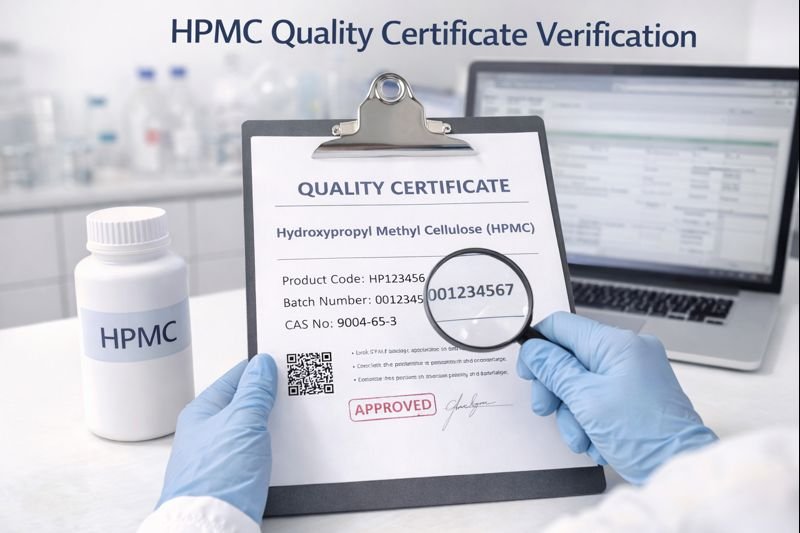
In my 15+ years supplying HPMC across developing markets, I've seen many buyers treat certificates as absolute proof of quality. But there's a crucial difference between what those papers promise and what might arrive at your factory. Let me show you how to protect yourself from this common industry problem.
How do I verify a Chinese supplier?
Do you feel overwhelmed by the number of HPMC suppliers claiming top quality? Many buyers get burned after trusting impressive websites and certificates without proper verification steps.
To verify a Chinese HPMC supplier, check their business license through China's National Enterprise Credit Information Publicity System, request facility photos with time stamps, conduct video factory tours, and obtain customer references from your region. Always verify their manufacturing capabilities match their claims.
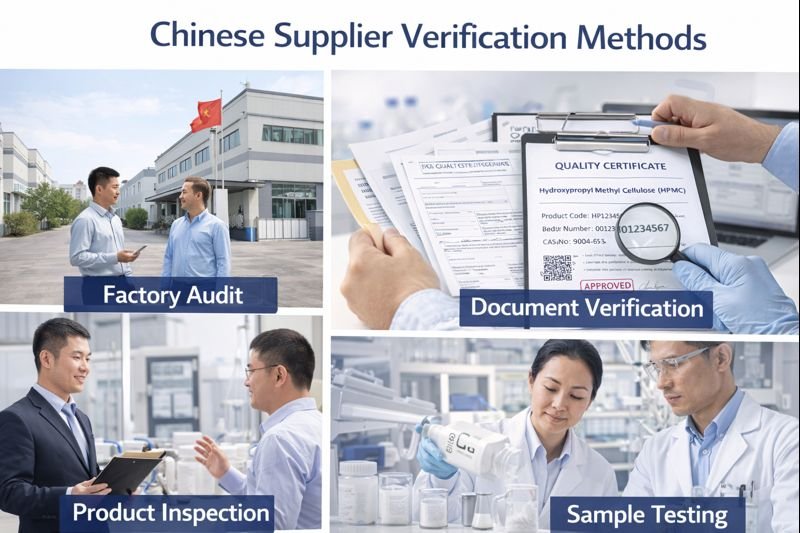
Comprehensive Supplier Verification Strategy
Verifying Chinese suppliers requires more than just checking documents online. I've developed a multi-step approach after seeing many clients struggle with this process.
Start with basic identity verification. Use the China National Enterprise Credit Information Publicity System2 (www.gsxt.gov.cn) to confirm registration status, registered capital, and business scope. A legitimate HPMC manufacturer should have "chemical manufacturing3" or similar in their business scope.
Next, assess production capabilities. Request recent dated photos of:
- Production lines (look for at least 3-5 lines for serious manufacturers)
- Raw material storage areas (should be clean and organized)
- Quality control laboratories (should have viscosity testing equipment)
- Packaging facilities (look for proper sealing and labeling capabilities)
Follow this with a surprise video call tour if possible. I once discovered a "factory" was actually just a trading company when they couldn't provide a live tour on short notice.
| Verification Level | Methods | What It Reveals |
|---|---|---|
| Basic | Business license check | Legal existence |
| Intermediate | Photos/videos of facility | Physical capabilities |
| Advanced | Third-party audit | Actual operations |
| Expert | Sample testing | Product quality reality |
Don't skip reference checks. Ask for customer contacts specifically in your region who have purchased similar volumes. When I call references, I ask about consistency across shipments and how the supplier handled quality problems - this reveals more than just asking if they're "good."
Who is the supplier of HPMC in China?
Are you confused by hundreds of companies claiming to be HPMC manufacturers4? Many buyers waste money on middlemen or trading companies pretending to be factories, leading to higher prices and quality control issues.
The major HPMC suppliers in China include Hopetate, Lotte Chemical, Anhui Wanwei, Shandong Head, Henan Tiansheng, and Shandong Yiteng. True manufacturers have multiple production lines, in-house testing facilities, and can provide plant tours showing the complete production process from raw materials to finished products.
Identifying True Manufacturers vs. Trading Companies
Distinguishing real manufacturers from middlemen requires understanding the HPMC manufacturing landscape in China. The industry has evolved significantly over the last decade, with production concentrating in several key provinces.
Most legitimate large-scale HPMC production occurs in Shandong, Anhui, Jiangsu, and Henan provinces. These regions have the necessary infrastructure and access to raw materials like cotton linters and methyl chloride. When a supplier claims to manufacture in other regions, this should raise initial questions.
Real manufacturers will have multiple production lines - typically 5-7 for large operations. During my factory visits, I specifically look for continuous production processes that include alkalization, etherification, neutralization, and purification stages. Each stage requires specific equipment that trading companies simply don't possess.
| Manufacturing Stage | Equipment Present | Red Flags |
|---|---|---|
| Alkalization | Reaction vessels with mixing capabilities | No visible reaction equipment |
| Etherification | Pressure vessels with safety features | Unable to explain process details |
| Purification | Washing and filtration systems | Clean facilities with no production residue |
| Quality Control | Viscosity meters, particle analyzers | Only showing basic packaging equipment |
The most telling verification method is examining their R&D capabilities. True manufacturers can modify viscosity ranges, substitution levels, and particle sizes based on customer requirements. I always ask potential suppliers technical questions about how they would adjust their process for specific applications like exterior renders versus tile adhesives. Trading companies typically provide generic answers, while real manufacturers can explain precise parameter adjustments.
How to trust a Chinese supplier?
Have you been burned by suppliers who sent perfect samples but disappointing bulk orders? Many businesses lose thousands of dollars and valuable time dealing with unreliable Chinese HPMC suppliers who can't deliver consistent quality.
To trust a Chinese HPMC supplier, implement a progressive trust system. Start with small trial orders, establish clear quality specifications in contracts using international standards, require retention samples5 from each batch, and develop a regular third-party testing schedule. Trust should be built on verification, not just promises.
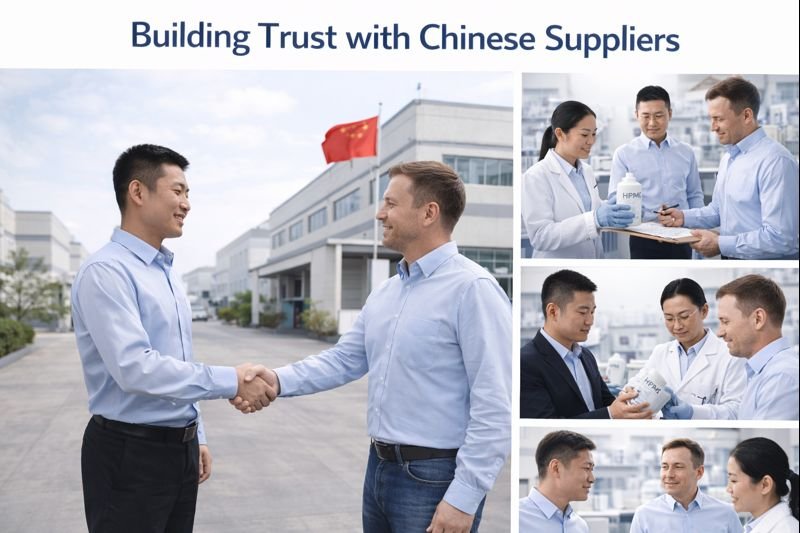
Building a Verification-Based Trust Framework
Trust in the HPMC supply chain must be built systematically, especially when dealing across cultural and language barriers. I've developed a framework that has protected both my company and my clients from costly mistakes.
First, establish crystal-clear specifications in your contracts. For HPMC, the critical parameters include:
- Viscosity (measured using Brookfield method at specific temperature)
- Methoxyl content (determines water retention properties)
- Hydroxypropyl content (affects solubility)
- Gel temperature (crucial for application temperature ranges)
- Particle size distribution (impacts dissolution rate)
Rather than using vague terms, reference specific testing methods like ASTM D1347 or DIN 53019 for viscosity measurements. This prevents the common issue where suppliers test under different conditions to produce artificially favorable results.
Implement a graduated ordering system. I typically recommend:
- Small sample order (5-25kg) for initial testing
- Trial production order (500-1000kg)
- Standard production order (5-25MT)
- Long-term partnership with scheduled deliveries
| Trust Stage | Order Size | Verification Method | Payment Terms |
|---|---|---|---|
| Initial | 5-25kg samples | In-house testing | 100% advance |
| Trial | 500-1000kg | Third-party testing | 50% advance, 50% after verification |
| Standard | 5-25MT | Batch sampling | 30% advance, 70% after verification |
| Partnership | Regular scheduling | Periodic audits | Letter of credit or open account |
For payment protection, use escrow services or letters of credit that include quality verification conditions. I've found that suppliers who resist these terms often have something to hide regarding their quality consistency.
Document everything. Create a supplier quality history for each vendor, tracking performance over time. This helps identify seasonal variations or gradual quality drift. When I noticed one supplier's viscosity gradually declining over six months, we addressed the issue before it affected our customers' products.
How to test HPMC?
Are you worried your HPMC isn't meeting specifications despite having perfect certificates? Many manufacturers face project failures and customer complaints because they don't know how to properly test what they're buying.
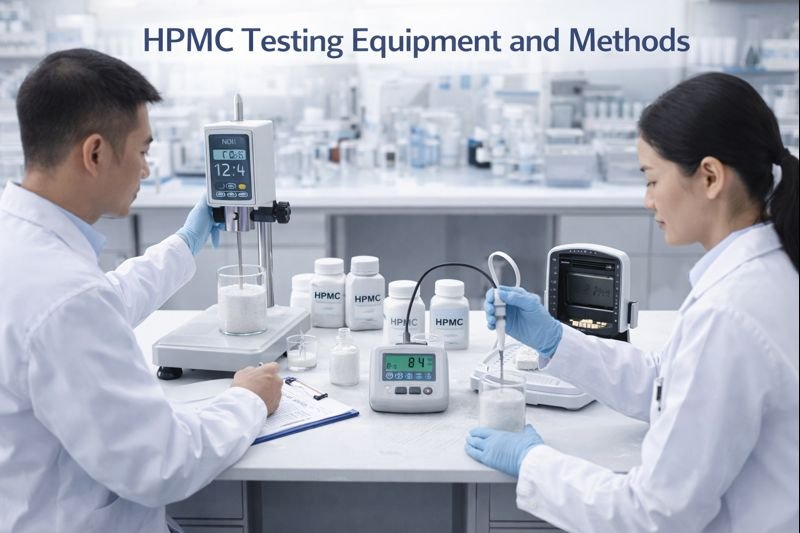
To test HPMC, measure key parameters including viscosity (using a Brookfield viscometer at 20°C in 2% solution), gel temperature (thermal behavior), particle size (using standard sieves), moisture content (using an oven method), and ash content. Compare results against both supplier specifications and your application requirements.
Critical HPMC Testing Protocols for Practical Applications
Testing HPMC effectively requires understanding both laboratory methods and practical application tests. After seeing countless quality issues in the field, I've developed a two-tier testing approach that catches problems before they reach your production line.
For laboratory testing, focus on these five critical parameters:
-
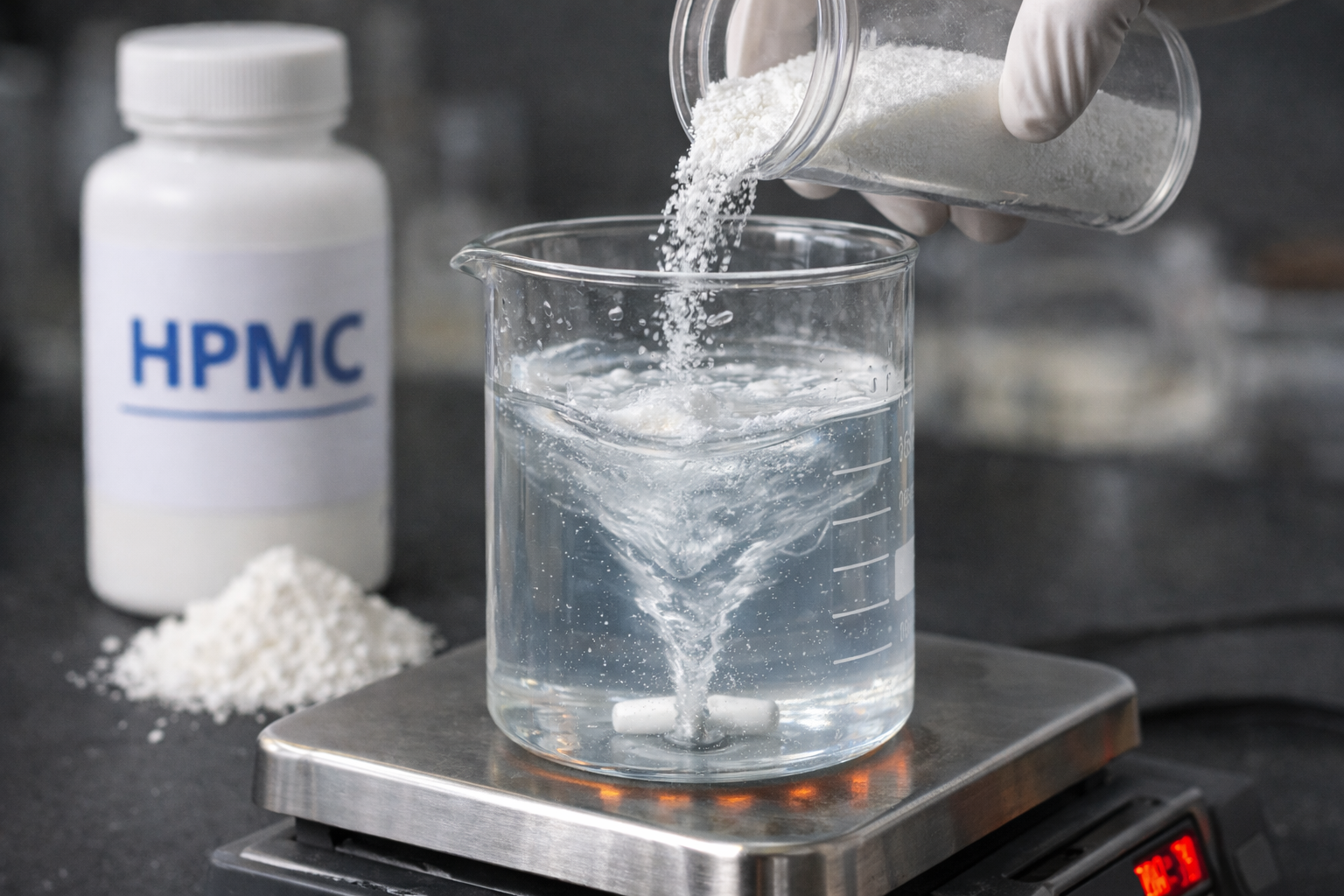
Viscosity: This is the most important functional property. Use a Brookfield viscometer with specific spindles and rotation speeds based on expected viscosity range. Test in a 2% aqueous solution at exactly 20°C after allowing full hydration (typically 24 hours). Small temperature variations can cause significant reading differences, so temperature control is essential.
-
Substitution pattern: The ratio of methoxyl to hydroxypropyl groups determines water retention, workability, and compatibility with other materials. While this requires sophisticated equipment (typically HPLC or NMR), it's worth having third-party verification for new suppliers.
-
Particle size distribution: This affects dissolution time and influences final application properties. Use standard mesh sieves (typically 80, 100, and 200 mesh) to verify distribution matches specifications.
-
Moisture content: Excessive moisture affects shelf life and can cause clumping. Dry a sample at 105°C until constant weight is achieved.
-
Ash content: High ash indicates potential contamination. Incinerate a sample at 550°C and measure residue.
| Test Parameter | Equipment Needed | Target Range for Construction | Target Range for Paint |
|---|---|---|---|
| Viscosity (2%, 20°C) | Brookfield viscometer | 40,000-80,000 mPa·s for tile adhesives | 15,000-30,000 mPa·s for water-based paints |
| Water retention | DIN testing kit | > 95% for cement mortars | > 90% for plasters |
| Dissolution time | Timer, transparent vessel | < 3 minutes for fine powder | < 5 minutes for coarse grades |
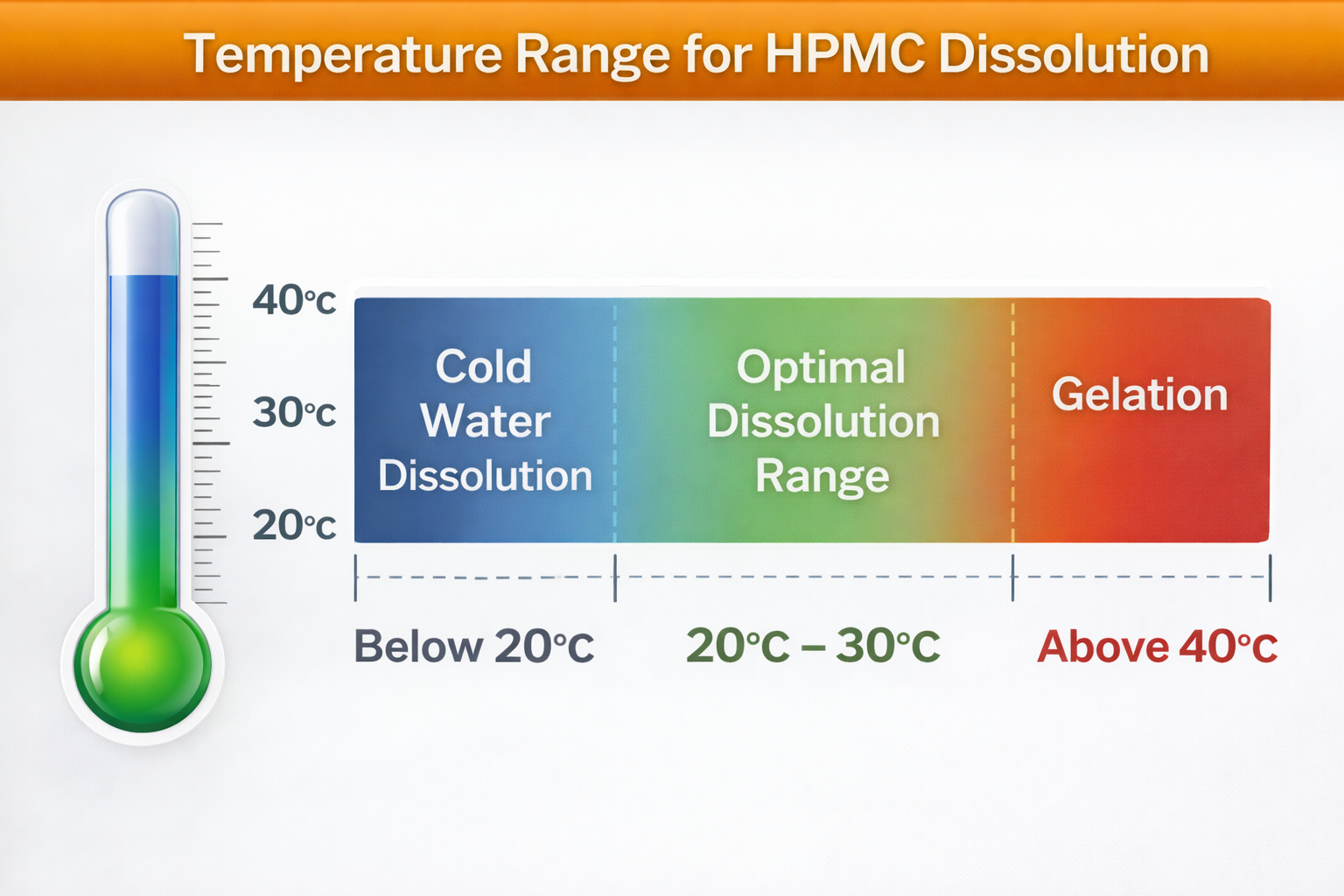
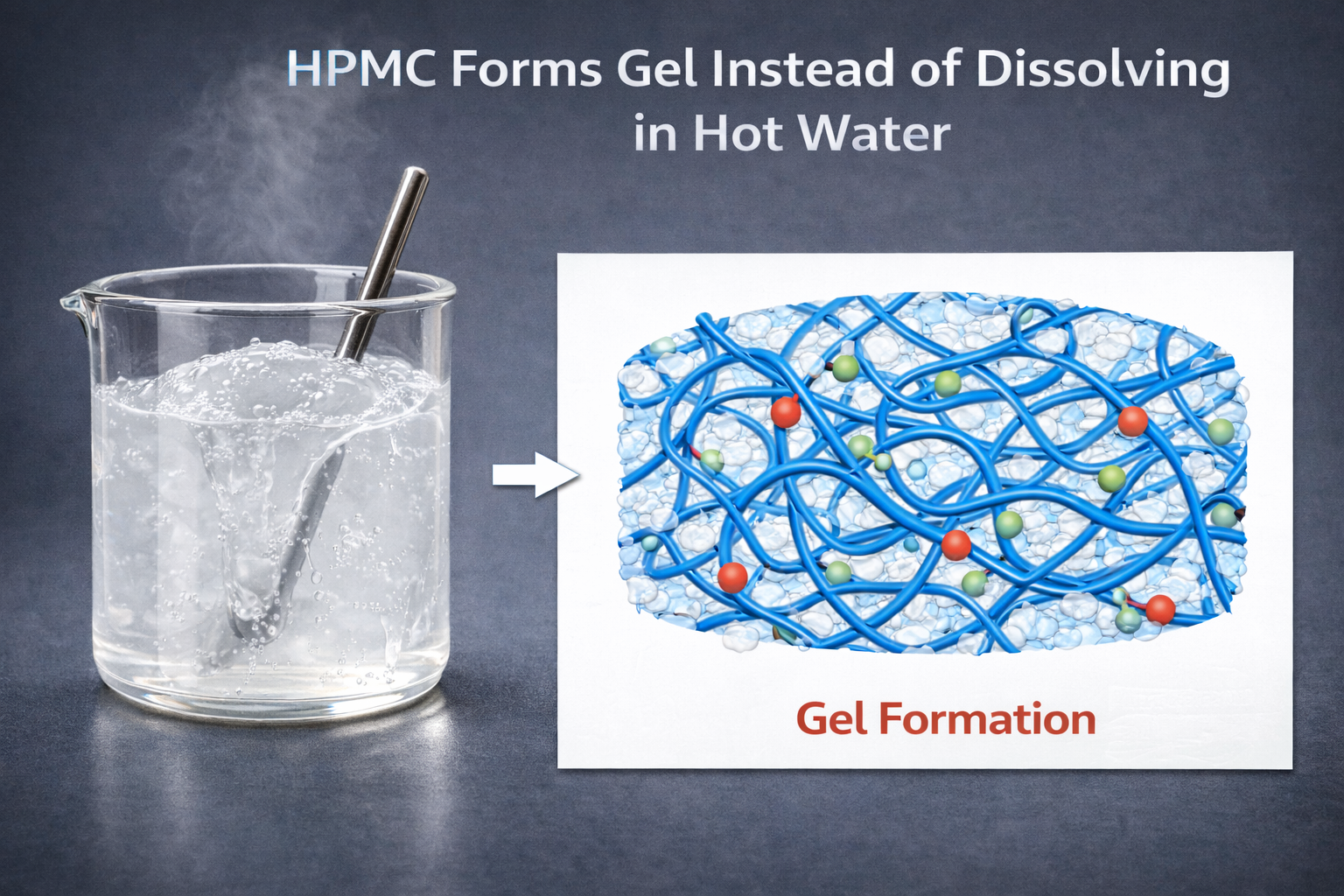
| Gel temperature | Heating plate with thermometer | 65-75°C for hot climate applications | 55-65°C for temperate climates |
| Sag resistance | Applicator, vertical surface | No sag at 5mm thickness | No sag at 250μm wet film |
Beyond laboratory tests, always conduct application-specific evaluations. For construction applications, I prepare test mortars to assess:
- Open time
- Slip resistance
- Adhesion strength
- Workability
- Setting time
For paint applications, evaluate:
- Anti-sag properties
- Leveling
- Film build
- Brush resistance
- Storage stability
These practical tests often reveal issues that certificate data won't show. I once had a batch of HPMC that met all viscosity specifications but performed terribly in tile adhesive applications due to an unusual substitution pattern not captured in standard testing.
Conclusion
Don't treat quality certificates as absolute truth. They're just entry tickets showing suppliers can produce quality, not guarantees of what you'll receive. Implement your own verification system with clear specifications, third-party testing, and progressive trust-building to ensure consistent HPMC quality.
-
Understanding how to verify HPMC quality certificates can save you from costly mistakes and ensure product reliability. ↩
-
This system is crucial for confirming the legitimacy of suppliers and avoiding scams. ↩
-
Understanding this term helps identify legitimate manufacturers in the HPMC industry. ↩
-
Knowing the key players in the market helps you identify reliable suppliers. ↩
-
Retention samples ensure you have a reference for quality verification from each batch. ↩