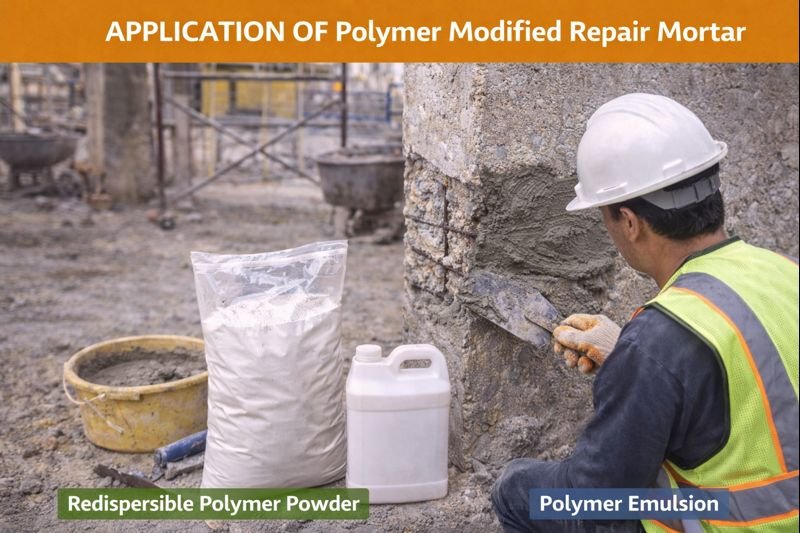
Crumbling infrastructure? Deteriorating concrete surfaces? Regular mortars just won't cut it anymore. Polymer modified repair mortars1s](https://whhpmc.com/construction-additives-for-repairing-mortar-which-ones-are-most-effective/)[^2] offer exceptional strength, adhesion, and durability where traditional products fail.
Polymer modified repair mortars1s](https://whhpmc.com/construction-additives-for-repairing-mortar-which-ones-are-most-effective/)[^2] are specialized cementitious materials enhanced with polymers to improve adhesion, flexibility, water resistance, and durability. They're primarily used for concrete repairs2 in bridges, buildings, industrial floors, marine structures, and other infrastructure requiring high-performance restoration solutions.
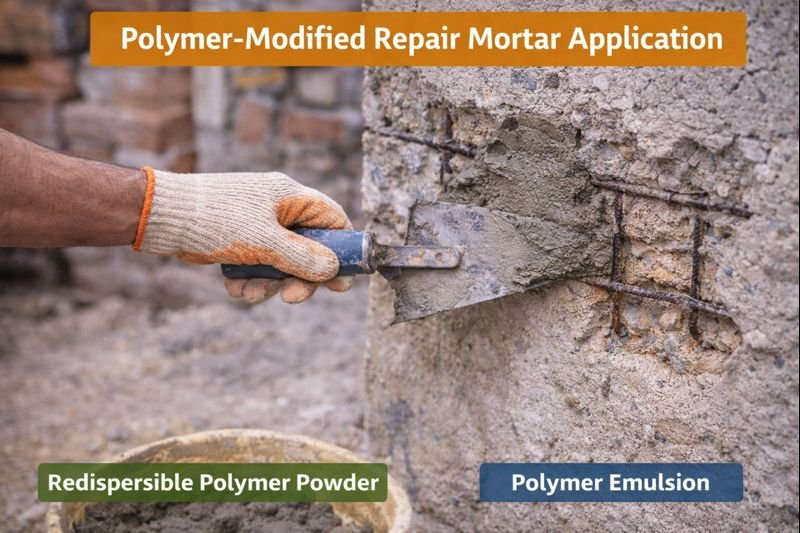
When I first encountered polymer modified repair mortars, I was skeptical about their claims. But after witnessing their performance in high-stress environments and extreme conditions, I'm convinced they're essential for modern construction repairs. Let me take you through the most impressive applications where these materials truly shine.
What Is Polymer Modified Mortar Used For?
Traditional cement mortars crack and fail under harsh conditions. Polymer modified mortars solve this problem by incorporating special polymers that enhance flexibility and bonding strength, making them perfect for challenging repair scenarios.
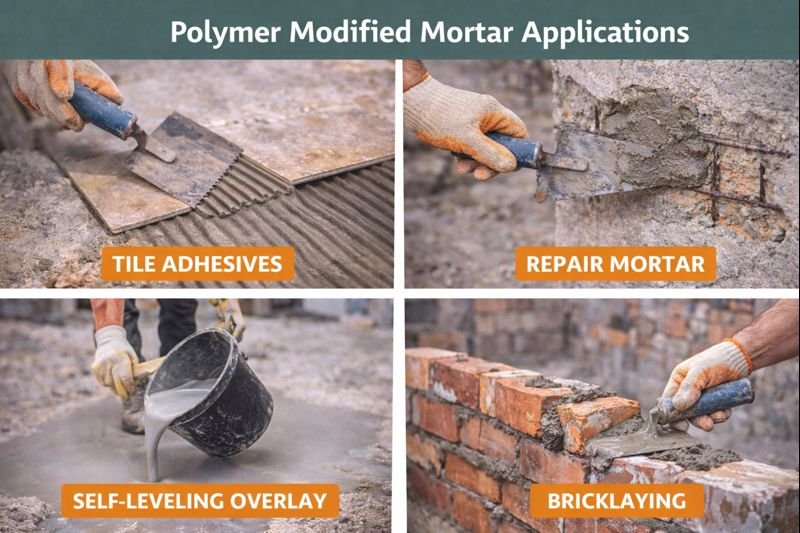
Polymer modified mortars are primarily used for concrete surface repairs, waterproofing, tile adhesion in wet areas, floor screeds, and structural repairs. They offer superior adhesion to difficult substrates, better flexibility to accommodate substrate movement, and enhanced resistance to water penetration.
Structural Repair Champions
When it comes to structural repairs, polymer modified mortars are unmatched in performance. Their flexural strength is up to three times higher than conventional cement mortars, reaching 5-8 MPa. This makes them ideal for load-bearing elements.
The Guangzhou-Shenzhen Coastal Expressway provides compelling evidence of their effectiveness. After seven years of heavy use, sections repaired with polymer modified mortars showed zero instances of delamination or hollow sounds during impact testing. According to the 2023 data from the Chinese Highway Journal, these repairs maintained structural integrity despite exposure to heavy traffic loads and coastal environmental conditions.
These mortars excel in:
| Application | Benefit | Real-World Example |
|---|---|---|
| Bridge joint repairs | Prevents water infiltration and maintains structural continuity | Zhoushan Cross-Sea Bridge repairs lasting 7+ years |
| Column/beam rehabilitation | Restores load-bearing capacity while ensuring proper bonding | High-rise retrofitting projects in earthquake zones |
| Expansion joint repairs | Accommodates thermal movement while maintaining waterproofing | Highway expansion joints in temperature-variable regions |
The key advantage here is the polymer's ability to create a monolithic bond with the existing substrate, ensuring load transfer and preventing the formation of new cracks where old and new materials meet.
What Are the Applications of Polymer Modified Concrete?
Vibration and dynamic loads destroy regular concrete over time. Polymer modified concrete absorbs these forces through its unique elastic properties, extending pavement and floor lifespan dramatically in high-movement areas.
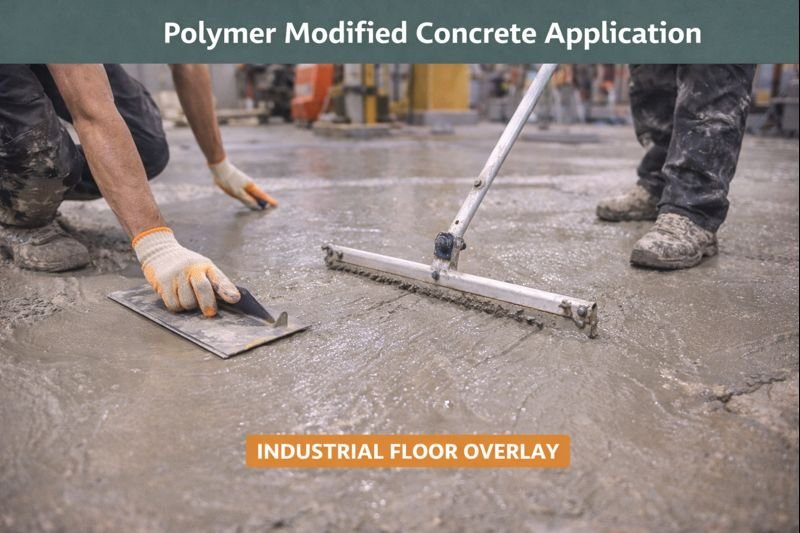
Polymer modified concrete applications include airport runways, industrial floors, bridge decks, parking structures, and water tanks. It excels in environments with dynamic loading, chemical exposure, or freeze-thaw cycles due to its enhanced flexibility, strength, and reduced permeability.
Dynamic Load Conqueror
The unique elastic modulus of polymer modified concrete makes it the ultimate solution for surfaces subjected to dynamic loading. Compared to epoxy resin systems, polymer modified concrete has 150-200% lower elastic modulus, providing superior vibration absorption capabilities.
Pudong International Airport offers compelling evidence of this performance. The runways repaired with polymer modified concrete have withstood over 3 million aircraft landings and takeoffs without significant deterioration. ISO 14679 cyclic loading test reports confirm the material's exceptional performance under repetitive stress conditions.
This makes polymer modified concrete particularly valuable in:
| Application | Performance Factor | Advantage |
|---|---|---|
| Airport runways | Resistance to jet blast and heavy aircraft landing | Reduced cracking and extended maintenance intervals |
| Factory floors | Absorption of machinery vibration | Prevention of floor dusting and surface deterioration |
| Railway structures | Dampening of continuous vibration | Increased structural longevity and reduced maintenance |
| Highway pavements | Resistance to continuous traffic loads | Minimized rutting and fatigue cracking |
I once visited a manufacturing facility that had replaced their conventional concrete floors with polymer modified concrete. After five years of heavy forklift traffic and machinery vibration, the floors remained intact with minimal surface wear, whereas their previous conventional concrete floors required major repairs within just two years.
What Is the Application of Repair Mortar?
Environmental damage destroys concrete at microscopic levels first. Repair mortars with specialized polymer formulations create impenetrable barriers against water, chlorides, and chemicals, preserving structural integrity in punishing environments.
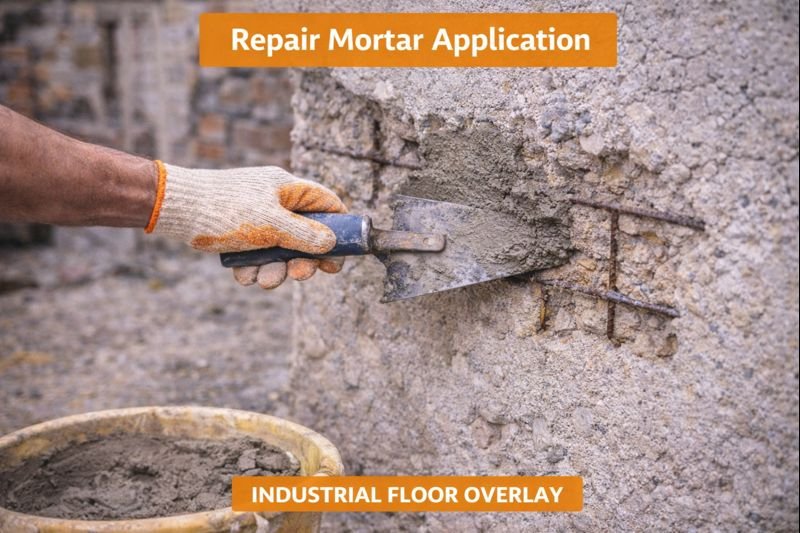
Repair mortars are applied to restore damaged concrete structures, patch spalls and cracks, rebuild deteriorated surfaces, and protect reinforcing steel from corrosion. They're essential in extending the service life of infrastructure by halting deterioration and preventing water ingress.
Extreme Environment Protector
In severely corrosive environments, polymer modified repair mortars truly demonstrate their worth. Acrylic-modified formulations achieve chloride penetration resistance rates that are a mere one-tenth of the national standard (less than 0.5%), making them perfect for marine environments and chemical exposure situations.
The Zhoushan Cross-Sea Bridge stands as testament to this capability. After seven years of continuous exposure to sea spray and salt-laden air, sections repaired with polymer modified mortars show no signs of reinforcement corrosion. This case was highlighted in the NACE 2024 annual corrosion prevention report3 as an exemplary application of protective materials.
These mortars excel in protecting structures in:
| Environment | Threat | Protection Mechanism |
|---|---|---|
| Splash zones | Chloride intrusion | Formation of polymer film barriers |
| Chemical plants | Acid/alkali attack | Chemical resistance of polymer matrix |
| Freeze-thaw regions | Ice expansion damage | Air-entrainment and flexibility |
| Urban environments | Carbonation | Reduced permeability to CO₂ |
During a recent inspection of a wastewater treatment plant I visited, areas repaired with standard mortars seven years ago showed significant deterioration, while sections treated with polymer modified materials remained virtually unchanged despite constant exposure to harsh chemicals. This demonstrates the remarkable difference in durability under extreme conditions.
What Is Dr Fixit Repair Polymer Mortar Used For?
Dr Fixit repair polymer mortar, like other branded products, offers specialized formulations for specific repair scenarios. The critical factor is matching the right polymer system to your environment, particularly with temperature considerations.
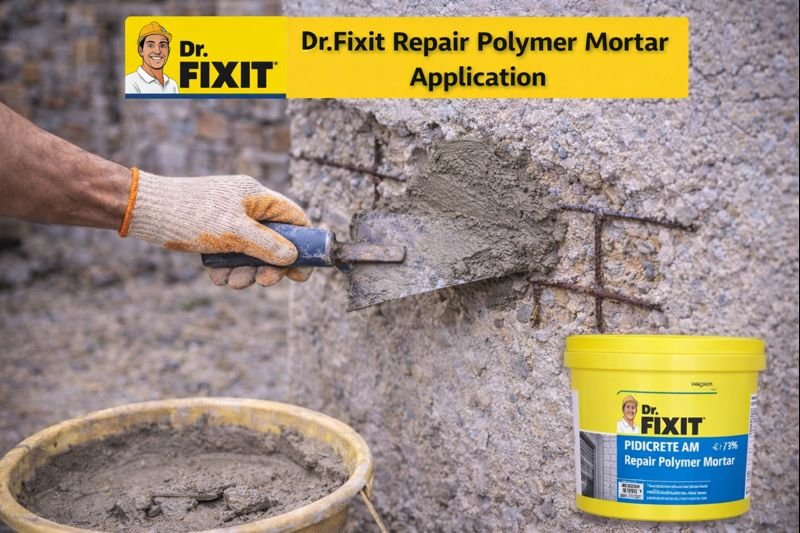
Dr Fixit repair polymer mortar is specifically designed for concrete repairs, waterproofing leaking structures, filling honeycombs, repairing spalled concrete, and anchoring fixtures. Its formulation provides excellent adhesion, low shrinkage, and enhanced durability in various environmental conditions.
Critical Application Details
One crucial detail that only industry experts understand is the temperature limitation of standard polymer mortars. In environments exceeding 80°C, traditional polymer systems will fail catastrophically. For these high-temperature applications4, specialized silicate-phosphate composite systems must be used instead.
I learned this lesson the hard way when a client used standard polymer modified mortar in a steel plant's cooling zone. Within months, the repairs deteriorated completely due to temperature exposure above the polymer's glass transition point. We replaced it with a silicate-phosphate system that has now performed flawlessly for over three years in the same conditions.
Different polymer systems have specific application ranges:
| Polymer Type | Temperature Range | Best Application |
|---|---|---|
| Acrylic | -20°C to 80°C | General repairs, waterproofing |
| SBR | -15°C to 70°C | Structural repairs, bonding |
| Epoxy | -30°C to 100°C | High-strength repairs, chemical resistance |
| Silicate-Phosphate | Up to 1000°C | High-temperature industrial environments |
The application method is equally critical - proper surface preparation, including removal of all loose material and thorough dampening (but not soaking) of the substrate, can mean the difference between a repair lasting decades versus failing within months. Many failures I've investigated weren't due to the material itself but improper application techniques.
Conclusion
Polymer modified repair mortars1 excel in three critical applications: structural repairs with 3x higher flexural strength, dynamic load environments with superior vibration absorption, and extreme conditions with exceptional chemical resistance. Always match the polymer system to your specific environment for optimal results.
FAQ
How long do polymer modified repair mortars last?
With proper application, polymer modified repair mortars typically last 15-25 years, compared to 5-8 years for conventional mortars.
Can polymer modified mortars be used underwater?
Special underwater-grade polymer mortars can be applied in wet conditions, but standard formulations require relatively dry surfaces.
Are polymer modified mortars environmentally friendly?
Many modern formulations use water-based polymers with low VOC content, making them more environmentally friendly than solvent-based alternatives.
How soon can repaired areas be returned to service?
Light foot traffic is typically possible after 24 hours, with full loading capacity reached after 7 days, depending on temperature and humidity.
Do polymer modified mortars require special mixing equipment?
Most can be mixed with standard drills and paddle mixers, though proper water ratios and mixing times are critical for performance.
-
Explore the advantages of polymer modified repair mortars for superior concrete repair solutions. ↩ ↩ ↩
-
Learn about effective methods for repairing concrete and extending its lifespan. ↩
-
Explore the latest findings on corrosion prevention from the NACE 2024 report. ↩
-
Discover materials designed for high-temperature applications to ensure safety and performance. ↩