Have you ever wondered why your ice cream stays creamy? The secret ingredient might surprise you.
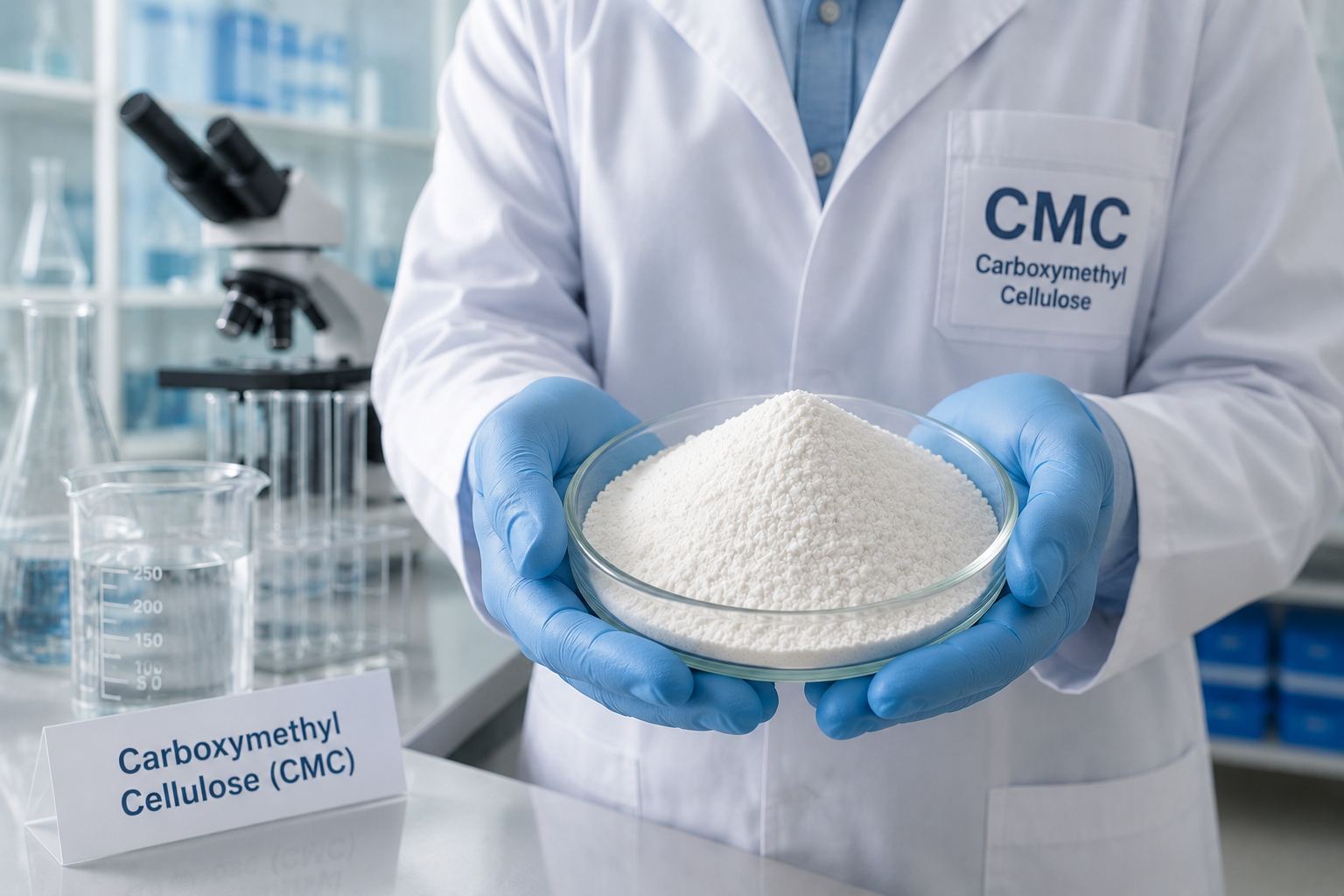
CMC is a versatile cellulose derivative used in food, pharmaceuticals, cosmetics, construction, and various industries as a thickener, stabilizer, and binder due to its unique water-soluble properties.1
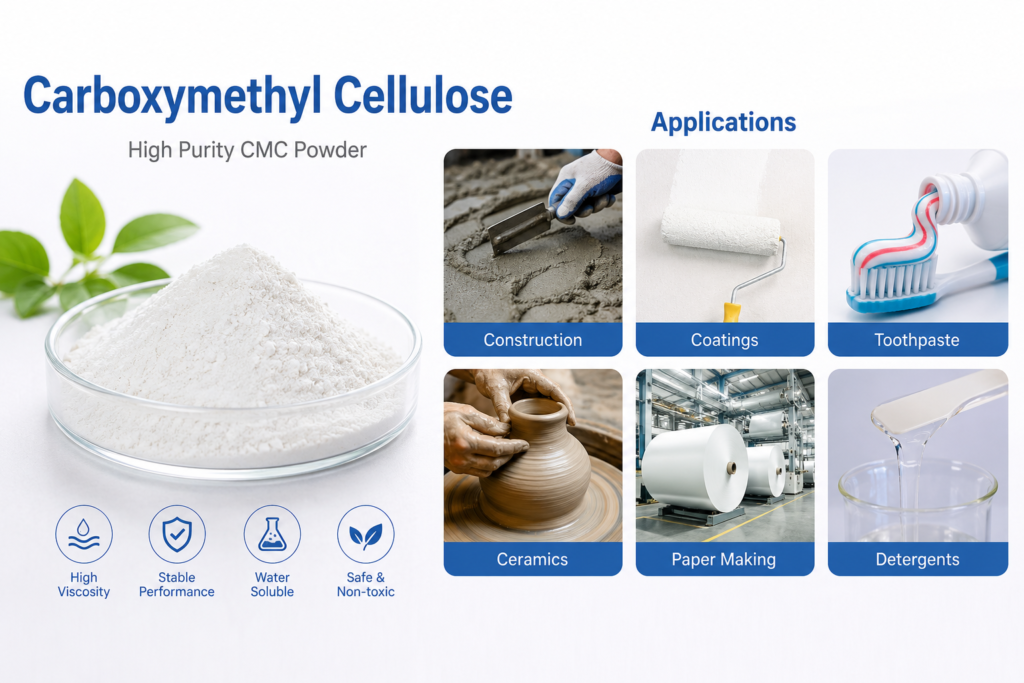
I first discovered CMC when a customer from Saudi Arabia asked me about it for his paint factory. That conversation opened my eyes to how this simple powder touches almost every part of our daily lives.
What Is CMC Introduction?
Most people don't know what CMC is. Yet they use products containing it every single day.
CMC is a water-soluble polymer made from cellulose. It works as a thickener, stabilizer, and film-former in countless products we use daily.2
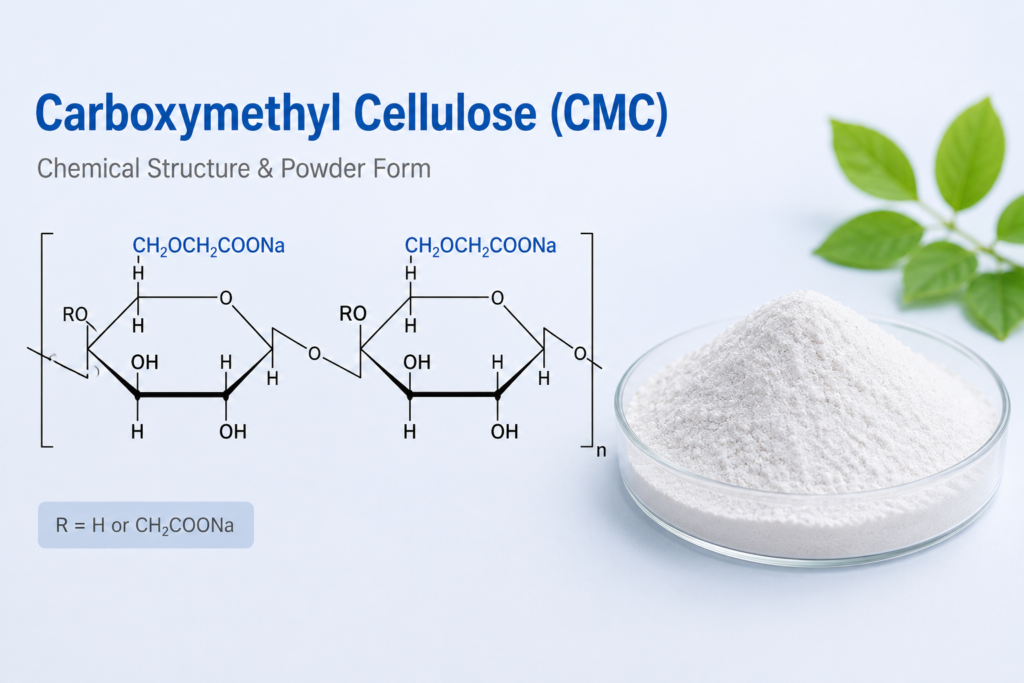
I work at kehao factory in China, and we produce CMC alongside other cellulose products. The basic process starts with natural cellulose from wood or cotton. We treat it with sodium hydroxide and chloroacetic acid. This creates a white powder that dissolves in water.
CMC Properties and Characteristics
| Property | Description |
|---|---|
| Appearance | White to cream powder |
| Solubility | Water-soluble |
| pH Range | 6.5-8.5 |
| Viscosity | 10-10,000 mPa.s |
| Stability | Heat and pH stable |
The magic of CMC lies in its ability to thicken water without making it sticky.3 When I show customers how one spoonful can turn a glass of water into gel, they always look amazed. The powder forms long chains in water. These chains trap water molecules and create thickness. Different grades offer different thickening powers. Low viscosity grades work for thin solutions. High viscosity grades create thick gels. We customize the viscosity based on what our customers need.
How Does CMC Work in the Food Industry?
Have you noticed your salad dressing doesn't separate anymore? That's CMC working behind the scenes.
In food, CMC acts as a thickener, stabilizer, and texture modifier. It prevents ice crystals in ice cream, keeps dressings smooth, and improves bread texture.

Last month, I visited a food factory in India that uses our CMC. They add it to their ice cream mix to prevent those annoying ice crystals. The plant manager told me their product quality improved dramatically after switching to our CMC grade.
Common Food Applications
| Food Product | CMC Function | Typical Usage (%) |
|---|---|---|
| Ice Cream | Prevents crystals | 0.1-0.3 |
| Bakery | Improves texture | 0.2-0.5 |
| Beverages | Stabilizes | 0.1-0.2 |
| Sauces | Thickens | 0.3-0.8 |
| Dairy | Prevents separation | 0.1-0.4 |
The food industry loves CMC because it's safe and effective. It doesn't change taste or smell. It works in hot and cold conditions. Most importantly, it's approved by food safety agencies worldwide.4 Our customers in Brazil use it in their juice production. They say it keeps the fruit particles suspended evenly. No more settling at the bottom of the bottle. This simple addition increased their sales by 20% because consumers noticed the improved quality.
What Role Does CMC Play in the Pharmaceutical Industry?
Ever wondered how pills stay together? Or why some medicines have a smooth texture?
CMC serves as a binder in tablets, stabilizer in suspensions, and coating agent in pharmaceuticals. It helps control drug release and improves medicine texture.
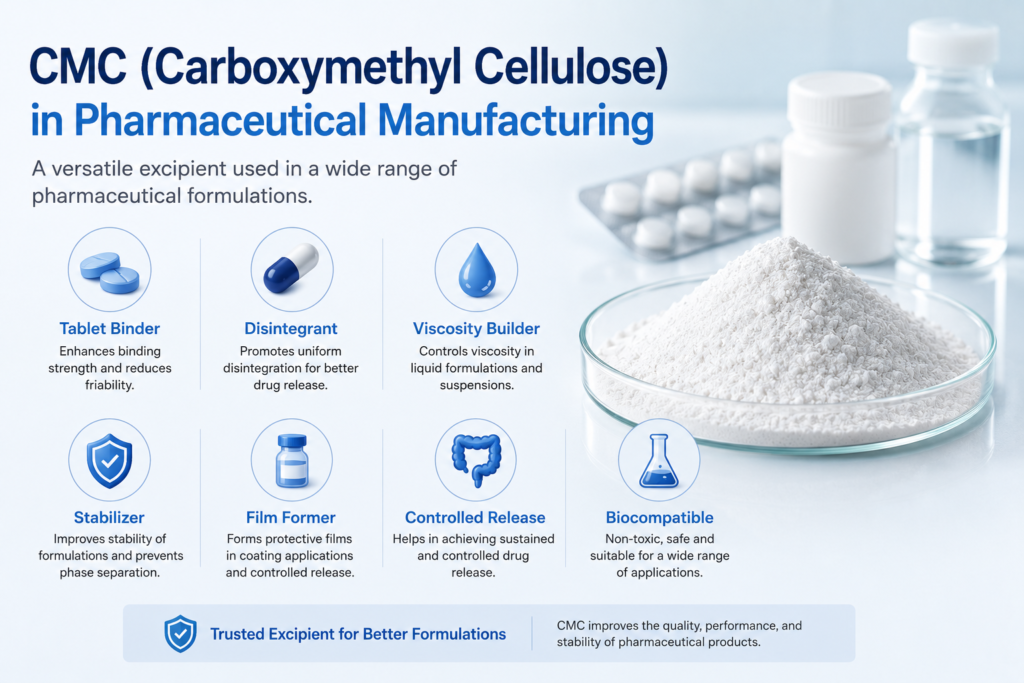
A pharmaceutical company from Pakistan recently ordered our pharmaceutical-grade CMC. They needed it for their new tablet formulation. The technical director explained how CMC helps bind the active ingredients together. Without it, tablets would crumble in the bottle.
Pharmaceutical CMC Applications
| Application | Purpose | Benefits |
|---|---|---|
| Tablet Binding | Holds ingredients | Prevents crumbling |
| Suspensions | Stabilizes liquid | Even distribution |
| Eye Drops | Viscosity modifier | Longer contact time |
| Wound Care | Film forming | Protective barrier |
| Controlled Release | Release modifier | Steady drug delivery |
The pharmaceutical industry has strict quality requirements. Our pharmaceutical-grade CMC meets USP and EP standards.5 We test every batch for purity and consistency. One mistake could affect thousands of patients. That's why we maintain clean room conditions in our pharmaceutical CMC production line. The viscosity must be exact. Too thick, and the medicine won't flow properly. Too thin, and it won't work as intended. We work closely with pharmaceutical companies to get the specifications just right.
How Is CMC Used for Personal Care and Cosmetics?
Why does your toothpaste have that perfect consistency? The answer might be CMC.
In personal care, CMC acts as a thickener in toothpaste, stabilizer in lotions, and film-former in hair products. It creates smooth textures and stable formulations.6
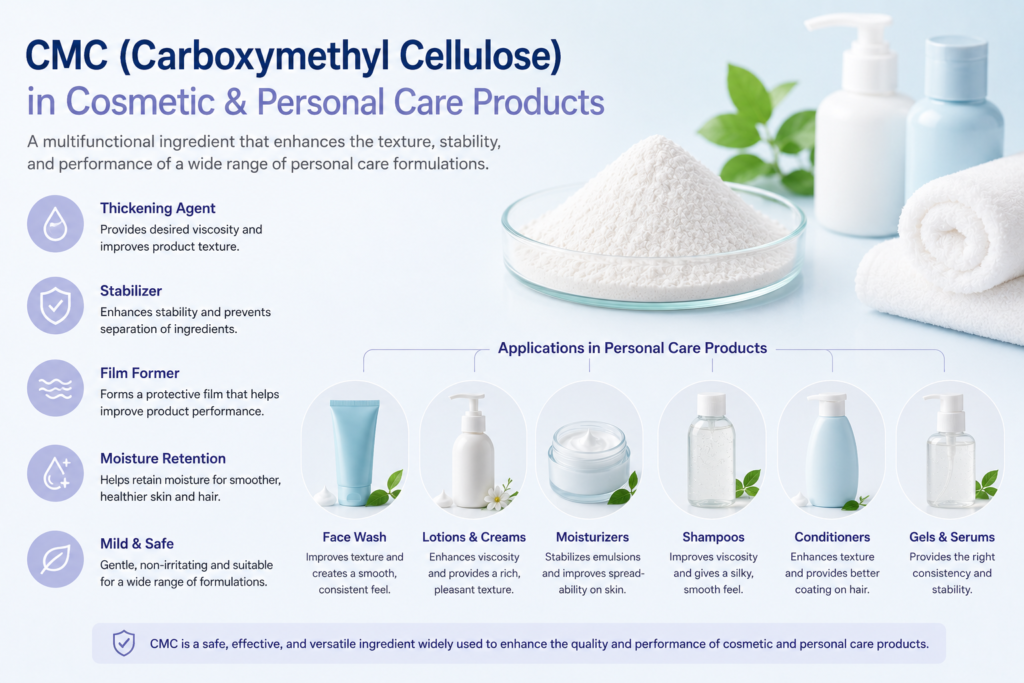
I remember when a cosmetics manufacturer from Mexico visited our factory. They were looking for a CMC grade for their new shampoo line. After testing our samples, they said it gave their product the exact thickness they wanted. Now they order 10 tons every month.
Personal Care CMC Uses
| Product Type | CMC Function | Key Benefits |
|---|---|---|
| Toothpaste | Binder & Thickener | Smooth texture |
| Shampoo | Viscosity control | Easy application |
| Lotions | Stabilizer | No separation |
| Face Masks | Film former | Even coverage |
| Hair Gels | Thickener | Hold without stickiness |
The cosmetics industry values CMC for its compatibility with skin. It's non-irritating and hypoallergenic.7 Our customers appreciate that it works well with other ingredients. It doesn't react with fragrances or active ingredients. One customer in Vietnam uses our CMC in their face mask products. They told me it helps the mask stick to skin evenly. The film it forms allows active ingredients to work better. Their sales doubled after improving their formula with our CMC.
Why Is CMC Important in Construction Materials?
Have you noticed how modern cement doesn't crack as easily? CMC plays a part in that improvement.
CMC improves workability in cement, prevents segregation in concrete, and enhances water retention in construction materials. It makes construction products more durable and easier to use.
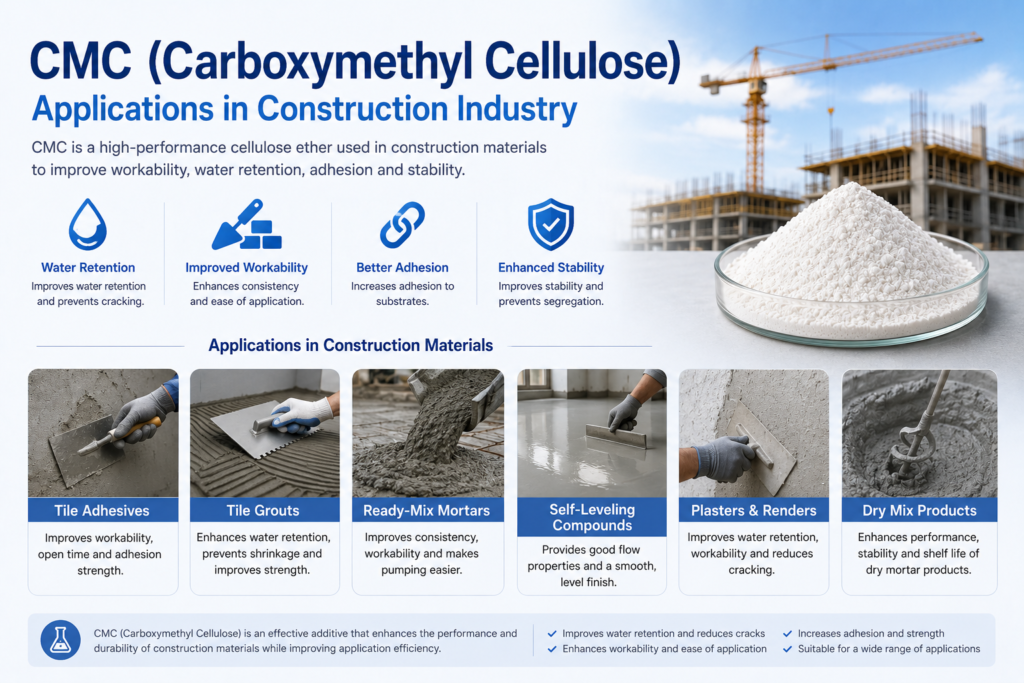
As someone who works closely with construction companies, I see the difference CMC makes every day. A large mortar factory in Saudi Arabia switched to our CMC last year. Their production manager called to thank us. He said their mortar quality improved significantly.
Construction Applications of CMC
| Material | CMC Function | Performance Improvement |
|---|---|---|
| Cement | Water retention | Better workability |
| Tile Adhesive | Anti-sag | Vertical application |
| Gypsum | Retarder | Extended working time |
| Putty | Thickener | Smooth application |
| Paint | Stabilizer | No settling |
In construction, every minute counts. Workers need materials that are easy to apply and reliable. CMC helps achieve both goals. It keeps water in the mix longer, giving workers more time to work. It prevents materials from separating during transport. Most importantly, it improves the final strength. Our construction-grade CMC meets industry standards for purity and performance. We've developed special grades for hot climates like those in the UAE and cold regions too.
What Are the Industrial Uses of Carboxymethyl Cellulose?
Beyond everyday products, where else does CMC make a difference in industry?
CMC serves in oil drilling as a fluid loss controller, in textiles as a sizing agent, in paper as a coating additive, and in mining as a pelletizing binder.

The industrial applications of CMC always fascinate me. Last year, an oil company from Iran contacted us for drilling-grade CMC. They needed it to control fluid loss in their wells. After using our product, they reported 30% less fluid loss compared to their previous supplier.
Major Industrial Applications
| Industry | Application | Key Function |
|---|---|---|
| Oil Drilling | Drilling fluids | Controls viscosity |
| Textiles | Sizing agent | Improves weaving |
| Paper | Coating additive | Surface quality |
| Mining | Pellet binder | Ore processing |
| Ceramics | Binder | Green strength |
Each industry has unique requirements. Oil drilling needs CMC that works under extreme pressure and temperature. Textile factories want CMC that washes out easily after weaving. Paper mills need CMC that improves printability. We've developed specialized grades for each application. Our technical team works with customers to optimize formulations. Sometimes small adjustments make big differences in performance.
What Are the Frequently Asked Questions (FAQ) About CMC?
Still have questions about CMC? Let me answer the most common ones I hear.
Common questions include CMC safety, storage methods, mixing procedures, compatibility with other materials, and selection of the right grade for specific applications.

Over my years at kehao, I've collected questions from customers worldwide. Here are the ones that come up most often:
Is CMC safe to use?
Yes, CMC is approved by FDA and other regulatory bodies. It's non-toxic and biodegradable. We provide safety data sheets with every shipment.
How do I store CMC?
Keep it in a cool, dry place. Moisture is the enemy. We package our CMC in moisture-proof bags. Properly stored, it lasts two years.
How do I mix CMC properly?
Add CMC slowly to water while stirring. Don't dump it all at once. It will form lumps. We provide mixing instructions with each grade.
Can I use CMC with other chemicals?
CMC works well with most chemicals. It's compatible with salts and other thickeners. However, avoid strong acids. They can break down CMC.
How do I choose the right CMC grade?
Tell us your application and desired viscosity. We'll recommend the best grade. We offer free samples for testing. Many customers try 2-3 grades before deciding.
Conclusion
CMC touches our lives in countless ways, from the food we eat to the buildings we live in, making modern life more convenient and comfortable.
-
"Cellulose - Wikipedia", https://en.wikipedia.org/wiki/Cellulose. Encyclopedia and technical sources describe carboxymethyl cellulose (CMC) as a water-soluble cellulose derivative widely used as a thickener, stabilizer, and binder in food, pharmaceutical, cosmetic, and industrial applications. Evidence role: definition; source type: encyclopedia. Supports: CMC is a versatile cellulose derivative used in food, pharmaceuticals, cosmetics, construction, and various industries as a thickener, stabilizer, and binder due to its unique water-soluble properties.. ↩
-
"Carboxymethyl Cellulose as a Food Emulsifier: Are Its Days ... - PMC", https://pmc.ncbi.nlm.nih.gov/articles/PMC10221013/. Technical and scientific literature confirms that CMC is a water-soluble cellulose derivative used as a thickener, stabilizer, and film-former in various consumer products. Evidence role: definition; source type: encyclopedia. Supports: CMC is a water-soluble polymer made from cellulose. It works as a thickener, stabilizer, and film-former in countless products we use daily.. ↩
-
"Carboxymethyl cellulose - Wikipedia", https://en.wikipedia.org/wiki/Carboxymethyl_cellulose. Scientific sources note that CMC increases viscosity in aqueous solutions without imparting stickiness, making it valuable as a thickener. Evidence role: mechanism; source type: paper. Supports: The magic of CMC lies in its ability to thicken water without making it sticky.. Scope note: The perception of 'stickiness' can be subjective and may vary with concentration and grade. ↩
-
"Chemistry Manufacturing and Controls (CMC) Guidances ...", https://www.fda.gov/animal-veterinary/guidance-industry/chemistry-manufacturing-and-controls-cmc-guidances-industry-gfis-and-questions-and-answers-qas. Regulatory and food safety sources confirm that CMC is generally recognized as safe (GRAS) and approved for use in foods by agencies such as the FDA and EFSA. Evidence role: expert_consensus; source type: government. Supports: The food industry loves CMC because it's safe and effective. It doesn't change taste or smell. It works in hot and cold conditions. Most importantly, it's approved by food safety agencies worldwide.. Scope note: Approval status may vary by country and application. ↩
-
"Chemistry Manufacturing and Controls (CMC) Guidances for ... - FDA", https://www.fda.gov/animal-veterinary/guidance-industry/chemistry-manufacturing-and-controls-cmc-guidances-industry-gfis-and-questions-and-answers-qas. Pharmacopoeial standards such as USP and EP specify quality requirements for pharmaceutical-grade CMC, including purity and viscosity parameters. Evidence role: definition; source type: institution. Supports: Our pharmaceutical-grade CMC meets USP and EP standards.. Scope note: Meeting standards depends on manufacturer compliance and batch testing. ↩
-
"Carboxymethyl cellulose - Wikipedia", https://en.wikipedia.org/wiki/Carboxymethyl_cellulose. Cosmetic science literature supports the use of CMC as a thickener, stabilizer, and film-former in personal care products such as toothpaste, lotions, and hair products. Evidence role: mechanism; source type: paper. Supports: In personal care, CMC acts as a thickener in toothpaste, stabilizer in lotions, and film-former in hair products. It creates smooth textures and stable formulations.. Scope note: Formulation specifics may vary by product type and region. ↩
-
"Carboxymethylcellulose excipient allergy: a case report - PMC - NIH", https://pmc.ncbi.nlm.nih.gov/articles/PMC8611968/. Dermatological and cosmetic safety assessments indicate that CMC is generally considered non-irritating and hypoallergenic when used in topical formulations. Evidence role: expert_consensus; source type: paper. Supports: The cosmetics industry values CMC for its compatibility with skin. It's non-irritating and hypoallergenic.. Scope note: Rare allergic reactions may still occur in sensitive individuals. ↩