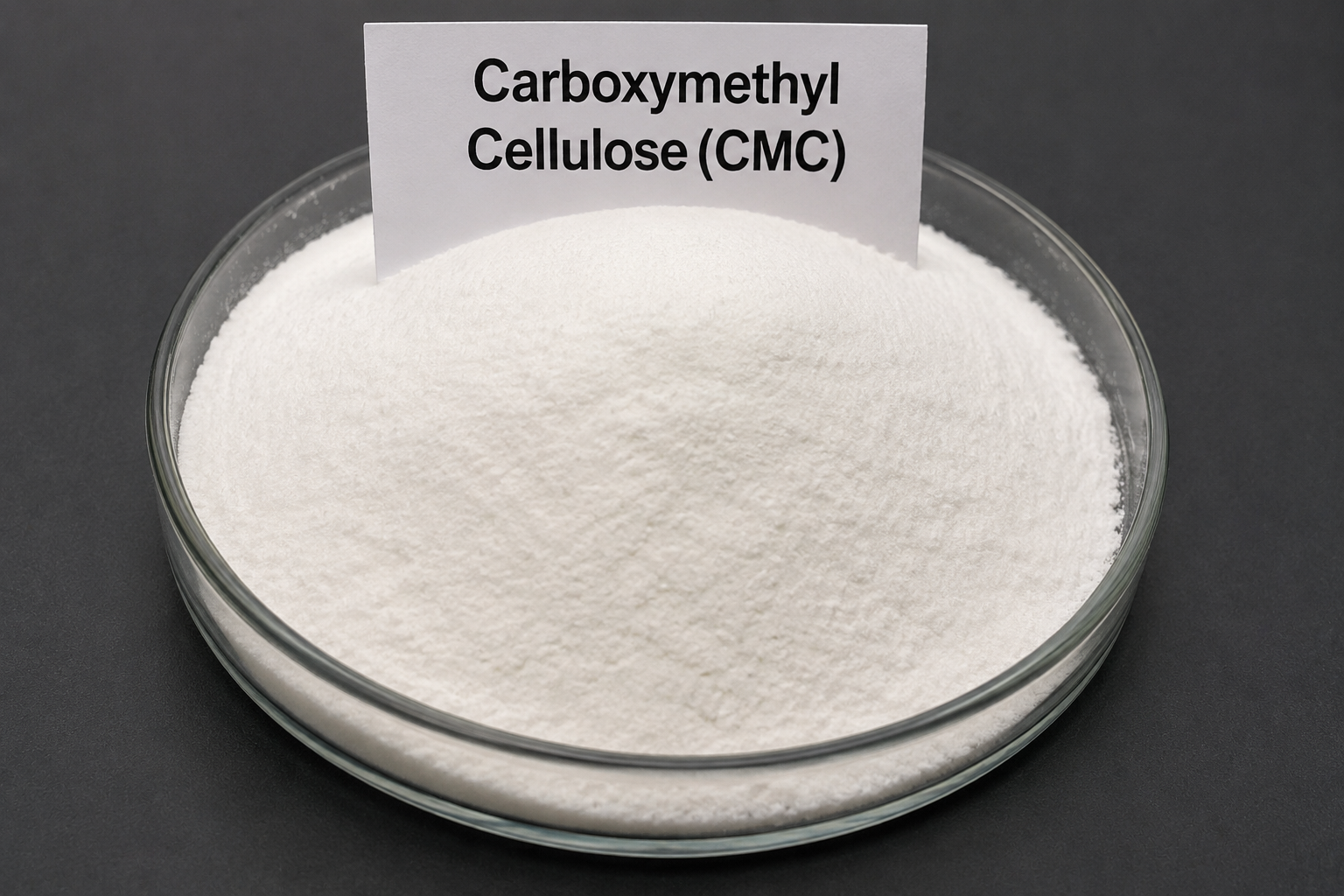
Having trouble understanding this common ingredient? You see it listed everywhere, from food to paint. I'll ahow you that Carboxymethyl Cellulose is a multi-talented powder that improves countless products.
Carboxymethyl cellulose (CMC) is an incredibly versatile, water-soluble polymer that works as a thickener, binder, and stabilizer1. You can find it in many products we use every day, including ice cream, toothpaste, building materials, and medicines, where it enhances texture, consistency, and performance.

The list of products that use CMC is surprisingly long. I've been in this business for years, and I'm still impressed by its range. I’ve helped customers from so many different industries find the right grade of CMC for their specific needs, from large paint factories in Saudi Arabia to food producers in Brazil. Let's break down where this amazing material is used and why it's so important.
What Exactly is Carboxymethyl Cellulose (CMC)?
Confused by chemical names on ingredient labels? You see CMC everywhere but don't know what it is. I'll explain it in the simplest terms.
CMC is a cellulose derivative, modified with carboxymethyl groups. It is made from natural cellulose, like wood pulp or cotton. This makes it non-toxic and biodegradable.2 Its primary function is to control the properties of water-based systems and add viscosity.
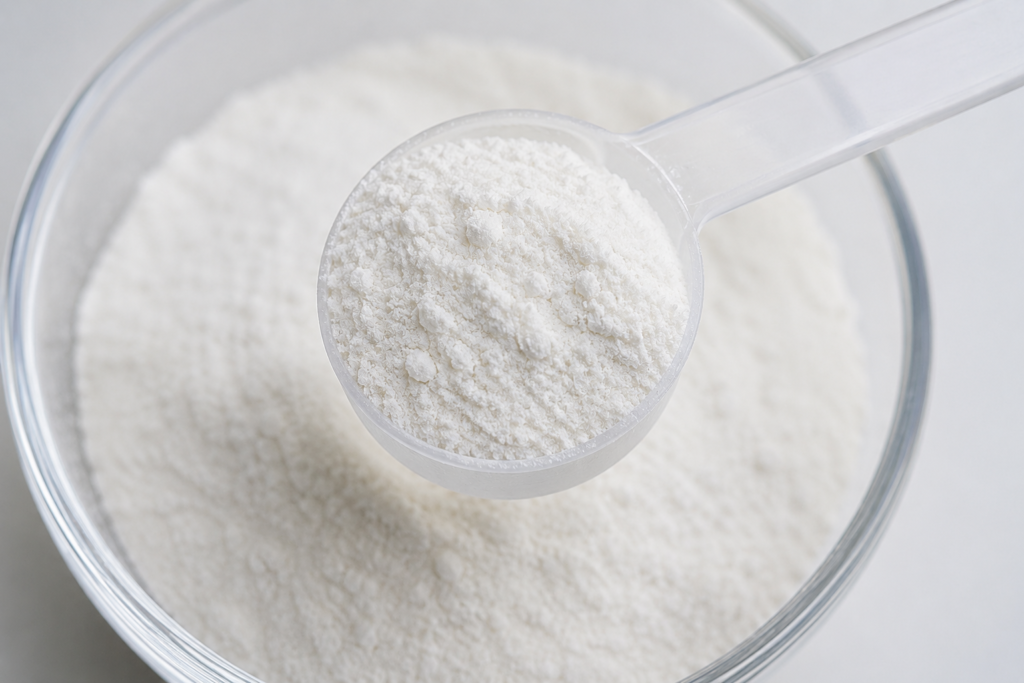
At my factory, we handle CMC powder every single day. Think of it as a super-absorbent powder derived from plants. The base material is cellulose, which is the main part of plant cell walls. We take this natural cellulose and put it through a chemical process to make it soluble in water. The result is CMC, a fine white powder that dissolves to create a clear, thick solution or gel.
The key to its versatility lies in its properties, which we can control during manufacturing.
Degree of Substitution (DS)
This refers to how many carboxymethyl groups are attached to the cellulose. A higher DS generally means better solubility and performance in certain solutions.3 It's a technical detail, but it's crucial for customers. A customer like Mark Chen needs a specific DS for his putty powder to get the right water retention.
Viscosity
This is the most common specification. We produce CMC in a wide range of viscosities, from low (like a thin syrup) to extremely high (like a thick gel). The choice depends entirely on the final product's needs.
Here is a simple table to show how these factors matter:
| Property | Low Grade / DS | High Grade / DS | Typical Use |
|---|---|---|---|
| Viscosity | Thin solution | Thick gel | Low for paper, High for tile adhesive |
| DS | Lower solubility | Higher solubility | Controls how it works in salt water |
Understanding these basics is the first step to seeing why CMC is so valuable in so many different fields.
How is CMC Used in Food and Drinks?
Want creamier ice cream and smoother sauces? The secret might be a simple powder. I will show you how CMC, or E466, improves your favorite foods.
In the food industry, food-grade CMC acts as a thickener, stabilizer, and emulsifier.4 It prevents ice crystals in frozen desserts, improves the texture of baked goods, and provides body to low-calorie drinks without adding fat or calories.
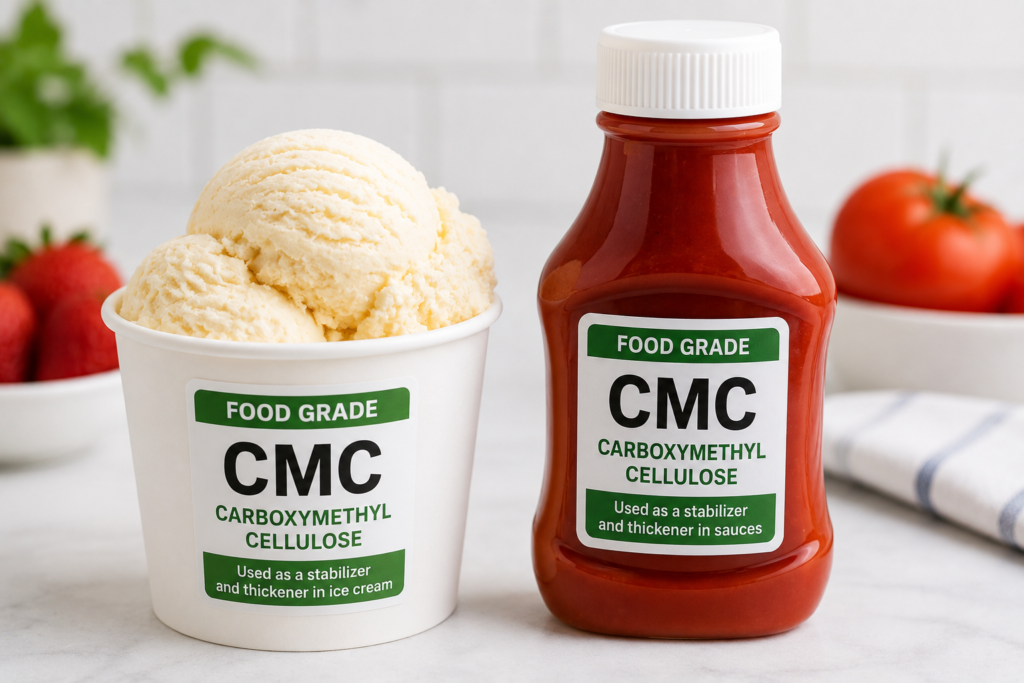
We don't manufacture food-grade CMC at my factory, but many of my business contacts do. I know how strict the quality control is for it. When you see CMC on a food label (often listed as E466 in Europe), it's performing one of several key jobs to improve your eating experience. Its ability to control water is the magic behind its many uses. For example, it helps create a consistent, pleasant mouthfeel.
Let's look at its specific roles.
Stabilizer
In products like ice cream and frozen yogurt, CMC is a game-changer. It stops large ice crystals from forming during freezing and thawing cycles. This ensures the product stays smooth and creamy, not grainy. It also stabilizes the proteins in dairy products like yogurt drinks, preventing them from separating.
Thickener
CMC gives body and texture to many foods without changing their flavor. It's used to thicken sauces, soups, and gravies. Because it's effective in small amounts and doesn't add calories, it's perfect for low-fat or low-calorie products like salad dressings and diet drinks.
Here’s a quick breakdown:
| Food Product | Function of CMC | Result |
|---|---|---|
| Ice Cream | Prevents ice crystal formation | Smooth, creamy texture |
| Bakery Goods | Retains moisture, improves volume | Fresher for longer, better texture |
| Sauces/Dressings | Thickens and stabilizes the emulsion | Consistent texture, prevents separation |
| Beverages | Provides mouthfeel and suspends solid particles | A richer feel in diet drinks, pulp stays suspended |
The purity and grade are critical for food applications, which is why sourcing from a reliable, certified manufacturer is non-negotiable in that industry.
What is CMC's Role in Medicine and Pharma?
Ever wonder what holds a pill together? Or what makes your eye drops feel thick and soothing? The answer is often a key ingredient that ensures effectiveness.
In pharmaceuticals, CMC is used as a binder in tablets, a thickener in liquid medicines, and a stabilizer in suspensions.5 Its ability to form a gel helps with controlled drug release. It's also the key ingredient in many lubricating eye drops.
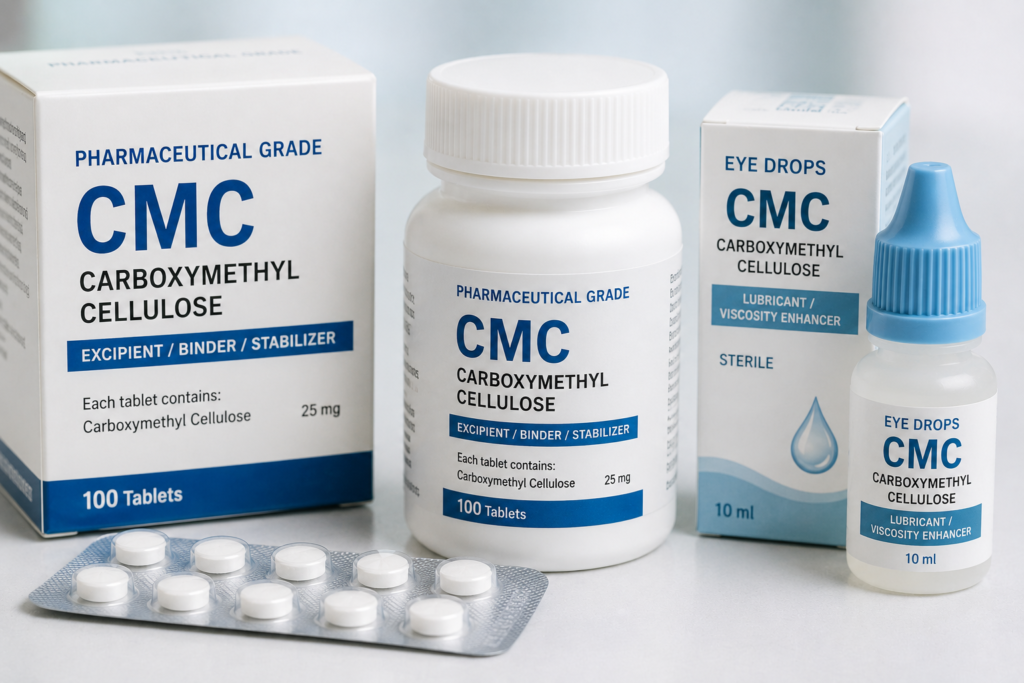
While my factory focuses on industrial and construction grades, the principles are the same, but the purity standards for pharma-grade CMC are on another level. In medicine, every component must be safe, stable, and predictable. CMC fits this description perfectly. It is inert, meaning it doesn't react with the active drugs, and its physical properties are incredibly useful.
Let's dive into its primary pharmaceutical functions.
Tablet Manufacturing
CMC acts as an excellent binder. It helps hold the tablet's ingredients together during the compression process. After you swallow the tablet, CMC helps it to disintegrate. It absorbs water, swells, and breaks the tablet apart, allowing the active drug to be released and absorbed by the body. This is a critical process called bioavailability.
Liquid Formulations
For syrups, suspensions, and oral gels, CMC is the go-to viscosity modifier. It thickens the liquid to the perfect consistency. This does two things: first, it makes the medicine easier to pour and swallow. Second, in a suspension where drug particles can settle, the thick CMC solution keeps the particles evenly distributed. This ensures you get a consistent dose with every spoonful.
A common example is in lubricating eye drops, often sold as "artificial tears." The CMC provides viscosity, so the drop stays on your eye longer, providing lasting relief from dryness.
| Pharmaceutical Use | CMC's Function | Benefit for the Patient |
|---|---|---|
| Tablets | Binder & Disintegrant | Tablet is stable but dissolves properly for drug release |
| Oral Suspensions | Thickener & Suspending Agent | Ensures even dosage, prevents particles from settling |
| Eye Drops | Viscosity Modifier & Lubricant | Soothes and protects the eye surface for longer |
| Topical Gels/Creams | Gelling Agent | Creates a stable, easy-to-apply base for active drugs |
The precision required in pharma-grade CMC is immense, and it highlights how a single chemical can be adapted for such sensitive and important applications.
Why is CMC in My Toothpaste and Shampoo?
Looking for that perfect smooth texture in your lotion or toothpaste? A single ingredient is often responsible for that luxurious feel. I'll reveal the secret.
CMC is a key ingredient in cosmetics and personal care products. It thickens toothpaste, stabilizes lotions and creams, and improves the consistency of shampoos and gels. It provides a smooth, non-greasy feel and helps products spread evenly on the skin.6
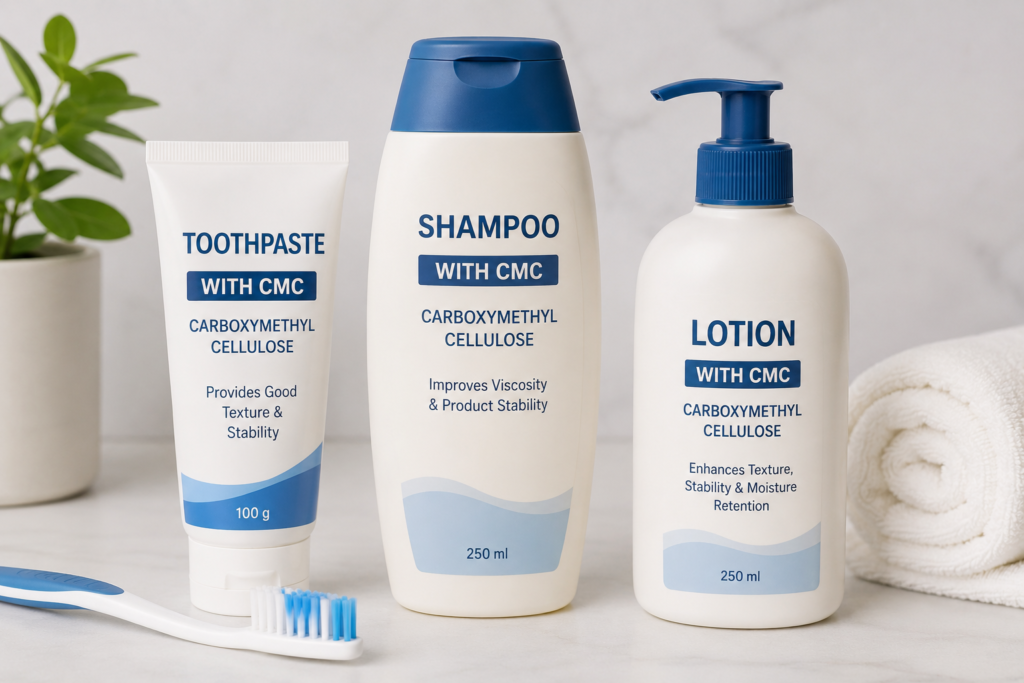
The look and feel of a product are just as important as its function. This is where CMC plays a huge role in the cosmetics industry. It’s a master of texture. When you squeeze toothpaste onto your brush and it comes out as a perfect, smooth ribbon that doesn't collapse, you can thank CMC. It acts as a binder and thickener, preventing the solid and liquid ingredients from separating in the tube.
This principle extends to many other products on your bathroom shelf.
Creams and Lotions
In skincare, CMC is used as an emulsion stabilizer. It keeps the oil and water components of a lotion from separating over time. It also contributes to a non-greasy, silky feel when you apply the product to your skin, which is a highly desirable quality.
Shampoos and Body Gels
The main job of CMC here is to create the right viscosity. It makes the shampoo thick enough to pour easily from the bottle without being watery, and it helps create a rich lather. By controlling the flow of the product, it enhances the user experience.
Here’s a simple guide to its role:
| Product | Primary Function of CMC | User Benefit |
|---|---|---|
| Toothpaste | Binder, Thickener | Smooth texture, prevents ingredient separation |
| Lotions | Emulsion Stabilizer, Thickener | Prevents separation, non-greasy feel, smooth application |
| Shampoo | Viscosity Modifier | Rich, easy-to-pour consistency, helps with lather |
| Face Masks | Film-former, Thickener | Creates a gel base, provides smooth application |
In this industry, consistency is key. A batch of lotion that's too thin or a toothpaste that separates is a failed product. Using a high-quality, stable CMC ensures that the product the customer buys in June feels exactly the same as the one they bought in January.
How Does CMC Improve Construction Materials Like Mortar?
Tired of your mortar drying too fast or tile adhesive not sticking properly? There's a simple additive that solves these common problems. This is my area of expertise.
In construction, CMC is added to cement-based materials like tile adhesives and mortars. It improves water retention, preventing the mix from drying too quickly. This provides longer workability time and enhances adhesion, reducing cracks and improving overall strength.

This is the world I live in every day at my factory, Kehao. My customers, like Mark Chen from Saudi Arabia, rely on our construction-grade cellulose ethers to make high-quality products. CMC is a vital additive in dry-mix mortars. When you just add water on the construction site, the CMC immediately dissolves and starts working its magic.
Its two most important functions are water retention and improving workability.
Water Retention
In hot climates or on absorbent surfaces like concrete blocks, water in the mortar can evaporate or be absorbed too quickly. If this happens, the cement doesn't have enough water to hydrate properly, which means it won't reach its full strength. CMC holds onto the water, keeping the mix wet and workable for longer. This is critical for strong, crack-free plaster and good adhesion.
Workability and Adhesion
By thickening the mortar mix, CMC makes it creamier and easier to apply with a trowel. It prevents sagging, which is especially important when applying tile adhesive to a vertical wall. The improved workability and longer open time7 (the time you have to adjust a tile before the adhesive sets) make the construction worker's job much easier and lead to a better final result.
| Construction Application | Key Function of CMC | Benefit for the Builder |
|---|---|---|
| Tile Adhesive | Water Retention, Anti-Sag, Longer Open Time | Tiles don't slip, more time for adjustment, stronger bond |
| Wall Putty/Plaster | Water Retention, Improved Workability | Smooth application, prevents cracking, easy to trowel |
| Joint Compound | Thickener, Binder | Good consistency, prevents shrinkage and cracking |
A few years ago, a new customer from a hot country was having big problems with his tile adhesive. It was drying so fast his workers couldn't keep up. We sent him samples of our CMC with high water retention. It solved his problem immediately and he's been a loyal customer ever since. This is the real-world impact of choosing the right additive.
What Other Industrial Applications Does CMC Have?
Think you know all of CMC's uses? Its versatility extends far beyond food and construction. Let's explore its role in other heavy industries where performance is everything.
CMC has many other industrial uses. It's used in the paper industry to improve surface smoothness and printability. In textiles, it's used for sizing fabrics8. It is also a key component in drilling muds for oil and gas exploration9.

Beyond the applications we see in our daily lives, CMC is a workhorse in several major industries. In these settings, it's chosen for its ability to control viscosity, act as a binder, and form films, often in challenging conditions. The grade and purity might be different, but the fundamental chemistry is the same.
Let's look at a few examples.
Paper Industry
CMC is used as a surface sizing agent. It is applied to the surface of paper or cardboard. This partially seals the paper's pores, making it less absorbent. This results in sharper, cleaner printing because the ink sits on the surface rather than bleeding into the fibers. It also improves the paper's strength and smoothness.
Textile Industry
In textile manufacturing, threads (the warp) are coated with a sizing agent before weaving to make them stronger and more resistant to abrasion. CMC is an excellent sizing agent because it forms a protective film on the yarn. Later, after weaving, the CMC can be easily washed away.
Oil and Gas Drilling
This is a very demanding application. When drilling an oil well, a special fluid called "drilling mud" is circulated. CMC is added to this mud to control its viscosity and to reduce fluid loss into the surrounding rock formation. It helps lubricate the drill bit and carry rock cuttings up to the surface. It needs to perform under high temperatures and pressures, so special grades of CMC are required.
| Industry | Function of CMC | Result |
|---|---|---|
| Paper | Surface Sizing Agent, Coating Binder | Smoother surface, better printability, increased strength |
| Textiles | Warp Sizing Agent | Stronger, smoother yarn for efficient weaving |
| Oil Drilling | Viscosity Modifier, Fluid Loss Reducer | Stable drilling mud, efficient drilling operations |
| Detergents | Anti-Redeposition Agent | Prevents dirt from resettling on clothes during wash |
From making your laundry cleaner to helping us get energy from the ground, CMC's industrial reach is truly impressive. It's a testament to the power of modifying a simple, natural polymer.
What Are Some Common Questions About CMC?
Still have questions about Carboxymethyl Cellulose? You are not the alone. I have gathered the most common questions my customers ask me about this product.
People often ask if CMC is safe, natural, or vegan. Yes, food-grade CMC is considered safe for consumption, derived from plant cellulose, and suitable for vegan diets. Others ask about its price and availability, which vary by grade and supplier.

When I talk to potential customers, whether at a big exhibition or over a video call, they always have great questions. It's my job to provide clear and honest answers. Here are some of the most frequent topics that come up in conversation, which might help clear up any remaining doubts you have.
Is CMC safe to eat?
Yes, when we talk about food-grade CMC, it is very safe. It has been studied extensively and approved as a food additive by regulatory agencies all over the world, including the US FDA and the European Food Safety Authority (EFSA). It passes through the body largely undigested, similar to other forms of dietary fiber.
Is CMC a natural product?
This is a great question. I would call it "semi-synthetic." The starting material, cellulose, is 100% natural and comes from wood or cotton. However, it undergoes a chemical process to become water-soluble CMC. So, while it has a natural origin, it is chemically modified to gain its useful properties.
How do I choose the right CMC grade?
This is the most important question for a B2B buyer. The answer is: it completely depends on your application. You need to consider the required viscosity, purity, and particle size. Someone making tile adhesive needs a high-viscosity grade, while someone in the paper industry might need a low-viscosity one. This is where partnering with an experienced supplier like Kehao is crucial. We help you select, or even customize, the perfect grade for your product to ensure optimal performance and cost-effectiveness.
Why is a stable supplier so important?
I once had a client who came to me after a disaster. His previous supplier sent him an inconsistent batch of cellulose ether. His entire production run of wall putty was ruined because it didn't perform correctly. This cost him a lot of money and damaged his reputation. Quality control and consistency from batch to batch are not just nice-to-haves; they are essential. It's the core of my promise to my customers.
Conclusion
From food to construction and beyond, CMC's uses are vast. For consistent quality and expert advice on the right grade for your needs, my team is here to help.
-
"Carboxymethyl cellulose", https://en.wikipedia.org/wiki/Carboxymethyl_cellulose. Authoritative sources describe carboxymethyl cellulose (CMC) as a water-soluble polymer widely used as a thickener, binder, and stabilizer in various industries. Evidence role: definition; source type: encyclopedia. Supports: Carboxymethyl cellulose (CMC) is an incredibly versatile, water-soluble polymer that works as a thickener, binder, and stabilizer.. ↩
-
"Safety and efficacy of sodium carboxymethyl cellulose for all animal ...", https://pmc.ncbi.nlm.nih.gov/articles/PMC7393346/. Scientific and regulatory sources indicate that carboxymethyl cellulose is derived from natural cellulose sources such as wood pulp or cotton, and is generally considered non-toxic and biodegradable. Evidence role: general_support; source type: government. Supports: It is made from natural cellulose, like wood pulp or cotton. This makes it non-toxic and biodegradable.. Scope note: Biodegradability and toxicity may depend on specific chemical modifications and environmental conditions. ↩
-
"What Does CMC 'Degree of Substitution' (D.S.) Actually Mean for ...", https://xhhpmc.com/what-does-cmc-degree-of-substitution-d-s-actually-mean-for-your-final-product-quality/. Materials science literature explains that a higher degree of substitution (DS) in carboxymethyl cellulose typically leads to increased solubility and improved performance in aqueous solutions. Evidence role: mechanism; source type: paper. Supports: A higher DS generally means better solubility and performance in certain solutions.. Scope note: Performance may vary depending on the application and other formulation factors. ↩
-
"Carboxymethyl cellulose - Wikipedia", https://en.wikipedia.org/wiki/Carboxymethyl_cellulose. Food regulatory agencies and scientific reviews confirm that food-grade carboxymethyl cellulose (E466) is used as a thickener, stabilizer, and emulsifier in various food products. Evidence role: definition; source type: government. Supports: In the food industry, food-grade CMC acts as a thickener, stabilizer, and emulsifier.. ↩
-
"Carboxymethyl cellulose - Wikipedia", https://en.wikipedia.org/wiki/Carboxymethyl_cellulose. Pharmaceutical references and pharmacopeias list carboxymethyl cellulose as a common excipient used as a binder in tablets, a thickener in liquid medicines, and a stabilizer in suspensions. Evidence role: definition; source type: institution. Supports: In pharmaceuticals, CMC is used as a binder in tablets, a thickener in liquid medicines, and a stabilizer in suspensions.. ↩
-
"The Role Of Cmc In Cosmetics", https://ojs.library.okstate.edu/osu/plugins/generic/pdfJsViewer/pdf.js/web/viewer.html?file=%2Fosu%2Findex.php%2Findex%2Flogin%2FsignOut%3Fsource%3D%2Esolalal.com%2Fketo%2F&id=MhatYsEe3cS. Cosmetic formulation studies indicate that carboxymethyl cellulose can contribute to a smooth, non-greasy texture and improve the spreadability of topical products. Evidence role: mechanism; source type: paper. Supports: It provides a smooth, non-greasy feel and helps products spread evenly on the skin.. Scope note: Sensory effects may depend on the overall formulation and concentration used. ↩
-
"Top 10 Common Issues in Tile Adhesive: Everything You Need to ...", https://whhpmc.com/top-10-common-issues-in-tile-adhesive-everything-you-need-to-know/. Technical literature on tile adhesives notes that CMC can increase open time and improve workability, allowing for easier tile adjustment before setting. Evidence role: mechanism; source type: research. Supports: The improved workability and longer open time (the time you have to adjust a tile before the adhesive sets) make the construction worker's job much easier and lead to a better final result.. Scope note: Degree of improvement may vary with product formulation and environmental conditions. ↩
-
"Carboxymethyl cellulose - Wikipedia", https://en.wikipedia.org/wiki/Carboxymethyl_cellulose. Textile industry references indicate that CMC is commonly used as a sizing agent to strengthen yarns during weaving. Evidence role: mechanism; source type: education. Supports: In textiles, CMC is used for sizing fabrics.. Scope note: Use may vary by region and specific textile process. ↩
-
"Carboxymethyl Cellulose (CMC) for Oil Drilling | Fluid Loss Control ...", https://whhpmc.com/cmc-for-oil-drilling/. Petroleum engineering literature identifies CMC as a key additive in drilling muds to control viscosity and reduce fluid loss during oil and gas exploration. Evidence role: mechanism; source type: education. Supports: CMC is a key component in drilling muds for oil and gas exploration.. Scope note: Other additives may also be used depending on drilling conditions. ↩