Inconsistent mortar strength ruins projects and your name. A single bad batch means costly failures. We solve this by ensuring every HPMC shipment delivers predictable 28-day strength1 for your peace of mind.
We ensure 28-day strength consistency through four key steps: strict raw material standards, precise chemical modification, perfect surface treatment, and rigorous quality control. This system means your final mortar product performs reliably, batch after batch, protecting your reputation and project integrity.
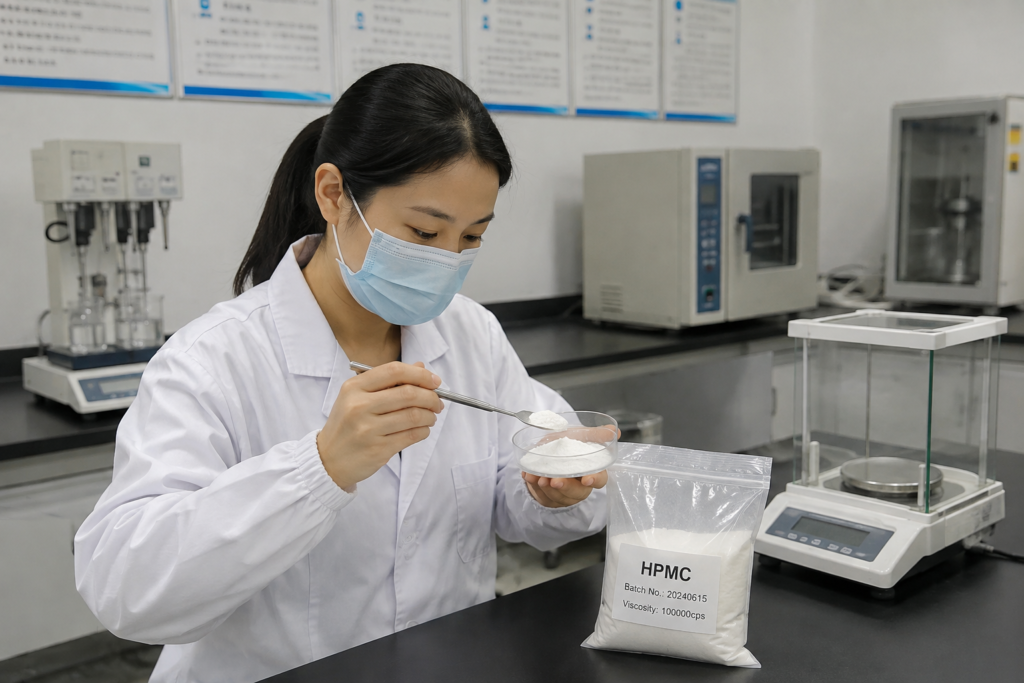
That's the short answer. But if you're like my friend Mark from Saudi Arabia, you know the details are what separate a good supplier from a great one. Mark always asks me, "Ada, how exactly do you control these things?" He knows that true stability comes from a deep understanding of the process. So, let’s break down each of these steps. You will see how we build consistency into our HPMC from the very first stage.
Why does raw material standardization matter so much?
Using low-grade raw cotton creates weak, unreliable HPMC. This inconsistency can ruin your mortar mixes. We solve this by standardizing our raw materials, using only top-quality refined cotton for every batch2.
Raw material standardization is crucial because the quality of the refined cotton directly impacts the final properties of HPMC. Consistent fiber length and purity ensure a stable chemical reaction, leading to predictable water retention, workability, and most importantly, the final 28-day strength of your mortar.
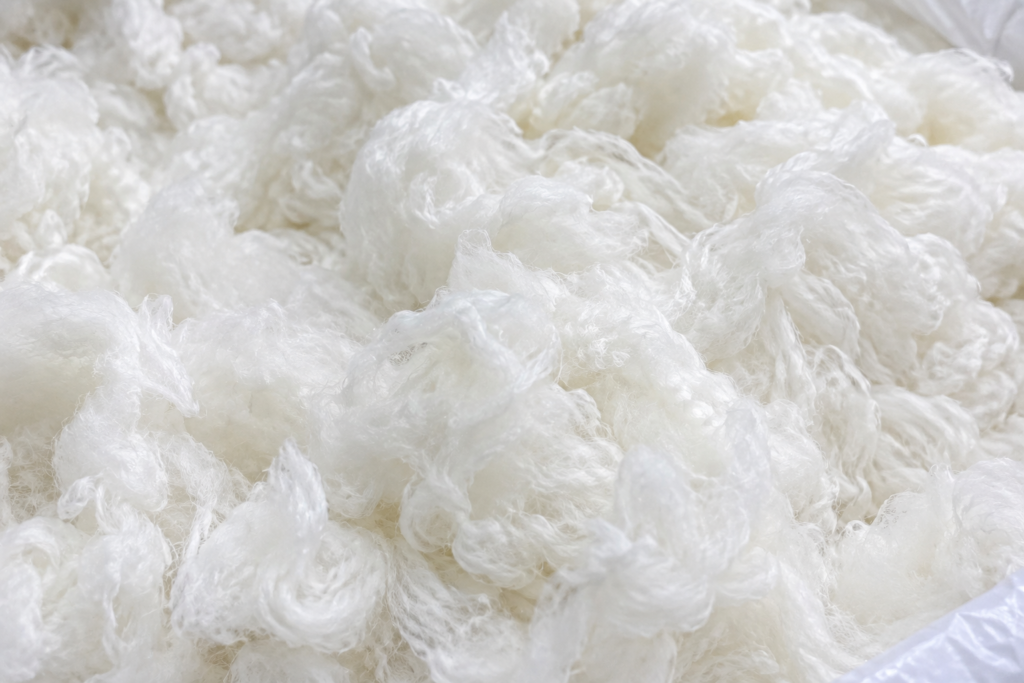
Everything starts with the refined cotton. You cannot make a high-quality product from low-quality materials. We source our cotton from specific regions known for producing long, pure fibers. Before any cotton enters our production line, it goes through strict testing. We check for purity, alpha-cellulose content, and degree of polymerization. If a batch of cotton does not meet our strict standards, we simply reject it. This is non-negotiable for us. Why are we so strict? Because impurities in the cotton can interfere with the chemical reactions later on. This leads to HPMC with inconsistent viscosity and poor water retention. For you, this means mortar that is difficult to work with and, worse, has unreliable final strength. Think about it: a small variation in the raw material can cause a big headache on a construction site. We prevent that headache from ever starting.
| Parameter | Our Kehao Standard | Industry Average | Impact of Low Standard |
|---|---|---|---|
| Alpha-Cellulose | >98% | 95-97% | Lower etherification efficiency |
| Viscosity (as raw pulp) | Tightly Controlled | Wider Range | Unpredictable final HPMC viscosity |
| Impurity Content | <0.1% | >0.5% | Side reactions, poor strength |
This strict selection is the first, and maybe most important, step in guaranteeing that our HPMC will give you the 28-day strength you expect.
How does precise chemical modification control final strength?
An uncontrolled chemical reaction results in unstable HPMC. This makes your mortar's final strength a complete gamble. We use precise chemical modification to lock in consistency for every single batch.
Precise chemical modification controls final strength by carefully managing the degree of substitution (DS). By dynamically adjusting the DS within a tight range (0.3-0.5), we can ensure the 28-day compressive strength has a fluctuation of less than 5%. This precision guarantees reliable and predictable performance.
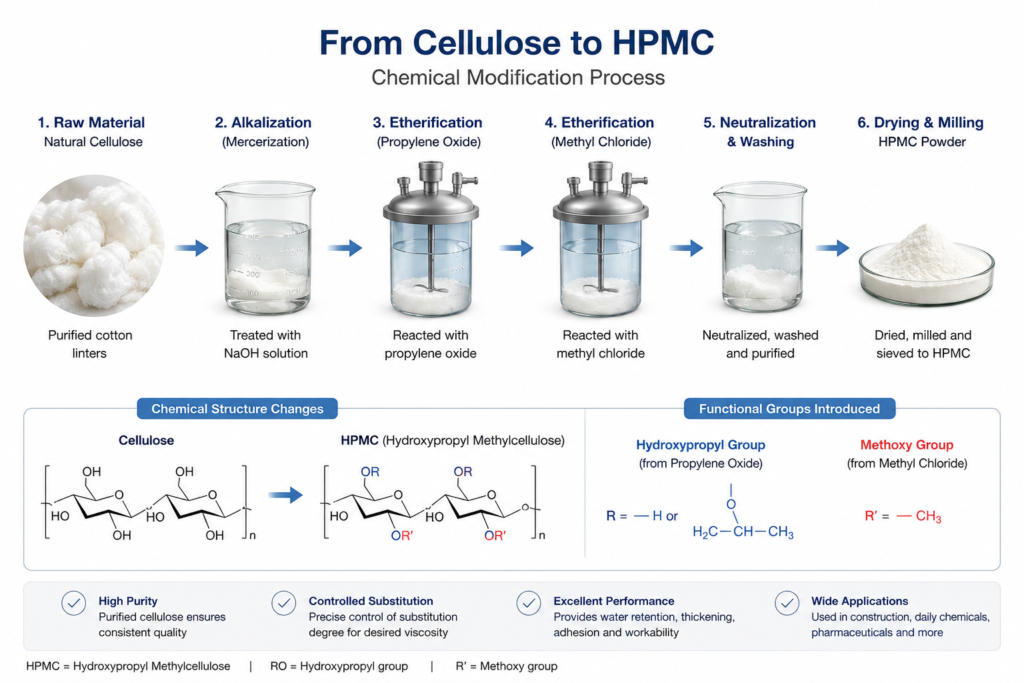
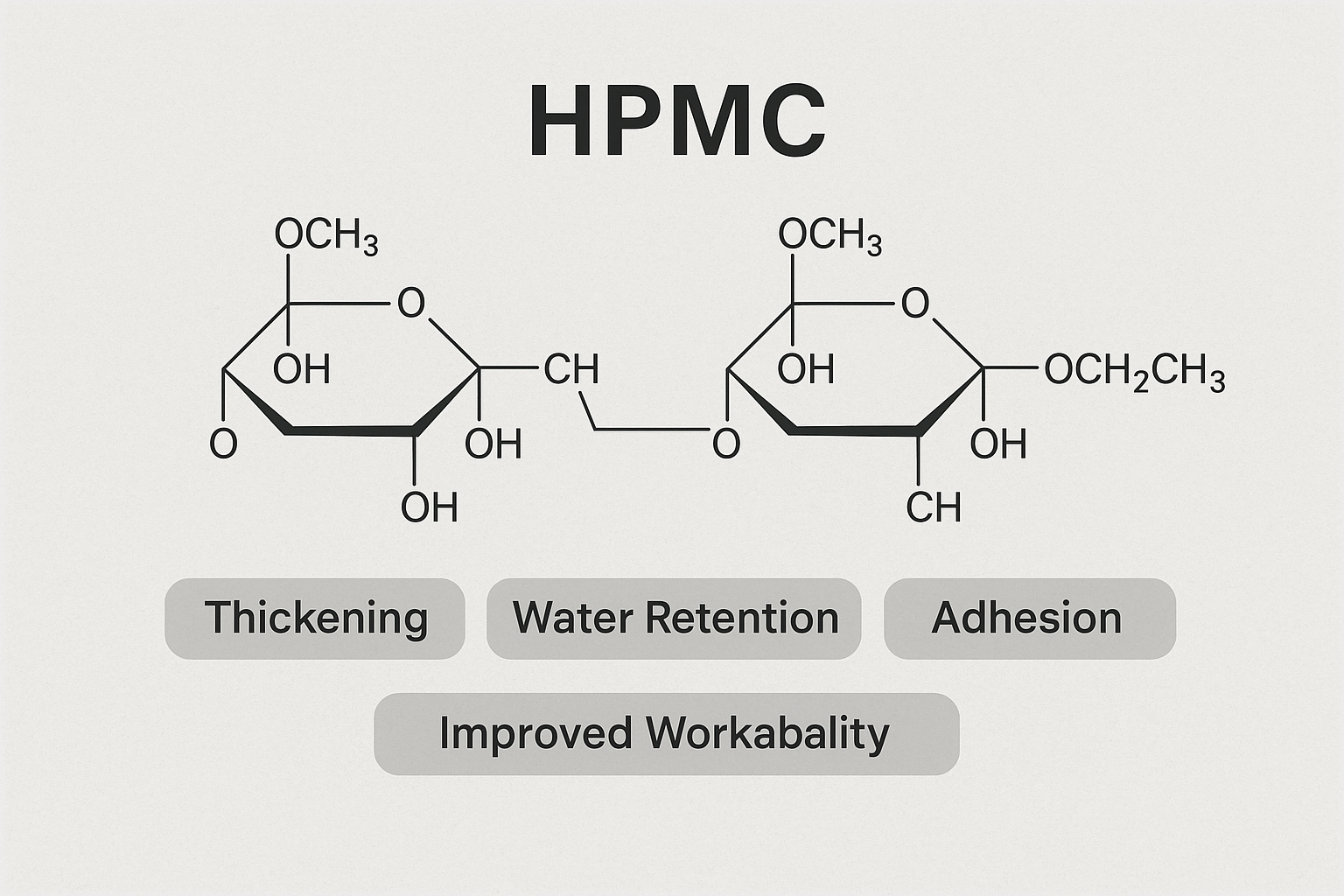
This is where the real "magic" happens. The strength and properties of HPMC are determined by its chemical structure. We focus on two key areas here. First is the Degree of Substitution (DS)3. This tells us how many hydroxypropyl and methoxy groups are attached to the cellulose chain. We use a dynamic system to control the DS within a very narrow range of 0.3 to 0.5. This precision is why our HPMC has a 28-day compressive strength fluctuation of only around ±1.2MPa. When I talk to buyers who have sourced from other regions, like India, they tell me they see fluctuations three times larger than that. Second is our low-temperature etherification process. Many producers react at higher temperatures to speed things up. We keep our reaction temperature at a steady 40℃. This slower, more controlled process reduces unwanted by-products and creates a more perfect polymer structure. The result? A direct increase in final mortar strength by up to 15%. This is not a guess; it's something we have measured and proven in our labs.
| Process Control | Our Kehao Method | Common Industry Practice | Your Benefit |
|---|---|---|---|
| DS Fluctuation | ≤5% (±1.2MPa) | Up to 15% | Highly predictable final strength |
| Etherification Temp. | 40℃ (Low Temp) | 60-70℃ (High Temp) | +15% stronger mortar, fewer defects |
| Result | Consistent, High-Strength HPMC | Variable Performance | Peace of mind, reliable projects |
This level of control means you are not just buying HPMC; you are buying certainty.
Does surface treatment really improve dispersion and strength?
HPMC clumping in water creates a lumpy, useless mix. These clumps lead to weak spots and wasted material. Our special surface treatment guarantees perfect dispersion every time you mix.
Yes, absolutely. Proper surface treatment creates a temporary barrier, preventing HPMC particles from clumping when added to water. This ensures each particle dissolves completely and evenly, leading to uniform hydration of a cement and, ultimately, a stronger, more consistent 28-day mortar strength without defects.
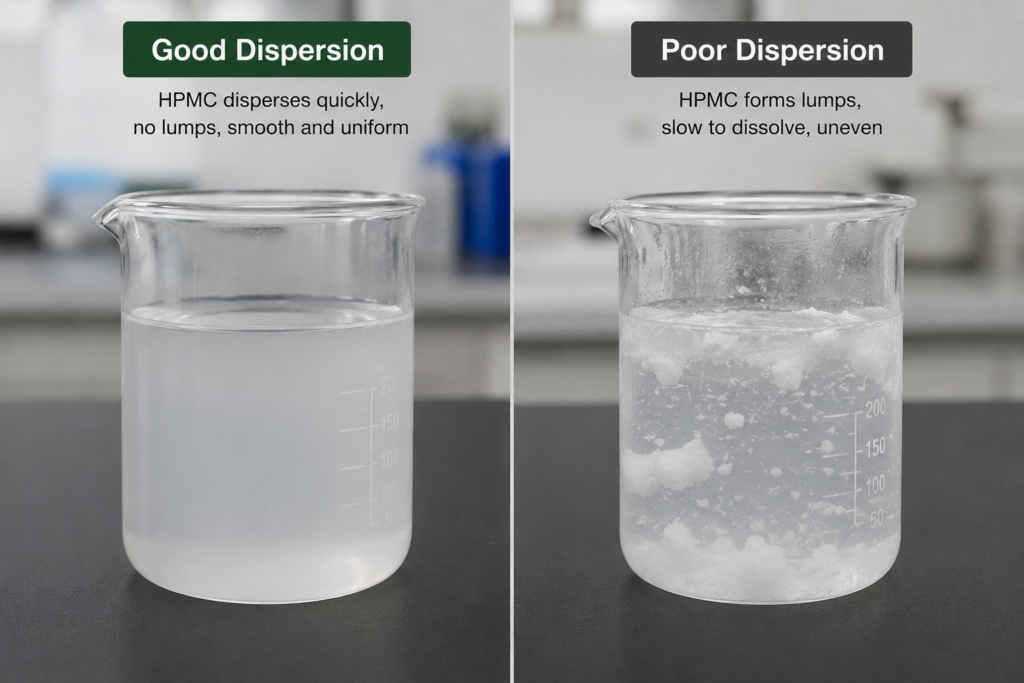
You can have the best HPMC in the world, but if it clumps up when you add it to water, it is useless. This is a common pain point I hear from customers. Clumps are basically undissolved pockets of HPMC. They do not contribute to water retention and create weak spots in the final plaster or mortar. This is where surface treatment and particle size control become critical. Our surface treatment is a process that slightly modifies the surface of each HPMC granule. This creates a "delayed hydration" effect. When you add our HPMC to cold water, it disperses easily without clumping. Only after a few minutes, as the pH changes or it is mixed thoroughly, does it start to dissolve and thicken the water. Combined with this, we use an advanced particle size classification system. We ensure that over 90% of our particles are between 80 and 120 mesh. This specific size range is the sweet spot. It is fine enough to dissolve fully but not so fine that it creates dust or clumps instantly. This avoids localized high concentrations of HPMC that lead to lumps.
| Feature | Our Kehao Method | Consequence of Poor Control | Your Advantage |
|---|---|---|---|
| Surface Treatment | Delayed Hydration Tech | Instant Clumping on Contact | Easy, lump-free mixing |
| Particle Size | ≥90% at 80-120 mesh | Wide, uneven distribution | Uniform dispersion, no weak spots |
| Dispersion Time | < 2 minutes to disperse | > 5 minutes with clumps | Faster production, less waste |
This two-part approach ensures the HPMC performs perfectly from the moment you add it to the mixer.
What makes your quality control truly rigorous?
An off-spec batch of HPMC halts your entire production line. This costs you time, money, and damages your reputation. Our rigorous QC process ensures every bag meets your exact specifications.
Our quality control is rigorous because it goes beyond standard checks. We test every single batch before it's packaged. We use advanced technology like Near-Infrared Spectroscopy (NIR) to predict 28-day strength instantly, ensuring consistency. This proactive approach prevents problems before they can ever reach you.
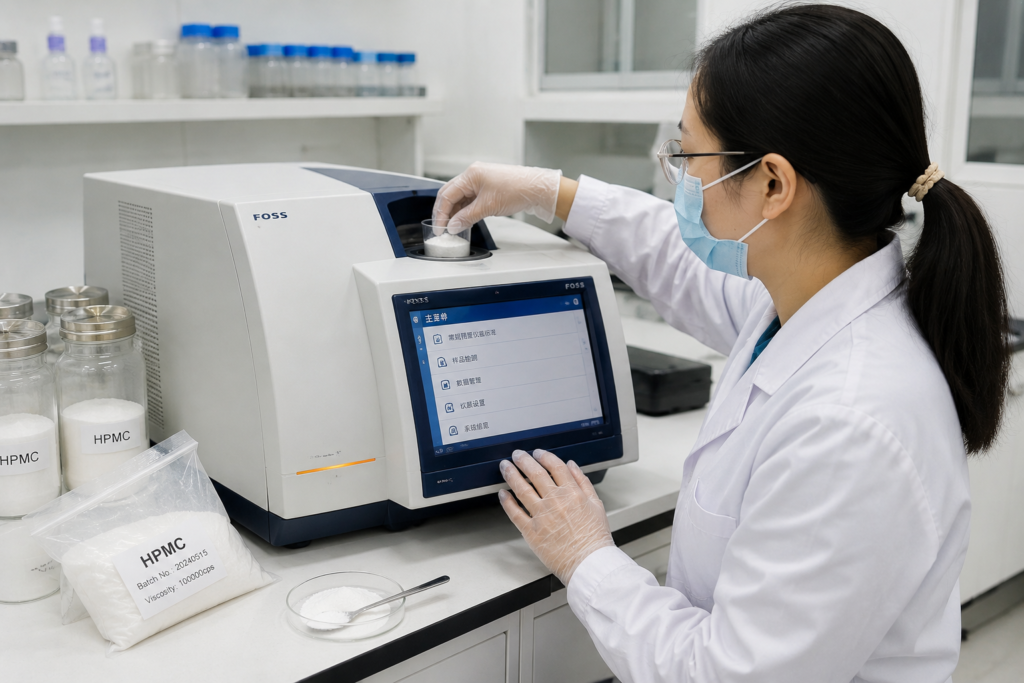
For a buyer like Mark Chen in Saudi Arabia, trust is everything. He has told me stories about suppliers who forge certificates or deliver batches with wildly different quality. This is a nightmare for any factory owner. Our quality control (QC) is designed to build that trust and eliminate those nightmares. It is not just a final check; it is a continuous process. We test everything, from raw materials to the final product. But here’s what makes us different. Instead of just relying on traditional mortar cube tests that take 28 days to get a result, we use advanced equipment. For every production batch, we use a Near-Infrared Spectroscopy (NIR) analyzer. This amazing machine can predict the 28-day strength in minutes by analyzing the chemical fingerprint of the HPMC. This means we can confirm the quality before the product is even bagged. It allows us to make micro-adjustments in real-time, ensuring every bag is identical. Furthermore, we listen to our customers. For clients in the Middle East, we know that high salinity in groundwater can attack mortar. That is why we developed a special formula with salt-resistant additives that counter sulfate erosion, further protecting the final structure's integrity. Our QC is not just about meeting a spec sheet; it's about solving your real-world problems.
| QC Method | Our "Black Tech" Approach | Traditional Approach | Why It Matters to You |
|---|---|---|---|
| Strength Test | NIR Prediction (minutes) | 28-Day Cube Test (days) | Instant quality assurance, no waiting |
| Consistency | In-line process adjustments | Batch-to-batch variation | You get the exact same product every time |
| Customization | Anti-Sulfate Formula (ME) | One-size-fits-all | Product designed for your environment |
Conclusion
By controlling everything from raw materials to final QC with advanced tech, we guarantee our HPMC delivers consistent 28-day strength, giving your projects unmatched reliability and your business a competitive edge.
-
"Methyl cellulose", https://en.wikipedia.org/wiki/Methyl_cellulose. Scholarly sources indicate that the quality and consistency of hydroxypropyl methylcellulose (HPMC) can significantly influence the 28-day compressive strength of cement-based mortars, as HPMC affects water retention and workability, which are critical for strength development. However, the exact impact may vary depending on formulation and application conditions. Evidence role: mechanism; source type: paper. Supports: We solve this by ensuring every HPMC shipment delivers predictable 28-day strength for your peace of mind.. Scope note: The relationship is supported in general terms, but specific outcomes depend on mortar composition and site practices. ↩
-
"What is the raw material of HPMC? - KEHAO Chemical-Expert Cellulose ...", https://xhhpmc.com/what-is-the-raw-material-of-hpmc/. Research shows that the purity and quality of refined cotton used as a cellulose source are critical factors in determining the consistency and performance of hydroxypropyl methylcellulose (HPMC), as impurities can affect etherification efficiency and final product properties. Evidence role: mechanism; source type: paper. Supports: We solve this by standardizing our raw materials, using only top-quality refined cotton for every batch.. Scope note: Direct links to specific supplier practices are not addressed; evidence supports the general importance of raw material quality. ↩
-
"What Does CMC 'Degree of Substitution' (D.S.) Actually Mean ...", https://xhhpmc.com/what-does-cmc-degree-of-substitution-d-s-actually-mean-for-your-final-product-quality/. The Degree of Substitution (DS) in cellulose ethers such as HPMC refers to the average number of hydroxyl groups on the cellulose backbone that have been replaced by ether groups, typically methoxy or hydroxypropyl groups. Evidence role: definition; source type: encyclopedia. Supports: First is the Degree of Substitution (DS). This tells us how many hydroxypropyl and methoxy groups are attached to the cellulose chain.. Scope note: This definition is general and does not specify optimal DS ranges for mortar applications. ↩