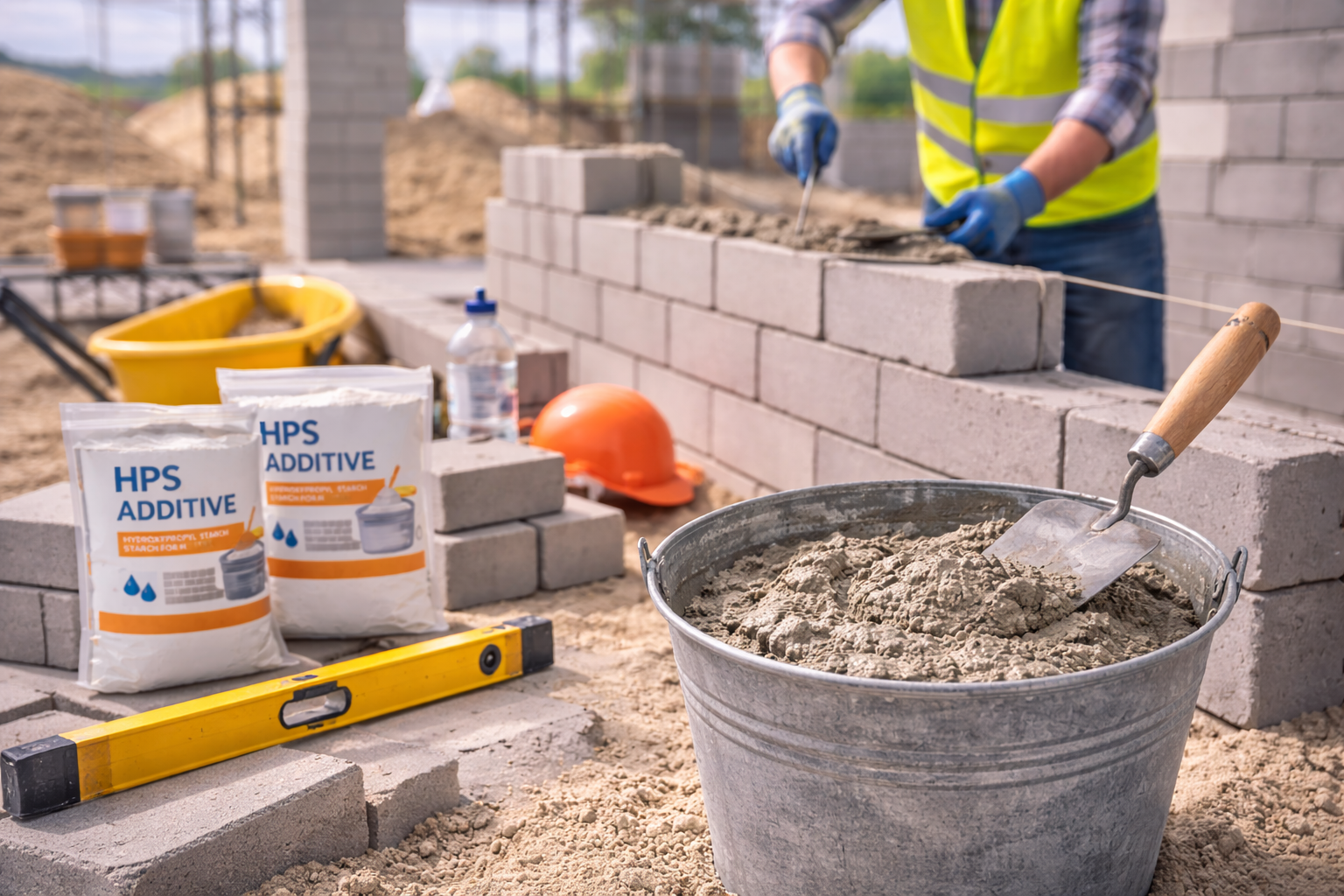
Ever struggled with mortar that cracks, doesn't stick well, or dries too quickly? These problems can ruin entire construction projects and cost thousands in repairs. The right additives can solve these issues.
The 5 essential additives for mortar are HPMC/HEMC (water retention)1, RDP (adhesion & flexibility)2, PCE (flowability)3, SHP (waterproofing), and HPS (thickening)4. These chemicals improve workability, strength, and durability of mortar for various applications from tile adhesives to renders.

As a manufacturer with 6 production lines and over a decade in the industry, I've seen firsthand how proper additives transform ordinary mortar into high-performance building material. I remember visiting a customer in Saudi Arabia who switched from a competitor's products to ours and saw their product returns drop by 30% in just two months. Let me walk you through what you need to know about these game-changing ingredients.
Understanding Additives for Mortar: Why Are They Essential?
Have you ever mixed mortar only to find it drying too fast, crumbling after curing, or failing to stick properly? These frustrations stem from missing the right additives in your formulation.
Mortar additives are specialty chemicals that modify specific properties of the mix to enhance performance for different applications and environments. They solve issues like poor workability, weak adhesion, insufficient water resistance, and inadequate durability that plain cement-sand mixtures cannot address.

Mortar without proper additives is like cooking without spices - technically possible but lacking in quality and performance. The construction industry has evolved dramatically over the past 30 years, with modern buildings demanding mortar that can meet specific technical requirements far beyond what traditional mixes can deliver.
The right additives transform ordinary mortar into specialized products designed for specific applications. For example, tile adhesives need different properties than rendering mortars, and external applications have different requirements than internal ones. I recently consulted with a large mortar factory in Pakistan that was experiencing high failure rates with their exterior renders. By adjusting their additive formulation, particularly increasing the HPMC content and adding the appropriate RDP, their callbacks dropped by 85% within three months.
Key Benefits of Using Mortar Additives
| Benefit | Impact on Construction | Economic Value |
|---|---|---|
| Improved workability | Easier application, higher productivity | 15-20% labor savings |
| Enhanced adhesion | Fewer failures, reduced callbacks | Up to 40% reduction in repairs |
| Water resistance | Better durability in wet conditions | Extended service life by 3-5 years |
| Controlled setting time | Optimal curing in various conditions | Reduced waste, consistent quality |
| Crack resistance | Better appearance, fewer failures | Higher customer satisfaction |
The 5 Essential Additives for Mortar and Their Functions
Does your mortar mix have the right combination of additives for your specific application? Let's look at what each essential component brings to your formulation.
The five essential mortar additives are cellulose ethers (HPMC/HEMC)5 for water retention, redispersible polymer powders (RDP) for adhesion, polycarboxylate ethers (PCE)6 for flowability, sodium hexametaphosphate (SHP)7 for water resistance, and hydroxypropyl starch (HPS)8 for thickening properties that complement cellulose ethers.
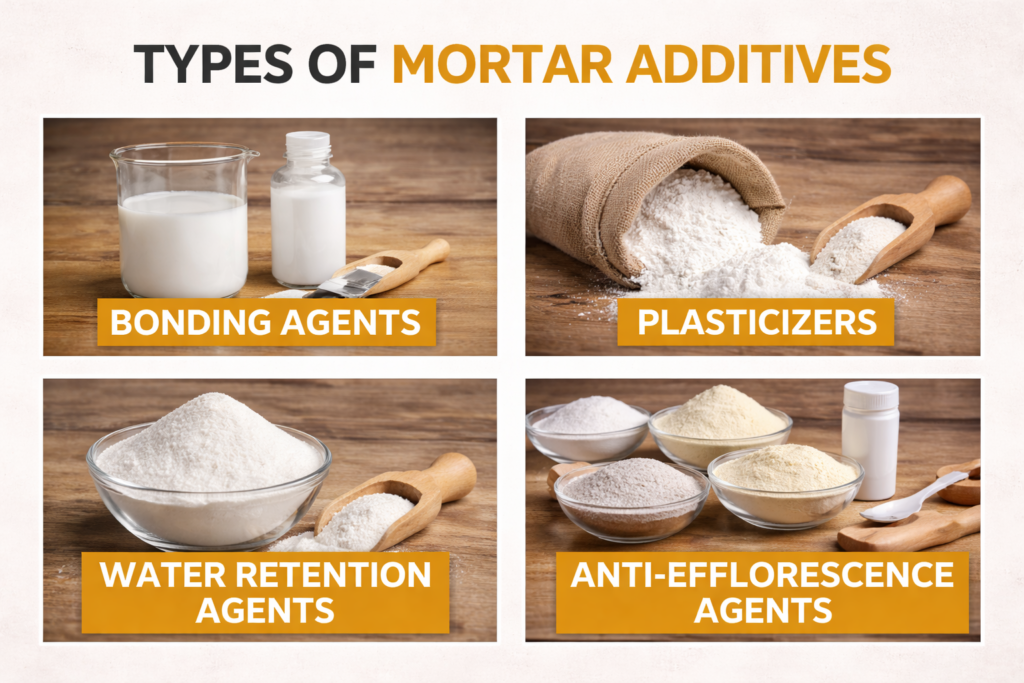
Each of these additives plays a crucial role in the performance of modern mortar systems. While visiting a customer's factory in the UAE last year, I saw how they were using only HPMC in their tile adhesive. When we introduced RDP into their formulation, their adhesion strength increased by 40%, allowing them to market their product for heavy tile applications and increase their profit margin.
These five additives work together synergistically, with each contributing specific properties that others cannot provide. For example, while HPMC provides excellent water retention, it doesn't contribute significantly to adhesion - that's where RDP comes in. Similarly, PCE optimizes flowability without negatively impacting other properties like water retention or adhesion.
The correct balance of these additives is crucial for achieving optimal performance. Too much of one component can sometimes negatively affect the properties contributed by another. This balance is particularly important in challenging environments like the extreme heat I've seen in Saudi Arabia or the high humidity conditions in Southeast Asian markets.
Additive Interaction Table
| Primary Additive | Complementary Additive | Resulting Property Improvement |
|---|---|---|
| HPMC/HEMC | RDP | Water retention with improved adhesion |
| RDP | PCE | Adhesion with optimal flowability |
| PCE | SHP | Flowability with water resistance |
| SHP | HPMC/HEMC | Water resistance with controlled setting |
| HPS | HPMC/HEMC | Cost-effective thickening with water retention |
HPMC & HEMC - The Backbone of Mortar Workability
Have you ever wondered why some mortars remain workable for hours while others dry out too quickly? The answer lies in the cellulose ethers used.
HPMC (Hydroxypropyl Methylcellulose) and HEMC (Hydroxyethyl Methylcellulose) are cellulose derivatives that provide essential water retention, thickening, and improved workability to mortar. They prevent water from evaporating too quickly, allowing proper cement hydration and extending working time.
From my experience supplying HPMC to major mortar manufacturers across developing countries, I've seen how critical this component is. Last year, I worked with a customer in Brazil who was struggling with inconsistent setting times in their tile adhesive. Their previous supplier had been providing cellulose ethers with variable viscosity, causing unpredictable workability. After switching to our more consistent HPMC, they were able to standardize their production process and reduce waste by 15%.
Cellulose ethers form the foundation of modern dry mix mortars, and their selection should be based on specific application requirements. For tile adhesives, typically a higher viscosity HPMC (50,000-100,000 mPa·s) provides ideal sag resistance, while renders and plasters often perform better with medium viscosity products (15,000-40,000 mPa·s).
The methoxyl and hydroxypropyl content of HPMC9 also significantly impacts performance. Higher methoxyl content provides better water retention but slower dissolution, while hydroxypropyl groups improve surface activity and compatibility with other additives. For hot climate regions like the Middle East, we typically recommend HPMC with higher methoxyl content to combat rapid water evaporation.
HPMC/HEMC Selection Guide by Application
| Application | Recommended Viscosity | Dosage Range | Key Property |
|---|---|---|---|
| Tile Adhesives | 50,000-100,000 mPa·s | 0.2-0.4% | Sag resistance |
| Self-leveling Compounds | 15,000-30,000 mPa·s | 0.1-0.3% | Flow properties |
| Renders/Plasters | 20,000-40,000 mPa·s | 0.2-0.3% | Workability |
| Joint Fillers | 30,000-60,000 mPa·s | 0.2-0.5% | Crack resistance |
| EIFS Adhesives | 40,000-80,000 mPa·s | 0.3-0.5% | Extended open time |
RDP - Enhancing Adhesion & Flexibility
Is your mortar failing to stick to challenging substrates or cracking after curing? RDP might be the missing component in your formulation.
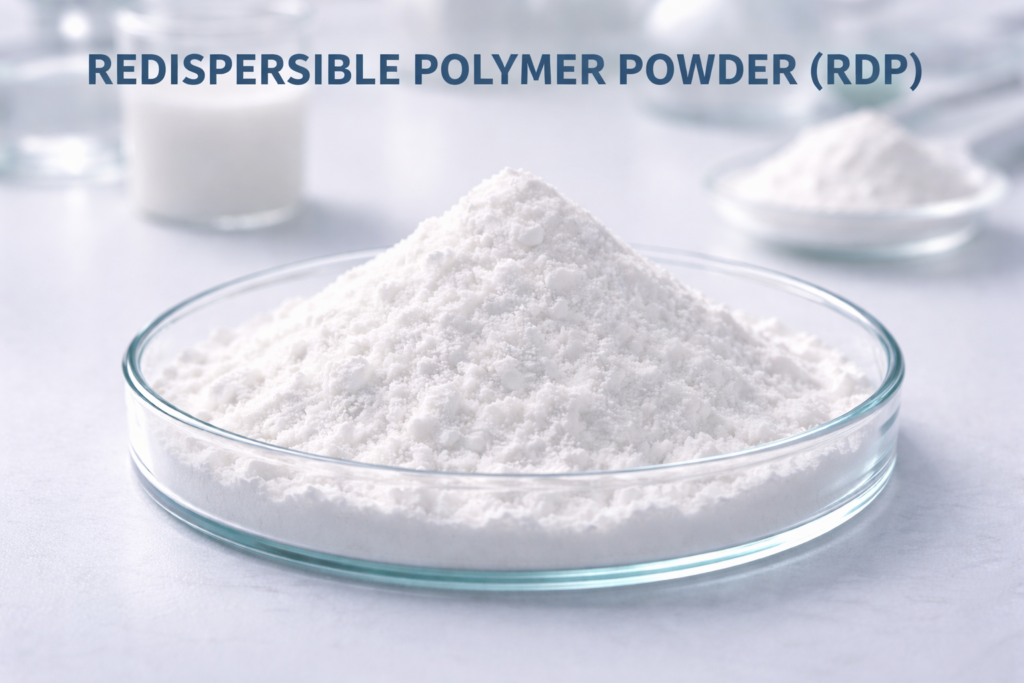
Redispersible Polymer Powder (RDP) is a spray-dried polymer that redisperses in water during mixing, forming a polymer film throughout the mortar as it dries. RDP dramatically improves adhesion to difficult substrates, increases flexibility, reduces cracking, and enhances tensile strength.
RDP represents one of the most significant innovations in mortar technology in the past few decades. I've seen its transformative effect firsthand when working with a customer in Vietnam who was experiencing high failure rates with their exterior render. After incorporating 3% of our VAc/E RDP into their formulation, their adhesion strength improved by 60%, and callbacks for cracking issues virtually disappeared.
Different types of RDP offer varying properties based on their polymer composition. The most common varieties include:
- VAc/E (Vinyl Acetate/Ethylene)10 - Balanced cost and performance
- VA/VeoVa (Vinyl Acetate/Versatate)11 - Improved water resistance
- Pure Acrylic - Premium performance for demanding applications
The choice depends on the specific application requirements and cost considerations. For example, while supplying to a major mortar producer in Mexico, we recommended switching from standard VAc/E to VA/VeoVa for their external render products, which significantly improved water resistance and durability in coastal areas.
RDP Selection Guide
| RDP Type | Water Resistance | Flexibility | Cost Level | Ideal Applications |
|---|---|---|---|---|
| VAc/E | Moderate | Good | Lower | Interior tile adhesives, general mortars |
| VA/VeoVa | High | Very Good | Medium | Exterior applications, EIFS adhesives |
| Pure Acrylic | Excellent | Excellent | Higher | Swimming pools, wet areas, critical applications |
| Styrene Acrylic | Very Good | Good | Medium-High | Facade renders, repair mortars |
The dosage of RDP is equally important as the type. For basic interior tile adhesives, 1-3% might be sufficient, while exterior and critical applications might require 4-6% or more. I once consulted with a customer in India who was using excessive RDP (8%) in their interior tile adhesive, which not only increased their costs unnecessarily but also caused excessive flexibility that compromised compressive strength.
PCE - Optimizing Flowability
Are you struggling with mortar that's difficult to mix or apply smoothly? PCE superplasticizers can transform your product's handling characteristics.
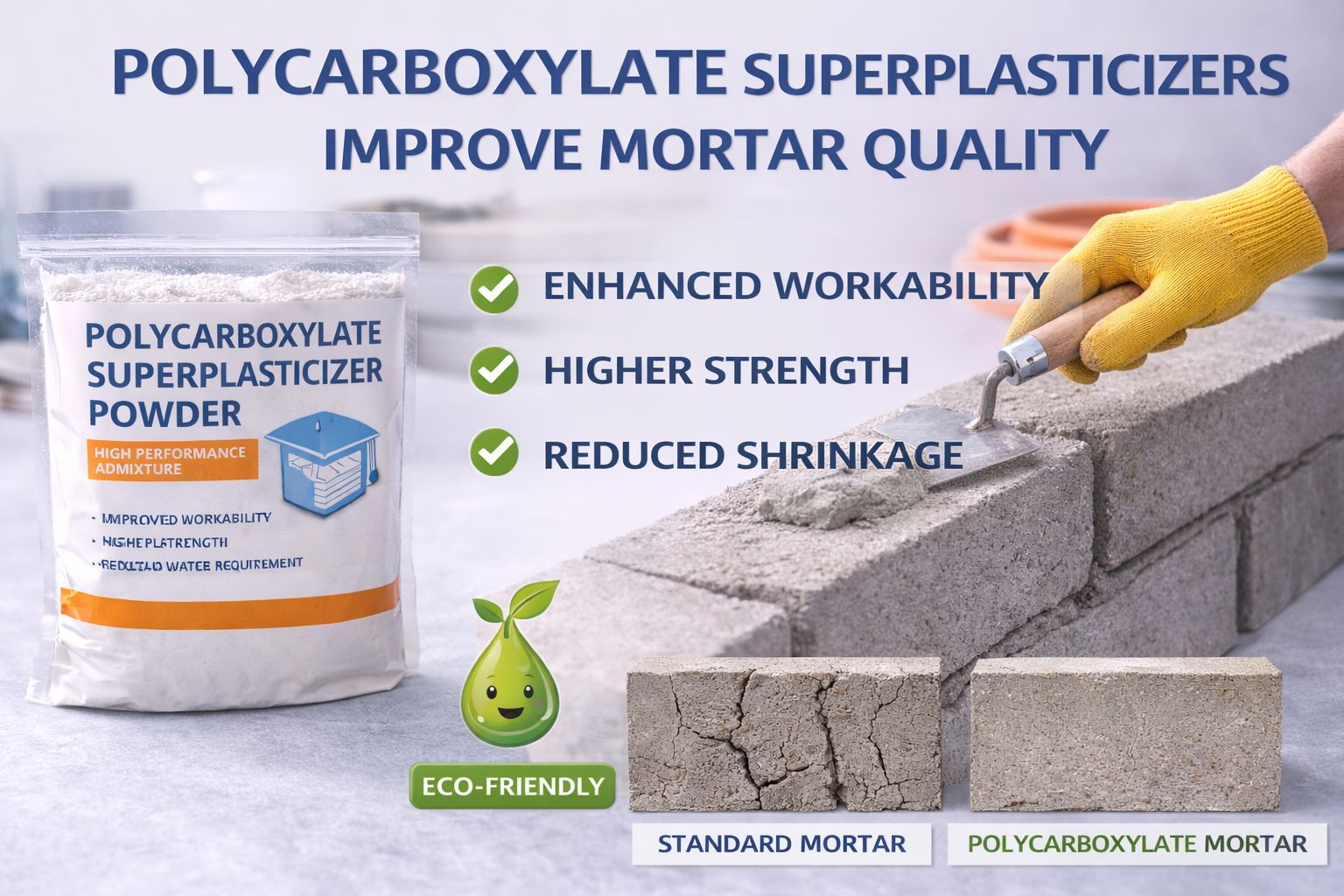
Polycarboxylate Ether (PCE) superplasticizers reduce the water requirement while maintaining flowability, creating stronger mortar with less water. They work by dispersing cement particles through steric hindrance and electrostatic repulsion, enabling self-leveling properties and improved workability.
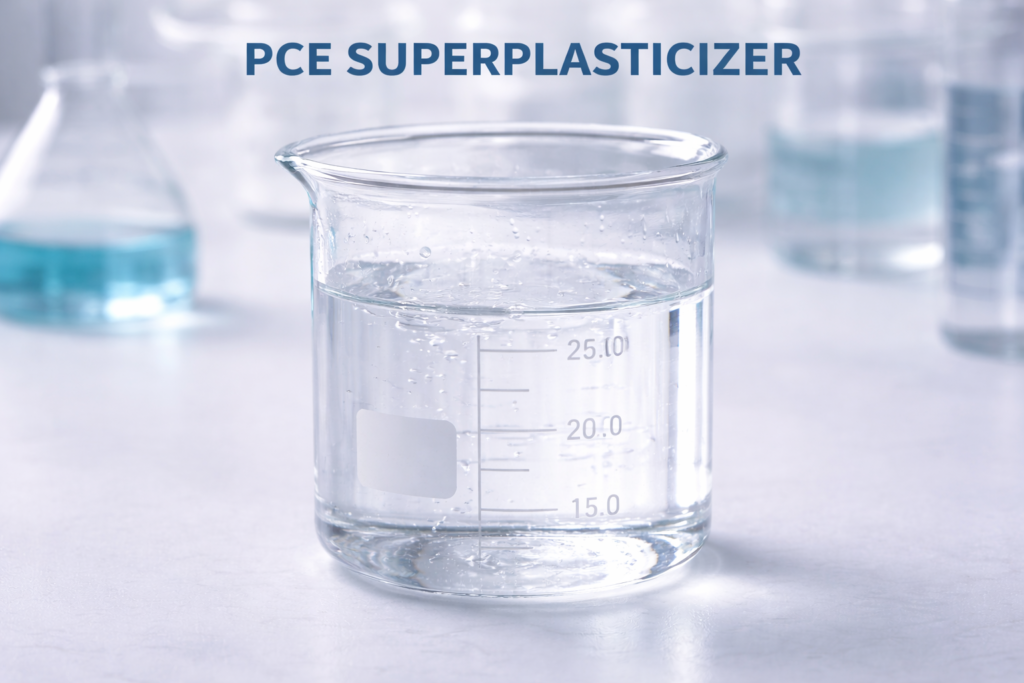
PCE superplasticizers have revolutionized self-leveling compounds12 and high-performance mortars. When I visited a customer's facility in Georgia last year, they were struggling with their self-leveling compound that required excessive water to achieve the desired flow, resulting in shrinkage and cracking. After incorporating our PCE at just 0.2% dosage, they achieved better flow with 15% less water, eliminating the shrinkage issues.
Unlike traditional plasticizers like lignosulfonates or naphthalene-based products, PCE offers several distinct advantages:
- Higher efficiency at lower dosages
- Longer slump retention (maintaining flowability)
- Less air entrainment
- Compatibility with a wider range of cement types
- Better robustness against changes in raw materials
The molecular structure of PCE can be customized for specific applications - a benefit I've highlighted to many customers seeking specialized performance. For example, PCEs with longer side chains provide better slump retention but slower early strength development, while those with shorter side chains offer rapid early strength but shorter workability windows.
PCE Applications and Benefits
| Application | PCE Benefit | Typical Dosage | Cost-Benefit Impact |
|---|---|---|---|
| Self-leveling Compounds | Enables flow without segregation | 0.2-0.5% | Reduces labor by 40-50% |
| High-strength Mortars | Reduces water demand while maintaining workability | 0.1-0.3% | Increases strength by 20-30% |
| Pumpable Mortars | Improves rheology for machine application | 0.1-0.4% | Increases application speed by 25-35% |
| Repair Mortars | Enables low water/cement ratio with good workability | 0.2-0.4% | Improves durability by 30-40% |
SHP - Waterproofing & Moisture Resistance
Does your mortar application require resistance to water and moisture? SHP can be the game-changer for such applications.
Sodium Hexametaphosphate (SHP) acts as a water-repellent and set retarder in mortar formulations. It creates hydrophobic barriers within the mortar matrix, reducing water absorption and improving durability while helping control setting time in hot conditions.
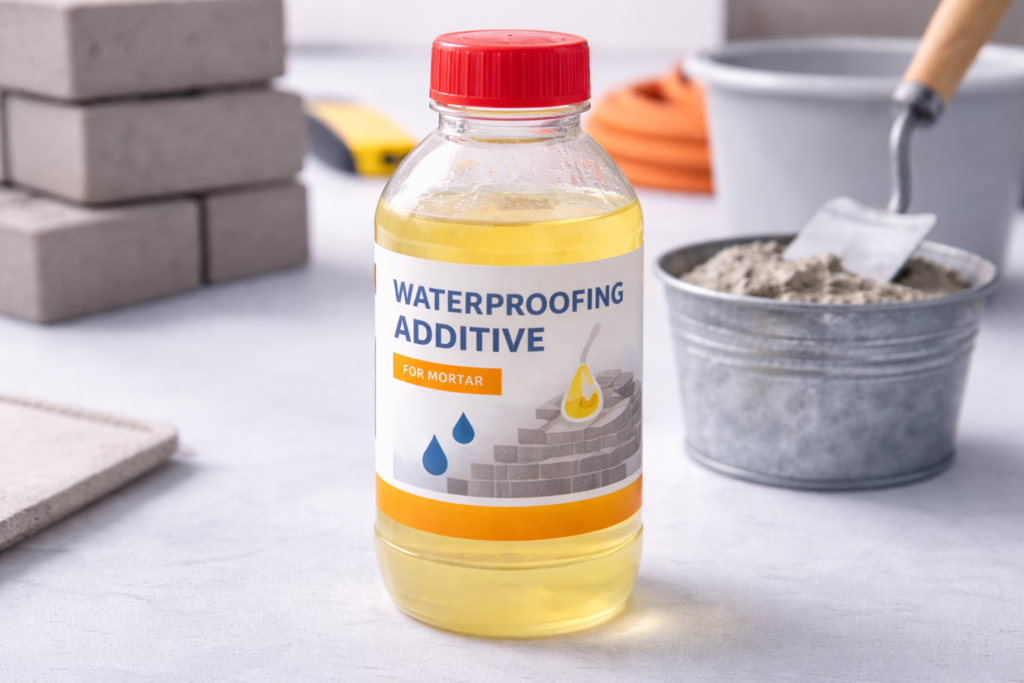
Water damage is one of the primary causes of mortar failure, particularly in exterior applications and wet areas. During a technical consultation with a major factory in Pakistan, I found their bathroom tile adhesive was showing efflorescence and poor water resistance. By incorporating 0.3% SHP into their formulation, water absorption decreased by 40%, and the efflorescence issues were eliminated.
SHP works through multiple mechanisms:
- It reacts with calcium compounds to form insoluble calcium phosphates that block capillaries
- It creates hydrophobic barriers within the mortar matrix
- It acts as a dispersant that improves particle distribution and reduces permeability
- It helps control setting time, particularly useful in hot climates
The proper dosage of SHP is critical - too little won't provide adequate protection, while excessive amounts can interfere with cement hydration. For most applications, the optimal range is 0.2-0.4% of the dry mix weight.
SHP Performance in Different Applications
| Application | SHP Contribution | Recommended Dosage | Performance Improvement |
|---|---|---|---|
| Bathroom Tile Adhesives | Water resistance, efflorescence control | 0.3-0.4% | 40-50% reduction in water absorption |
| External Renders | Weather resistance, durability | 0.2-0.3% | 30-40% longer service life |
| Basement Mortars | Moisture barrier properties | 0.3-0.5% | 50-60% reduction in moisture transmission |
| Swimming Pool Mortars | Chemical resistance, waterproofing | 0.4-0.6% | Near complete waterproofing when combined with RDP |
SHP also has synergistic effects when used with other additives. For example, when combined with RDP, the waterproofing effect is significantly enhanced beyond what either component could achieve individually. I've demonstrated this to customers by showing water beading on the surface of properly formulated mortar samples even after 28 days of curing.
HPS - Enhancing Thickening & Workability
Are you looking for ways to optimize your mortar formulation cost while maintaining performance? HPS offers an excellent solution.
Hydroxypropyl Starch (HPS)13 is a modified starch that provides thickening and water retention properties at lower cost than cellulose ethers. It can partially replace HPMC/HEMC to reduce formulation costs while maintaining workability and sag resistance.

In today's competitive construction market, cost optimization without sacrificing quality is crucial. During my work with customers in India and Philippines, I've introduced HPS as a partial replacement for more expensive HPMC, helping them achieve cost savings of 10-15% while maintaining product performance.
HPS offers several technical advantages:
- Compatible with cement chemistry
- Good thickening effect
- Contributes to water retention
- Improves consistency and workability
- Reduces formulation costs
The optimal approach is not to fully replace HPMC but to use HPS as a complementary additive. For example, in a tile adhesive formulation that might originally use 0.3% HPMC, you could reformulate with 0.2% HPMC plus 0.2% HPS, achieving similar performance at lower cost.
HPS and HPMC Comparison
| Property | HPMC Performance | HPS Performance | Optimal Combination |
|---|---|---|---|
| Water Retention | Excellent | Good | HPMC for primary water retention, HPS as supplement |
| Thickening Effect | Very Good | Good | Both contribute effectively |
| Setting Time Influence | Significant retardation | Mild retardation | Balance for optimal setting |
| Cost | Higher | Lower | Cost optimization |
| Stability | Excellent | Good | HPMC provides stability, HPS reduces cost |
When working with a large mortar producer in Vietnam last year, we developed a tiered product range using varying ratios of HPMC and HPS - their premium products used primarily HPMC for maximum performance, while their standard range used a HPMC/HPS combination for competitive pricing. This strategy allowed them to capture different market segments effectively.
How to Optimize Mortar Performance with Proper Additive Combinations
Are you using the right combination of additives for your specific application and environmental conditions? Proper balance is the key to superior performance.
To optimize mortar performance, combine additives based on specific application requirements: HPMC (0.2-0.4%) for water retention, RDP (1-5%) for adhesion, PCE (0.1-0.5%) for flowability, SHP (0.2-0.4%) for water resistance, and HPS (0.1-0.3%) for cost-efficient thickening, adjusting for climate conditions.
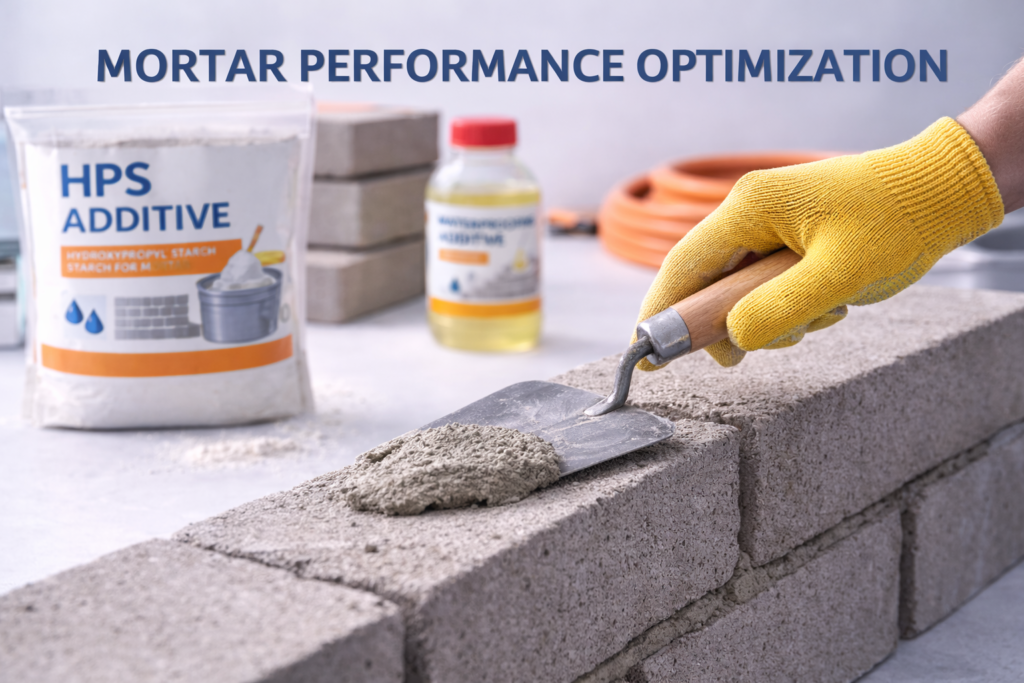
Finding the right combination of additives requires understanding both their individual functions and their interactions. I remember helping a customer in Saudi Arabia who was experiencing inconsistent setting times with their exterior render. The problem wasn't with any single additive but with the balance - their HPMC dosage was insufficient for the extreme heat, and they needed more set-retarding properties from SHP.
Developing the optimal additive combination requires considering several factors:
- Application requirements (tile adhesive, render, repair mortar, etc.)
- Environmental conditions (temperature, humidity)
- Substrate characteristics
- Performance expectations
- Cost constraints
- Available application time
For example, a tile adhesive for exterior use in hot climates might benefit from:
- Higher HPMC dosage (0.3-0.4%) for extended open time
- VA/VeoVa RDP (3-4%) for water resistance and adhesion
- Small amount of PCE (0.1-0.2%) for workability without excess water
- SHP (0.3%) for additional water resistance and set control
Meanwhile, a self-leveling compound for indoor use in moderate climates would have a completely different balance:
- Lower HPMC dosage (0.1-0.2%)
- Higher PCE content (0.3-0.5%)
- Lower RDP requirement (1-2%)
- Minimal or no SHP
Additive Combinations by Application Type
| Application | HPMC/HEMC | RDP | PCE | SHP | HPS | Key Performance Criteria |
|---|---|---|---|---|---|---|
| Exterior Tile Adhesive | 0.3-0.4% | 3-5% VAc/VeoVa | 0.1-0.2% | 0.2-0.3% | 0-0.1% | Weather resistance, adhesion |
| Interior Tile Adhesive | 0.2-0.3% | 1-3% VAc/E | 0.1% | 0-0.2% | 0.1-0.2% | Cost-efficiency, adequate open time |
| Self-leveling Compound | 0.1-0.2% | 1-2% | 0.3-0.5% | 0-0.1% | 0-0.1% | Flow properties, surface finish |
| External Render | 0.2-0.3% | 2-4% | 0.1-0.2% | 0.2-0.3% | 0.1-0.2% | Crack resistance, workability |
| Repair Mortar | 0.2-0.3% | 3-6% | 0.2-0.3% | 0.2-0.4% | 0-0.1% | Adhesion, strength, low shrinkage |
I've found that successful formulations often start with establishing the minimum effective dosage of each component, then fine-tuning based on specific performance requirements. During a technical seminar I conducted in Mexico, I demonstrated how just a 0.05% adjustment in HPMC content could extend open time by 5-7 minutes in high-temperature conditions - a crucial difference for larger tile installations.
Other Key Considerations for Using Additives for Mortar
Beyond selecting the right additives, are you accounting for all the factors that affect their performance? Several practical considerations can make or break your mortar's effectiveness.
When using mortar additives, consider mixing sequence (add HPMC first to water), storage conditions (keep dry, below 35°C), compatibility testing between components, quality consistency of raw materials, and proper mixing time (minimum 3 minutes) to ensure optimal additive activation.
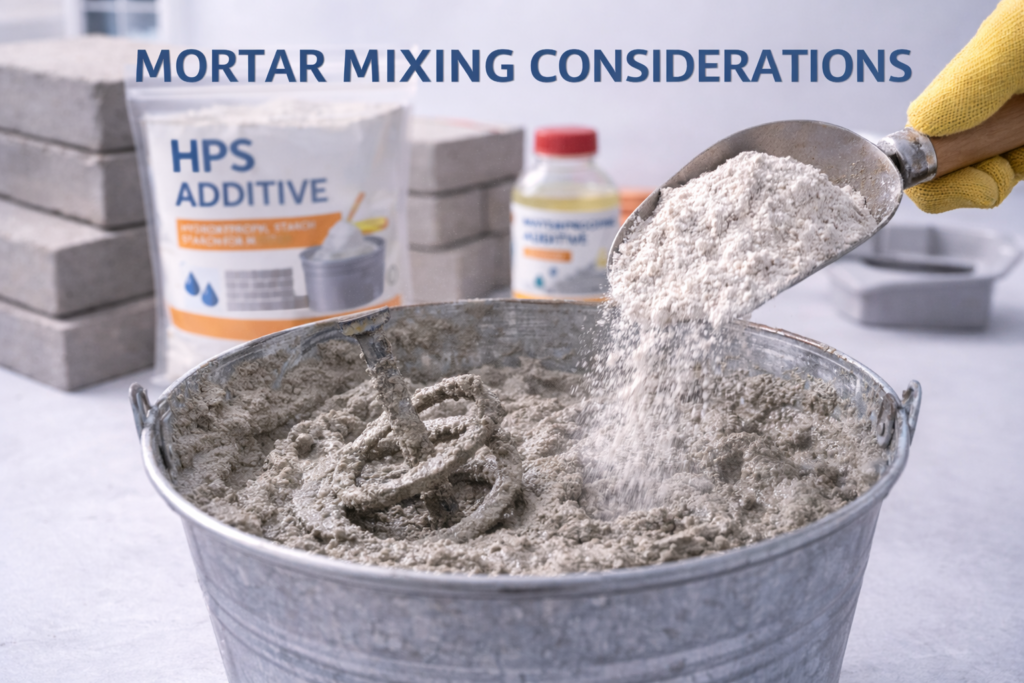
The effectiveness of additives depends not only on their selection but also on proper handling and application. Earlier this year, I visited a customer in the Philippines who was experiencing inconsistent performance despite using quality additives. The issue turned out to be their mixing procedure - they weren't allowing sufficient dissolution time for the HPMC, resulting in uneven water retention across batches.
Several practical factors significantly impact additive performance:
-
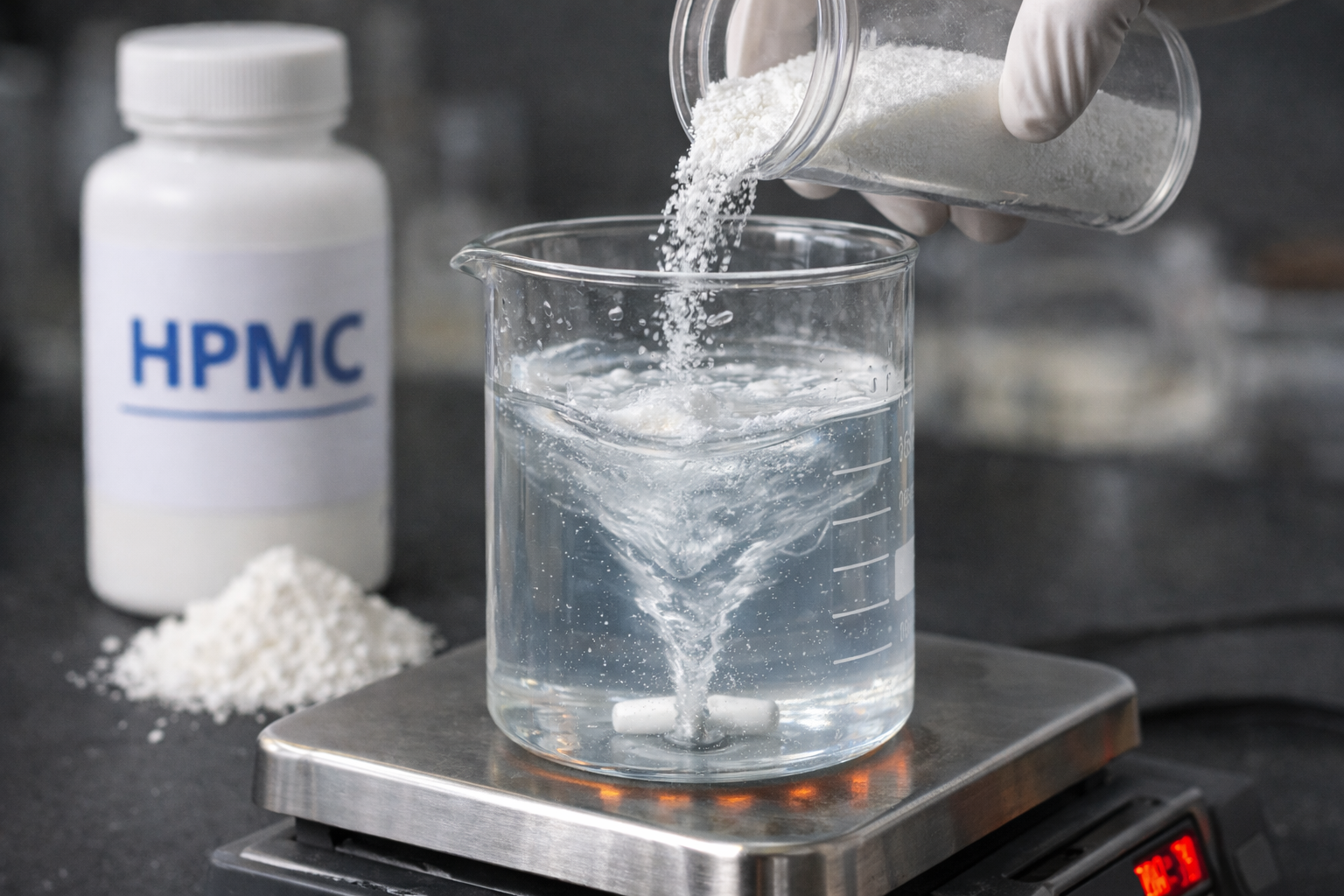
Mixing sequence and time: Cellulose ethers should typically be pre-mixed with dry components, and adequate mixing time (minimum 3 minutes for machine mixing) ensures proper dispersion. For HPMC specifically, allowing it to fully dissolve before adding cement components can improve performance.
-
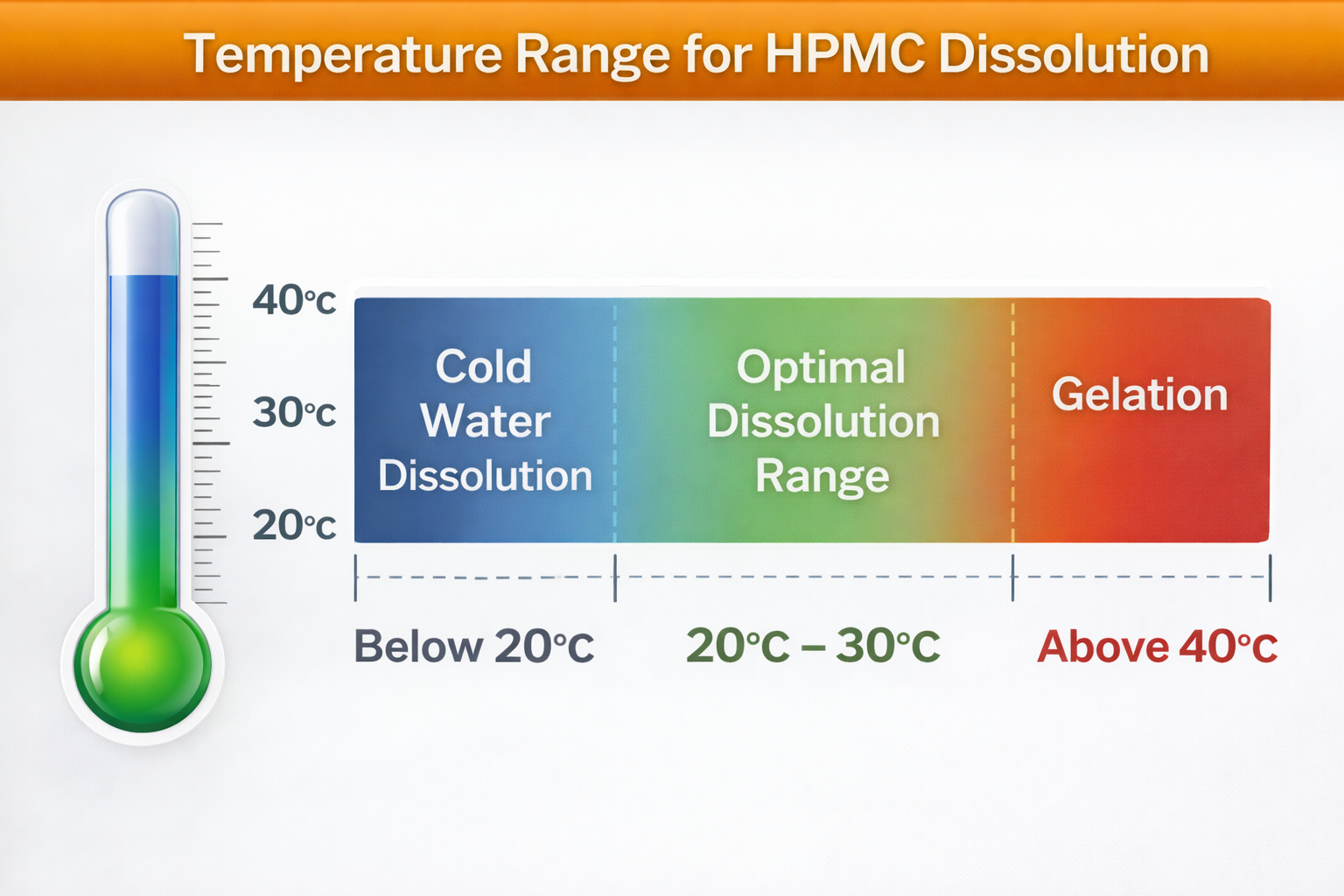
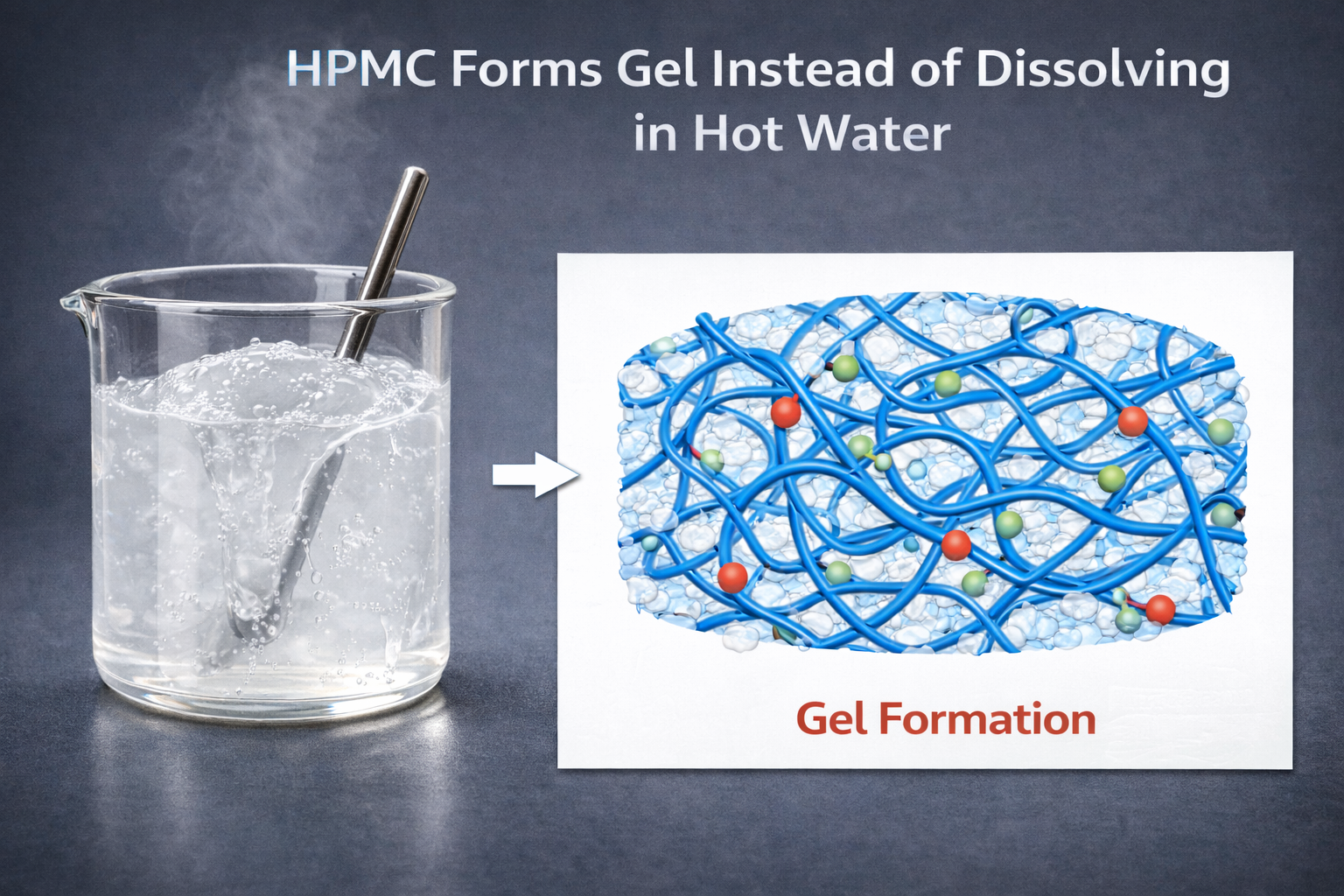
Water quality and temperature: Hard water (high calcium content) can interfere with some additives, particularly PCE. Water temperature also affects dissolution rates - I've seen customers in cold regions struggle with HPMC dissolution in winter when using near-freezing water.
-
Cement compatibility: Different cement types and sources can interact differently with additives. For example, cements with high C3A content may require higher PCE dosages to achieve the same flowability.
-
Storage conditions: Most additives are sensitive to moisture and temperature. I always advise customers to store RDP and HPMC in cool, dry conditions and to implement first-in, first-out inventory management.
-
Quality consistency: Variations in additive quality between batches or suppliers can cause significant performance fluctuations. This is why we implement strict quality control on all our production lines.
Troubleshooting Common Additive-Related Issues
| Problem | Possible Additive-Related Cause | Solution |
|---|---|---|
| Mortar drying too quickly | Insufficient HPMC/HEMC | Increase cellulose ether content by 0.05-0.1% |
| Poor adhesion to substrate | Insufficient or wrong type of RDP | Increase RDP dosage or switch to more suitable polymer type |
| Excessive shrinkage/cracking | Water content too high, insufficient RDP | Add PCE to reduce water demand, increase flexible polymer content |
| Mortar too stiff but adding water causes sag | Imbalanced thickening system | Adjust HPMC/PCE ratio for better rheology |
| Efflorescence | Poor water resistance | Add or increase SHP content, consider hydrophobic RDP |
When formulating mortars with multiple additives, I always recommend systematic testing when changing suppliers or dosages. In a recent case with a customer in Mexico, we implemented a test matrix to find the optimal balance between our HPMC and their local RDP supplier's product, resulting in a 15% performance improvement without cost increase.
Conclusion
The right combination of HPMC/HEMC, RDP, PCE, SHP, and HPS transforms ordinary mortar into high-performance building material suited for specific applications. By understanding these additives and optimizing their use, you can create superior products that outperform competitors.
-
Find out why HPMC/HEMC is essential for water retention and how it improves mortar workability and durability. ↩
-
Explore how RDP can solve adhesion and cracking issues, making your mortar suitable for demanding applications. ↩
-
Understand how PCE enhances mortar flow, making application easier and more consistent. ↩
-
See how HPS works with other additives to achieve the perfect mortar consistency for your project. ↩
-
Get insights into why cellulose ethers are foundational for modern mortar performance. ↩
-
See how PCEs revolutionize mortar flow and application efficiency. ↩
-
Discover how SHP enhances water resistance and setting control in mortar. ↩
-
Find out how HPS provides cost-effective thickening and complements other additives. ↩
-
Understand how these chemical groups influence water retention and compatibility in different climates. ↩
-
Learn why VAc/E is a popular choice for balancing cost and performance in mortars. ↩
-
See why VA/VeoVa is recommended for exterior and high-durability mortar applications. ↩
-
Discover how to achieve smooth, crack-free surfaces with the right additive choices for self-leveling mortars. ↩
-
HPS offers cost-effective thickening and water retention—see how it can optimize your formulations. ↩